
📌 Updated 28 September 2026 — A fourth giant enters the ring: the Honor Magic 9 Pro Max, unveiled in Beijing on 28 September. A 10,000-nit display, two 200 MP ARRI cameras with CIPA 8.0 stabilisation, an 8,800 mAh battery and IP69K protection: we have added it to every part of this comparison, table included.
The end of September 2026 will undoubtedly go down as one of the most intense periods in mobile phone history. In the space of a week, four Chinese ultra-premium giants all played their trump cards: Vivo opened the show on 21 September with the X500 Pro Max, immediately followed by Oppo on 22 September with its Find X10 Pro Max, then by Xiaomi on 23 September with the 18 Pro Max, before Honor closed the offensive on 28 September with the Magic 9 Pro Max.
For this generation, all four manufacturers share a dizzying common technology base: chips built on TSMC’s 2 nm process, huge batteries of at least 8,000 mAh in China, and camera modules armed with 200-megapixel sensors. Yet as soon as you look beyond the raw spec sheet, their engineering philosophies turn out to be diametrically opposed. Between Oppo’s lavish trio of 200 MP sensors, Xiaomi’s revolutionary rear secondary screen, Vivo’s studio-grade optical expertise and Honor’s dual 200 MP camera designed with ARRI, which model truly matches your needs? Here is our in-depth comparison.
Design and display: the interactive rear screen against benchmark panels
In terms of exterior design, all four flagships have a strong visual identity, but it is unquestionably Xiaomi that makes the most spectacular ergonomic break.
The Xiaomi 18 Pro Max builds a genuine 2.9-inch AMOLED touch secondary screen into its back. Far from being a mere decorative gimmick, this panel offers a smooth 120 Hz refresh rate and peaks at an impressive 4,000 nits. It can display more than a hundred app cards (productivity, media, AI widgets generated from a text prompt), let you interact with a contextual voice assistant without turning the phone over, or show personalised avatars. Xiaomi takes the concept as far as selling miniature plush toys fitted with NFC chips which, once attached to the back, transform the rear interface. On the front, the phone offers a 19.6:9 aspect ratio with 1.9 mm corner curves. It comes in fibreglass (235 g in Black, White or Iced Peach Pink) or glass (240 g in Galaxy Blue), plus a spectacular red-tinted transparent edition (16 GB + 1 TB), the brand’s first since the Mi 10 Ultra.
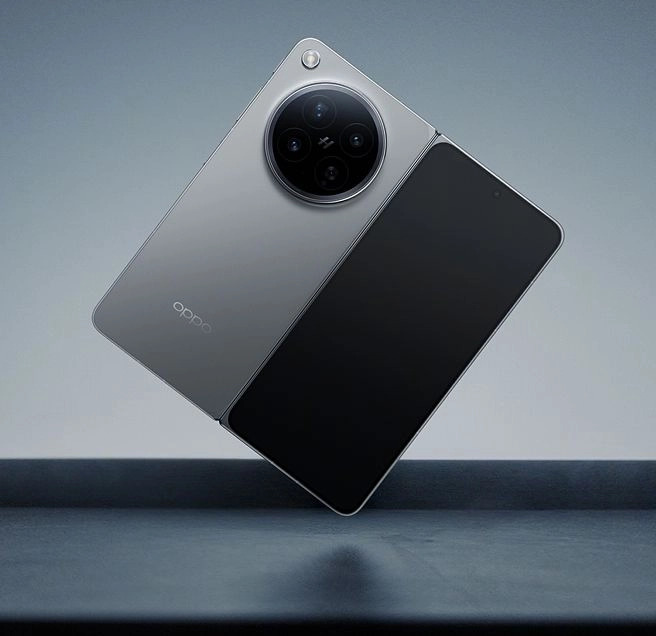
The Oppo Find X10 Pro Max favours a more conventional but remarkably refined elegance. It keeps the rounded-square (“squircle”) camera block, split into two sections: a large square for the lenses and a vertical pill housing the LED flash and the assistance sensors. Its Moon White finish debuts a camera-splicing process that combines two distinct textures on a single piece of glass, while the Warm Orange and Light Titanium colourways use a soft-touch sanded glass, all bearing the Hasselblad badge. On the front, the 6.78-inch 1.5K LTPO OLED panel (1 to 120 Hz, 144 Hz in some games) focuses on eye comfort: minimum brightness down to 1 nit, 95% coverage of the very wide BT.2020 colour space, a 2,000-nit global peak, 3,840 Hz PWM dimming and a dedicated Display P3 display chip.
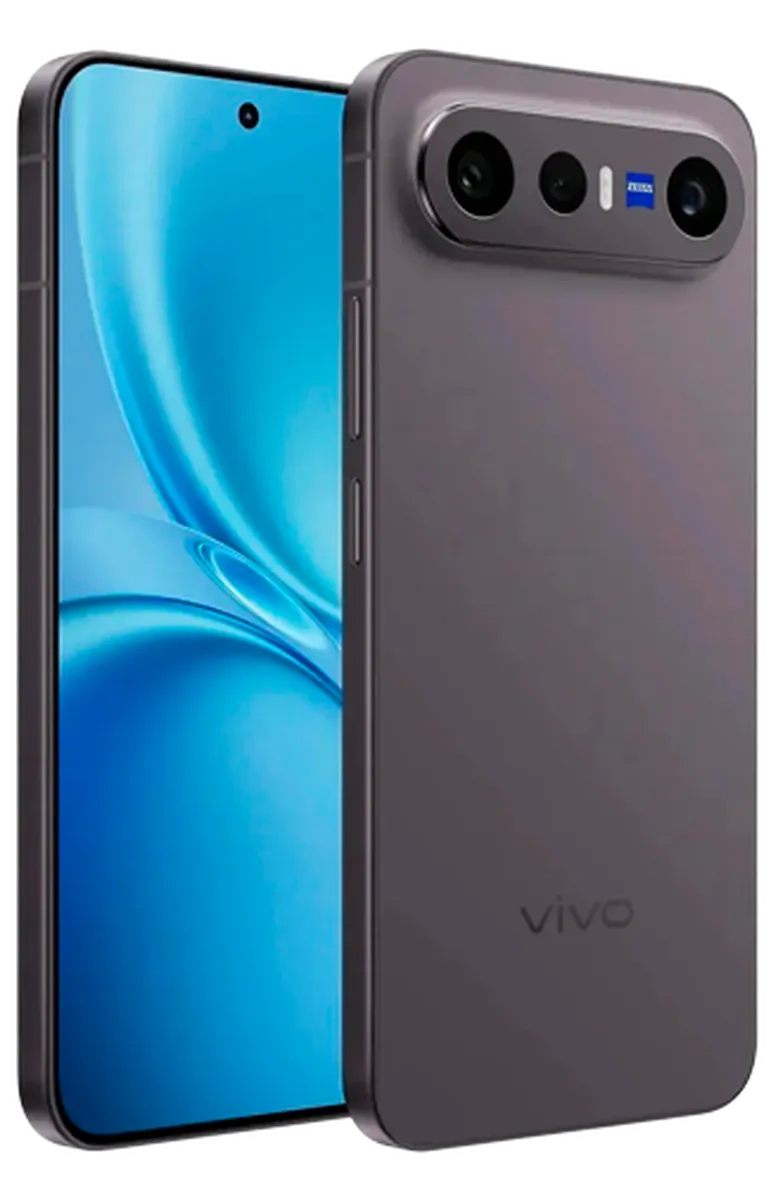
The Vivo X500 Pro Max, for its part, opts for a majestic central circular “pancake Deco” module, set in an aviation-grade aluminium frame. The back is dressed in “Tidal Cold Carved Glass” with water-like reflections (Earth Echo, Sunny and Sunset shades) or a dark Night Photography finish. The 6.85-inch front display takes a step forward with the brand-new BOE Q11 panel at native 2K resolution and 144 Hz. It reaches 4,400 nits of local peak brightness (on a 20% window) and 2,000 nits of global brightness, while benefiting from chip-level AP Demura 2.0 calibration to even out colours. Its fine-step 0.3-lux ambient light sensor reproduces 98% of the human eye’s sensitivity.
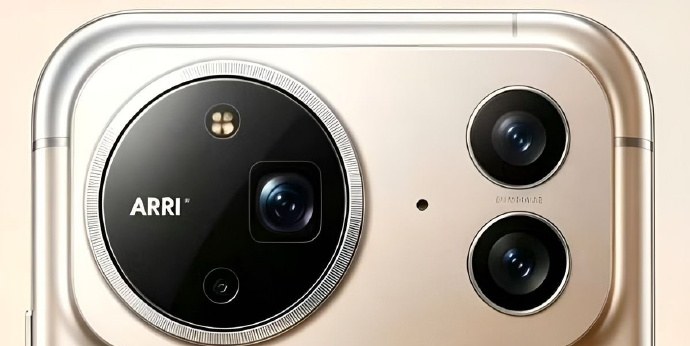
The Honor Magic 9 Pro Max relies on a metal unibody shell, carved from a single piece rather than a frame sandwiched between two panels. On the back, a rounded-square plateau called the “director’s eye” brings its two 200 MP cameras together inside a large metal-ringed circle. Despite its 8,800 mAh battery, it is only 8.59 mm thick and weighs 233 g, in silver, moss green or shadow black. Its 6.8-inch “Black Diamond” LTPO OLED panel (1,320 × 2,868 pixels, 1 to 120 Hz) is, on paper, the brightest in this comparison: 10,000 nits peak and 2,000 nits full screen. It reflects only 1.5% of ambient light, dims with 4,320 Hz PWM and gets 5,600 layers of silicon nitride which, according to Honor, make it fifteen times more scratch-resistant and twenty-five times more drop-resistant.
On durability, Honor and Oppo take the lead: the Magic 9 Pro Max combines IP68, IP69 and IP69K, the last being the most demanding rating against dust and high-pressure cleaning, and Oppo lines up a triple IP66, IP68 and IP69 rating. Vivo follows closely (rated IP68 and IP69 against immersion and high-pressure hot water jets), while Xiaomi sticks to the standard IP68 rating.
Photography: four opposing visions of very high resolution
Each of these phones claims the title of best camera phone of the year, but their optical architectures follow very different logics.
Oppo: the absolute consistency of a triple 200 MP array
Oppo sets a world first by becoming the first manufacturer to line up three 200-megapixel sensors across its three rear focal lengths:
- Main wide-angle (200 MP): a 1/1.3-inch sensor (f/1.5, 24 mm equivalent) with a claimed 17 stops (EV) of dynamic range, stabilised to the CIPA 6.5 standard.
- Periscope telephoto (200 MP): a 1/1.56-inch sensor (f/2.1, 70 mm) with CIPA 7.5 stabilisation and ultra-close macro focusing at 10 cm.
- Ultra-wide (200 MP): a 1/1.56-inch sensor (f/2.2, 124° field of view) capturing 202% more light than the previous generation.
This trio is backed by a second-generation Danxia spectral lens (24 sampling channels) for flawless colour consistency. On video, the Find X10 Pro Max innovates with Open Gate mode (which records the sensor’s entire surface so you can reframe freely in post-production), 8K 30 fps recording in 10-bit Log compatible with ACES, and the modular KHRONOS ecosystem developed with Blackmagic Camera and TILTA. An optional Hasselblad teleconverter kit extends the focal length up to a 4,600 mm equivalent (20x lossless zoom).
Vivo: a giant telephoto sensor and a 3° gimbal
Rather than spreading its megapixels around, Vivo concentrates its firepower on physical sensor size and mechanical stabilisation:
- 50 MP Blueprint 900 / Sony main sensor: 1/1.28-inch format (f/1.57, 24 mm, 17 EV of dynamic range, Zeiss T* coating) mounted on a genuine 3° TrueDynamic stabilisation gimbal, offering motion compensation worthy of a motorised stabiliser.
- 200 MP Zeiss APO periscope telephoto: it relies on the giant 1/1.4-inch Samsung HP0 sensor (f/2.67, 85 mm, CIPA 7.0, macro at 15 cm). This 85 mm focal length, considered the gold standard for portraits, captures far more light than the Oppo and Xiaomi telephotos at long range.
- 50 MP ultra-wide: a 1/2.75-inch sensor (f/2.0) with macro autofocus.
Vivo adds a matrix laser autofocus with 1,536 measuring points (48×32 grid) and a hardware active anti-fog system on the telephoto to tackle cold, humid environments. On video, the phone shoots native 10-bit Log 4K at 120 fps without an external recorder, goes up to 4K at 240 fps for extreme slow motion, and supports 4K Dolby Vision portrait video. It works with the official Zeiss G2 Ultra teleconverter (400 mm equivalent) and offers as an accessory a detachable 3.92-inch magnetic touchscreen that can be controlled from 10 metres away.
Xiaomi: the Leica signature, multiplied by the rear screen
Xiaomi adopts a balanced formula that pairs Leica’s know-how with the strengths of its rear display:
- 200 MP Light Hunter 960L main sensor: 1/1.28-inch format paired with a 1G+6P Summilux lens (one glass element and six plastic ones) with MgF2 and ALD/PVD/SWC anti-reflective coatings to eliminate light aberrations.
- 200 MP periscope telephoto: a 1/1.56-inch sensor (f/2.4, 75 mm portrait, native 3.2x optical zoom, lossless up to 12.8x and floating macro at 12 cm).
- 50 MP ultra-wide: an f/2.4 sensor with a 102° field of view and autofocus down to 5 cm.
Xiaomi’s software processing stands out with its “A Legendary Moment” imaging model, which offloads raw data processing to the cloud to simulate the rendering of 75 mm and 2,035 mm lenses, with very distinctive profiles such as “Legendary CCD” or a black-and-white film mode calibrated on the spectrum of historic film stocks. Above all, the 2.9-inch rear display changes the way you take selfies and vlogs: you can frame your shots directly with the 200 MP main sensor or the 75 mm telephoto, relegating the front camera to second place.
Honor: dual 200 MP ARRI cameras and CIPA 8.0 stabilisation
Honor developed its camera with ARRI, the German maker of cinema cameras, and puts two 200 MP sensors in the key positions:
- 200 MP main sensor: 1/1.28-inch format (f/1.57) mounted on a “gimbal” stabiliser able to compensate up to 3°, rated CIPA 8.0. It has the sensor size, aperture and gimbal range of the Vivo, with four times as many pixels.
- 200 MP periscope telephoto: a large 1/1.4-inch sensor (f/2.6, 3.5x optical zoom, up to 200x digital), also stabilised to CIPA 8.0. It matches the Vivo’s telephoto sensor in size.
- 50 MP ultra-wide: f/2.0 aperture, with autofocus.
A CIPA 8.0 rating means you can shoot handheld at a shutter speed eight stops slower than without stabilisation: it is the best rating announced in this comparison, and Honor achieves it on both its 200 MP sensors. It adds a matrix zoom flash, its own H1 imaging chip to assist the processor with heavy processing, and a 55 MP front camera paired with a 3D camera. On video, it shoots 4K at up to 120 fps, and ARRI modes and looks will arrive in an update. Like its rivals, it has its own accessory: the G500 extender, a 500 mm lens that attaches in front of the telephoto, sold separately.
Performance: the 2 nm chip duel
For the first time, TSMC’s cutting-edge 2 nm process arrives at the heart of mainstream smartphones, pitting Qualcomm against MediaTek.
The Oppo Find X10 Pro Max and the Vivo X500 Pro Max share the same chip: the MediaTek Dimensity 9600 Pro. This SoC is built on an all-big-core 2+3+3 architecture (Arm C2-Ultra and C2 Pro cores). Each manufacturer, however, uses it in its own way:
- Oppo adds its Tide Engine scheduling system, cutting the processing gap between two 200 MP shots to just 0.7 seconds (ten times faster than before), and its Falcon Scheduler, which keeps 4K recording at a steady 60 fps while allowing up to eight hours of continuous MOBA gaming at full frame rate.
- Vivo, which co-developed the platform with MediaTek, claims a 17% jump in single-core performance, a spectacular 61% cut in peak multi-core power consumption, and a 27% faster GPU. Its Monster Hypercore engine unlocks native 144 fps gaming and ray tracing at 120 fps, supported by an ultra-sensitive gyroscope for precision aiming.
The Xiaomi 18 Pro Max, meanwhile, puts its trust in Qualcomm with the Snapdragon 8 Elite Extreme Gen 6. Also built on 2 nm, it uses a 2+6 layout around Qualcomm’s fourth-generation in-house Oryon architecture, peaking at a dizzying 5.0 GHz. To tame the heat of this thermal beast, Xiaomi deploys a 5,513 mm² cold-pump ring vapour chamber. In one-hour stress tests with graphics maxed out, the phone holds an average of 59.26 fps without exceeding 43.6 °C.
The Honor Magic 9 Pro Max uses the same chip, and its official spec sheet details the layout: two prime cores at 5.01 GHz, three at 4.03 GHz and three at 3.74 GHz, with an Adreno 850 GPU backed by 18 MB of dedicated memory. Before its launch, it scored 5,524,187 points on AnTuTu.
Battery, charging and the big caveat of global versions
In China, all four rivals post massive battery specs thanks to new high-density silicon-carbon anodes:
- The Honor Magic 9 Pro Max takes the lead with 8,800 mAh (8,600 mAh rated), a blade battery reaching 1,000 Wh/L thanks to 40% silicon in the anode, which lets it fit in an 8.59 mm body. It charges at 100 W wired and 80 W wireless, the fastest wireless charging of the four, and can charge another device at 27 W by cable.
- The Xiaomi 18 Pro Max follows with an 8,500 mAh battery (946 Wh/L density, 32% silicon, 80% capacity retained after 2,000 cycles). It charges at 100 W wired (with support for the universal 100 W PPS standard, very handy for third-party chargers) and 50 W wireless.
- The Oppo Find X10 Pro Max packs an 8,000 mAh Glacier battery (spherical silicon anode, 867 Wh/L) designed to retain 80% of its capacity after five years of daily charging, backed by 80 W wired and 50 W wireless charging.
- The Vivo X500 Pro Max also offers 8,000 mAh (more than 25% silicon), certified to keep delivering power in extreme cold down to −30 °C (−20 °C for full operation). Its wired charging climbs to 90 W, while wireless charging tops out at 40 W (50 W with the official Vertical Wireless Charger 2 stand).
PhoneDroid exclusive heads-up: beware of hasty conclusions, because the capacities quoted above are those of the Chinese versions. Outside China, some brands shrink their batteries to meet air transport and Western certification regulations, a well-known precedent in the industry. According to an analysis of HyperOS system code, the global version of the Xiaomi 18 Pro Max would carry 7,050 mAh instead of 8,500 mAh, which is not yet official. At Vivo, only the European version is affected: the European X500 Pro Max is listed in the EU energy label register with 6,570 mAh rated capacity, but the global version we sell keeps its 8,000 mAh. Honor has not yet unveiled the global version of the Magic 9 Pro Max, but the brand has already cut its battery outside China: the Chinese Magic 8 Pro claimed 7,200 mAh, while the global version we sell has 6,270. Oppo, on the other hand, should keep its 8,000 mAh whatever the version.
Software and ecosystem: Android 17 and bridges to the Apple world
All four run Android 17, and they stand apart through their skin and the way they interact with other everyday devices:
The Oppo Find X10 Pro Max (ColorOS 17) relies on context assistants such as Xiao Bu Space (which gathers your bookings and flights) and AI Notes. The brand plays an attractive card with Oppo Connect, which builds real bridges to the Apple ecosystem: relaying an iPhone’s calls and texts directly to the Find X10 Pro Max, syncing activity data from an Apple Watch and multi-earbud audio sharing.
The Xiaomi 18 Pro Max (HyperOS 4) showcases Super Xiao AI 2.0, able to carry out complex requests across several apps (planning an outing and adding it to your calendar, pre-conditioning your connected car). The bridge with iOS and macOS goes even further: two-way notification sync, mirroring the phone’s screen on an iPad with drag-and-drop file transfer, and unlocking the phone from the iPad via Face ID or Touch ID.
The Vivo X500 Pro Max (OriginOS 7) offers the Blue Heart Little V Pro mode and the Atomic Workbench space, which displays five active apps side by side in the foreground with drag-and-drop of text and images. In China, the 1 TB model also includes two-way BeiDou satellite messaging for dead zones.
The Honor Magic 9 Pro Max (MagicOS 11) relies on the YOYO assistant and on AI agents able to chain several actions for you. It is the only one of the four to combine 3D face recognition and an ultrasonic fingerprint sensor, so it unlocks in the dark as well as with wet fingers, and it will support Wi-Fi 8 through an update. It takes up to four lines, with two SIM cards and two eSIMs.
Specifications comparison table
| Criteria | Oppo Find X10 Pro Max | Xiaomi 18 Pro Max | Vivo X500 Pro Max | Honor Magic 9 Pro Max |
|---|---|---|---|---|
| Main display | 6.78-inch LTPO OLED 1.5K (120 Hz, 144 Hz in games, 2,000 nits, 3,840 Hz PWM) | 6.90-inch LTPO OLED 120 Hz (4,000 nits, 19.6:9 ratio) | 6.85-inch BOE Q11 OLED 2K (144 Hz, 4,400 nits peak) | 6.8-inch “Black Diamond” LTPO OLED (1 to 120 Hz, 10,000 nits peak, 4,320 Hz PWM) |
| Secondary display | No (optional Bubble selfie accessory) | Yes, 2.9-inch AMOLED touchscreen (120 Hz, 4,000 nits) | No (optional 3.92″ magnetic screen) | No |
| Processor | MediaTek Dimensity 9600 Pro (TSMC 2 nm) | Qualcomm Snapdragon 8 Elite Extreme Gen 6 (TSMC 2 nm, 5 GHz) | MediaTek Dimensity 9600 Pro (TSMC 2 nm) | Qualcomm Snapdragon 8 Elite Extreme Gen 6 (2 nm, 5.01 GHz, Adreno 850) |
| Main camera | 200 MP (1/1.3″, f/1.5, CIPA 6.5, Hasselblad) | 200 MP Light Hunter 960L (1/1.28″, Summilux, Leica) | 50 MP Blueprint 900 (1/1.28″, f/1.57, 3° gimbal, Zeiss) | 200 MP (1/1.28″, f/1.57, 3° gimbal, CIPA 8.0, ARRI) |
| Telephoto | 200 MP periscope (1/1.56″, f/2.1, 70 mm, 10 cm macro) | 200 MP periscope (1/1.56″, f/2.4, 75 mm, 12 cm macro) | 200 MP Zeiss APO periscope (1/1.4″ HP0, 85 mm, CIPA 7.0) | 200 MP periscope (1/1.4″, f/2.6, 3.5x, CIPA 8.0) |
| Ultra-wide | 200 MP (1/1.56″, f/2.2, 124°) | 50 MP (f/2.4, 102°, 5 cm macro AF) | 50 MP (1/2.75″, f/2.0, macro AF) | 50 MP (f/2.0, autofocus) |
| Battery (China) | 8,000 mAh (Glacier silicon-carbon) | 8,500 mAh (32% silicon) | 8,000 mAh (works down to −30 °C) | 8,800 mAh (1,000 Wh/L, 40% silicon) |
| Battery outside China | 8,000 mAh expected, whatever the version | 7,050 mAh in the global version (HyperOS code, unofficial) | 8,000 mAh in the global version · 6,570 mAh rated in the European version | Not announced (the global Magic 8 Pro lost nearly 1,000 mAh) |
| Charging | 80 W wired · 50 W wireless | 100 W wired (PPS) · 50 W wireless | 90 W wired · 40 to 50 W wireless | 100 W wired · 80 W wireless |
| Water resistance | IP66, IP68 and IP69 | IP68 | IP68 and IP69 | IP68, IP69 and IP69K |
| Weight | 235 g (233 g in white) | 235 g (fibreglass) / 240 g (glass) | 225 g (black) to 229 g | 233 g |
| Starting price in China | CNY 6,799 (roughly €885) | CNY 6,999 (roughly €910) | CNY 6,999 (roughly €910) | CNY 6,499 (roughly €845) |
Price and schedule: the race for availability in Europe
On the Chinese market, the four phones are positioned very closely, starting between CNY 6,499 (Honor) and 6,999 for the base 12 GB + 256 GB versions, and topping out between CNY 8,499 and 10,999 for the 1 TB variants, Xiaomi’s transparent edition and Honor’s photographer kit.
For a European buyer, however, geography changes everything:
- Vivo X500 Pro Max: the European certainty. Vivo has officially confirmed the phone’s release in Europe. Pre-orders officially open on 27 October 2026, with sales starting on 5 November 2026. It is the only one of the four with a firm Western schedule.
- Xiaomi 18 Pro Max: a promised but blurry global launch. Xiaomi has confirmed that its 18 Pro series will cross China’s borders before the end of 2026 (the Xiaomi 17 Pro and 17 Pro Max had stayed limited to China). However, neither the exact date nor European pricing has been set, and the prospect of a battery cut to 7,050 mAh calls for caution.
- Oppo Find X10 Pro Max: a global version expected at the end of October. Oppo has not announced anything official for international markets yet, but according to our information, the global version of the Find X10 Pro Max will be available at the end of October. We will offer it as soon as it arrives.
- Honor Magic 9 Pro Max: a global version still to be announced. It has been on sale in China since the evening of its launch, but Honor has not yet detailed its international release. The previous generation, the Honor Magic 8 Pro, is available in its global version in our store.
Verdict: which super-flagship should you choose?
At the end of this summit clash, each contender speaks to a very specific type of user:
- Choose the Oppo Find X10 Pro Max if your absolute priority is photographic consistency and professional video. Three identical 200 MP sensors let you zoom in or widen the frame without any break in texture, while Open Gate mode and Blackmagic compatibility make it a filmmaking tool without equal.
- Choose the Vivo X500 Pro Max if you want the champion of portraits, low light and fast-moving subjects. Its giant 1/1.4-inch HP0 telephoto at 85 mm and its 3° stabilisation make it a formidable hunter of moving subjects, all enhanced by a superb 2K BOE Q11 display and a guaranteed official European release in early November.
- Choose the Xiaomi 18 Pro Max if you want a new and versatile hardware experience. The 2.9-inch rear screen reinvents shooting and notifications, the 5 GHz Snapdragon chip, the same as Honor’s, delivers colossal raw power, and universal PPS charging makes life on the move easier, provided you accept a battery capacity that may be reduced in the global version.
- Choose the Honor Magic 9 Pro Max if you want the most complete of the four, and the cheapest to start with in China. It combines the brightest display, two 200 MP sensors stabilised to the highest level, the biggest battery, the fastest wireless charging, dual 3D recognition and the best water and dust resistance. The only unknowns: the date of its global version and the battery capacity it will keep.
We will follow the release of these four models in Europe. In the meantime, browse our Oppo, Xiaomi, Vivo and Honor smartphones in stock.