
The September 2026 tech season marks a spectacular turning point in the world of high-end smartphones. Just as the market seemed to have settled into a routine of cautious updates, Oppo, Vivo and Xiaomi have laid their cards on the table in China. The Oppo Find X10, Vivo X500 Pro and Xiaomi 18 Pro embody three very distinct visions of the modern flagship. Between a race for megapixels, extreme miniaturisation, 2 nm chips and batteries of mind-boggling capacity in pocketable bodies, the choice is a genuinely tough one.
At PhoneDroid, we look at these spec sheets beyond the marketing talk, taking into account the realities of the European market, regulatory certifications and the hardware changes often hidden in the move to global versions. Here is our point-by-point breakdown of this top-level match.
Design, handling and display
The first striking observation is the widespread abandonment of curved screens. All three manufacturers have converged on perfectly flat panels, which improve touch accuracy and make it easy to fit a tempered glass protector without bubbles. Their approaches to size, however, differ.
| Criterion | Oppo Find X10 | Vivo X500 Pro | Xiaomi 18 Pro |
|---|---|---|---|
| Size & type | 6.59″ Tianma OLED (flat) | 6.36″ BOE Q11 AMOLED (flat) | 6.40″ M11 Super Pixel 2.0 AMOLED (flat) |
| Resolution | 2,768 × 1,272 px (462 ppi) | 2,660 × 1,216 px (459 ppi) | 2,436 × 1,120 px |
| Refresh rate | 1-120 Hz adaptive (144 Hz in games) | 1-144 Hz adaptive LTPO 8T | 1-120 Hz LTPO |
| Peak brightness | 2,000 nits full screen (800 manual) | 4,500 nits peak (2,000 full screen) | 4,000 nits peak |
| Bezels | 0.99 mm, even on all sides (LIPO) | Ultra-thin, even on all sides (LIPO) | 0.99 mm, even on all sides |
| Dimensions | 156.51 × 74.29 × 8.35 mm | 151.78 × 71.92 × 7.95 / 8.12 mm | 151.8 × 72 × 8.46 / 8.56 mm |
| Weight | 216 g | 192 g to 197 g | 203 g to 208 g |
| Water resistance | IP66 / IP68 / IP69 | IP68 / IP69 | IP68 |
Oppo Find X10: a larger format with record-thin bezels
The Oppo Find X10 goes for a comfortable mid-size 6.59-inch display. Thanks to the LIPO packaging process, which folds the connections under the panel, Oppo has cut the bezels down to 0.99 mm on all four sides, 32% thinner than the Find X8 (1.45 mm). Its “Tiangong Screen 2.0” panel, co-developed with Tianma, covers 95% of the BT.2020 colour space, dims down to 1 nit for night-time reading and uses 3,840 Hz PWM dimming to reduce eye strain. On the back, Oppo refreshes its design with a horizontal camera band that replaces the old circular module.
Vivo X500 Pro: the master of compactness
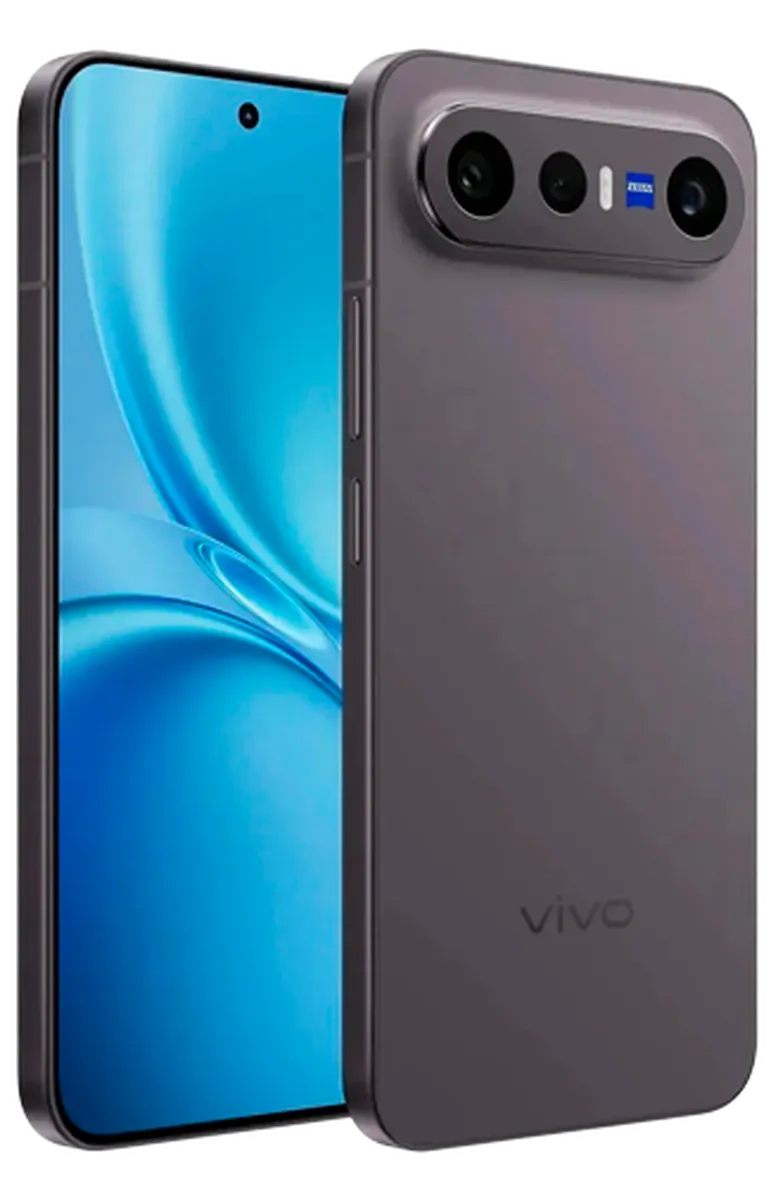
With a 6.36-inch display and a weight starting at 192 g in black, the Vivo X500 Pro is one of the most pocketable phones in this line-up. Its BOE Q11 panel uses an LTPO 8T design that adjusts its refresh rate from 1 Hz to 144 Hz in real time, depending on what the interface or game needs. On the back, it asserts its photographic identity with an imposing circular module, ringed by a finely knurled metal band like a lens ring.
Xiaomi 18 Pro: two screens and a privacy display
Xiaomi offers a footprint similar to Vivo’s (6.4 inches and 151.8 mm tall), but stands out with two major innovations:
- A hardware privacy display: built into the panel itself, it limits visibility from the sides without degrading the image in front of you, ideal on public transport.
- A 2.7-inch rear screen: running at 120 Hz and reaching 4,000 nits, it handles more than 100 widgets and acts as a very precise viewfinder for taking selfies with the main camera.
On durability, Oppo and Vivo take the lead with dual or triple IP68 and IP69 ratings (resistance to prolonged immersion and to high-pressure hot water jets), with Oppo also certified IP66.
Performance and thermals: 2 nm against a mature 3 nm
This generation brings the first mass-produced chips on TSMC’s 2 nm process, a genuine generational break.
| Component | Oppo Find X10 | Vivo X500 Pro | Xiaomi 18 Pro |
|---|---|---|---|
| Chip (SoC) | MediaTek Dimensity 9600M | MediaTek Dimensity 9600 Pro | Qualcomm Snapdragon 8 Elite Gen 6 |
| Process | TSMC 3 nm (N3P) | TSMC 2 nm | TSMC 2 nm |
| CPU layout | 1× C1-Ultra 4.21 GHz + 3× 3.50 + 4× 2.70 | 2× C2-Ultra 4.55 GHz + 6× C2 Pro | 2× 5.00 GHz + 6 performance cores |
| GPU & NPU | Mali-G1 Ultra MC12 / APU 990 | New Arm GPU architecture / V3+ | New-generation Adreno |
| Memory & speed | LPDDR5X (10,667 Mbps) + UFS 4.1 | LPDDR5X Ultra (LPDDR6 / UFS 5 ready) | LPDDR5X + UFS 4.1 |
Oppo: the choice of thermal maturity
Oppo has reserved the 2 nm chip for its Find X10 Pro Max, which we pit against the other Pro Max models in our clash of the giants. The standard Find X10 uses the Dimensity 9600M. Behind this new commercial name, the spec sheet confirms the proven architecture of the Dimensity 9500 (3 nm N3P process, 4.21 GHz prime core and Mali-G1 Ultra GPU). Its strength lies in thermal stability and software tuning, thanks to the Dimensity Scheduling Engine 3.0. With 3,380 points in single-core and 9,792 points in multi-core on Geekbench, it has headroom for any app.
Vivo and Xiaomi: the 2 nm generational leap
The Vivo X500 Pro and the Xiaomi 18 Pro both make the jump to 2 nm:
- The Vivo X500 Pro’s Dimensity 9600 Pro features two C2-Ultra cores at 4.55 GHz and 34.5 MB of total cache. MediaTek claims 14% more raw performance and 23% lower power consumption than 3 nm, with the prime cores using up to 37% less.
- The Xiaomi 18 Pro’s Snapdragon 8 Elite Gen 6 pushes the limits with cores peaking at 5.0 GHz. Xiaomi claims a GPU that is 35% faster and 40% more efficient, holding a steady 60 fps in the most demanding 3D games without the surface exceeding 42.3 °C.
Photography and video: Hasselblad, Zeiss and Leica go head to head
Three prestigious camera partnerships face off in this high-end segment.
| Camera | Oppo Find X10 (Hasselblad) | Vivo X500 Pro (Zeiss) | Xiaomi 18 Pro (Leica) |
|---|---|---|---|
| Main camera | 200 MP (1/1.4″, f/1.6, 23 mm, CIPA 6) | 50 MP BluePrint 900 LOFIC (1/1.28″, f/1.57, 17 EV) | 200 MP Light Hunter 960 (1/1.28″, f/1.67, 23 mm) |
| Telephoto | 200 MP HP5 (1/1.56″, f/2.6, 65 mm, 2.8× optical) | 64 MP Zeiss APO periscope (85 mm, 3.5× optical) | 200 MP periscope (1/1.56″, f/2.4, 75 mm, 3.2×) |
| Ultra-wide | 50 MP (f/2.0, 15 mm, 120°, AF) | 50 MP (f/2.0) | 50 MP (f/2.4, 17 mm, 5 cm macro) |
| Front camera | 50 MP with autofocus (f/2.0) | 50 MP with autofocus (f/2.0) | 50 MP (4K 60 fps video) |
| Video | 8K 30 fps, 4K 120 fps Dolby Vision | 4K 120 10-bit Log, 4K 240 fps slow motion, USB-C SSD | 8K 30 fps, 4K 120 fps Dolby Vision |
Oppo: the colour consistency of a dual 200 MP setup
The Find X10 pairs a 200 MP main camera with a 200 MP telephoto (2.8x, 65 mm). Oppo’s goal is not just detail but colour consistency: avoiding the visible shift in tones when the phone switches from the main camera to the telephoto, especially in video. CIPA 7 optical stabilisation on the telephoto effectively compensates for shake at high zoom.
Vivo X500 Pro: the LOFIC dynamic range benchmark and cinematic video
Vivo has chosen a 50 MP, 1/1.28-inch main sensor with lateral overflow capacitors (LOFIC), handling up to 17 EV of dynamic range so that highlights never burn out against the light. Its 64 MP Zeiss APO periscope telephoto (85 mm) uses an original pixel layout (GG 1×1 for sharpness and RB 2×2 for ultra-fast autofocus). On video, the X500 Pro behaves like a cinema camera: 10-bit Log at 120 fps, native 4K 240 fps slow motion and direct recording to an external SSD over USB-C.
Xiaomi 18 Pro: Leica precision and telephoto macro
Xiaomi lines up two 200 MP sensors, including a large 1/1.56-inch periscope telephoto (f/2.4, 3.2x zoom at 75 mm) that captures 280% more light than the 17 Pro’s. It focuses from as close as 12 cm for remarkably sharp macro shots. The rear screen lets you use this exceptional camera for self-portraits of unmatched quality.
Battery and endurance: PhoneDroid’s take on global versions
Battery life is where international versions differ most from the Chinese spec sheets. Here is where things stand, version by version:
| Power & charging | Oppo Find X10 | Vivo X500 Pro | Xiaomi 18 Pro |
|---|---|---|---|
| Capacity in China | 8,000 mAh typical (7,770 rated) | 6,510 mAh typical (6,305 rated) | 7,000 mAh typical (6,860 rated) |
| Global capacity | 8,000 mAh (same capacity whatever the version) | 6,510 mAh (6,305 rated, unchanged in Europe) | 6,000 mAh according to HyperOS code (unofficial) |
| Wired charging | 80 W (55 W PPS compatible) | 90 W | 100 W |
| Wireless charging | 50 W | 40 W | 50 W (27 W reverse charging) |
PhoneDroid’s take, model by model
- Oppo Find X10: the 8,000 mAh Glacier battery, which Oppo says will last five years of daily use, makes two days of use a realistic prospect. Oppo keeps the same capacity whatever the version: these 8,000 mAh will be there on the global version, expected at the end of October.
- Vivo X500 Pro: despite its very compact body, it packs 6,510 mAh. Its official listing in the EU energy label register (EPREL) confirms that even the European version keeps the 6,305 mAh rated capacity. No battery cut, neither in Europe nor on the global version!
- Xiaomi 18 Pro: beware of disappointment. While the Chinese model packs 7,000 mAh thanks to an anode with 32% silicon, the HyperOS system code for the global version (2609BPN61G) points to a battery cut to 6,000 mAh, 14% less capacity. Xiaomi has not confirmed it.
Price, availability and PhoneDroid’s verdict
| Commercial criterion | Oppo Find X10 | Vivo X500 Pro | Xiaomi 18 Pro |
|---|---|---|---|
| Starting price in China | CNY 5,499 (roughly €715) | CNY 6,499 (roughly €845) | CNY 5,999 (roughly €780) |
| On sale in China | 24 September 2026 | 29 September 2026 | 23 September 2026 |
| Outside China | Global version at the end of October | Official in Europe: 27 Oct. (on sale 5 Nov.) | Worldwide release by the end of 2026 |
PhoneDroid’s verdict: which model should you choose?
- Oppo Find X10: the endurance pick. If you want a large, near bezel-free display (0.99 mm) and two full days of battery life from 8,000 mAh without compromising on photography, it is the safest choice.
- Vivo X500 Pro: the ultimate pocket camera. For those who want a compact phone (6.36″), a highly efficient 2 nm chip, flawless LOFIC dynamic range and a 6,510 mAh battery that Vivo does not cut outside China.
- Xiaomi 18 Pro: a concentrate of innovation. For its hardware privacy display, a lifesaver day to day, its handy rear screen and the raw power of its Snapdragon 8 Elite Gen 6 running at 5.0 GHz.
We will follow the release of these three models outside China. In the meantime, browse our Oppo, Vivo and Xiaomi smartphones in stock.