
Buying a smartphone increasingly feels like reading an applied physics catalogue or an astrophysics textbook. Caught between obscure acronyms (LTPO, VRR, OIS, eSIM), esoteric units of measurement (nits, mAh, W/kg), and dizzying marketing promises (200 megapixels, 3 nanometres), the modern buyer is often overwhelmed by an avalanche of figures without knowing what difference they make to everyday life.
The problem? Manufacturers exploit this technical overload. A larger number gives the illusion of superior quality, whereas the actual user experience hinges on subtle balances between optics, semiconductor physics, and software algorithms.
To cut through the commercial jargon and understand once and for all how the machine in the palm of your hand actually works, we have chosen a textbook example: the Oppo Find X9 Ultra. With its extreme specifications, this ultra-flagship handset single-handedly encapsulates the entirety of contemporary smartphone technology.
Here is a methodical, component-by-component and line-by-line dissection of this silicon colossus.
| Characteristic | Specification |
|---|---|
| Model | CPH2841 |
| Memory and storage | 12 GB + 512 GB, or 16 GB + 1 TB |
| Screen size | 6.82 inches |
| Screen type | AMOLED – 144 Hz – 3600 nits – HDR10+ – Dolby Vision – LTPO – VRR |
| Screen resolution | 3120 x 1440 |
| OS | Android 16 (ColorOS) |
| Software updates | 5 years |
| Processor | Qualcomm Snapdragon 8 Elite Gen 5 – 4.61 GHz – Octa Core – 3 nm |
| Graphics chip | Adreno 840 |
| Camera | Quad camera: 200 MP Sony LYT-901 F1.5 sensor – 200 MP Omnivision OV52A F2.2 telephoto sensor – 50 MP Samsung S5KJN1 F3.4 telephoto sensor – 50 MP Sony LYT-600 F2.0 wide-angle sensor |
| Front camera | 50 MP F2.4 sensor |
| eSIM | Yes |
| Dual SIM | Yes |
| Frequencies | Compatible with all 2G/3G/4G/5G bands |
| Wi-Fi | Yes, Wi-Fi 7 |
| Bluetooth | Version 6.0 |
| NFC | Yes |
| Fingerprint sensor | Yes |
| Connectivity | GPS/A-GPS, Wi-Fi, NFC, Bluetooth |
| Battery | 7050 mAh with 100W SuperVOOC fast charging – Compatible with 50W AirVOOC wireless charging |
| Dimensions | 163.2 × 77 × 8.7 mm |
| Weight | 235 g |
| In the box | 1x smartphone, 1x USB-C cable, 1x charger, 1x protective case, 1x user manual |
| Head SAR | 0.985 W/kg |
| Torso SAR | 1.279 W/kg |
| Limb SAR | 2.971 W/kg |
| IP certification | IP68/69 |
| Google services | All supported |
| Energy class | A |
| Repairability index | 3.62/5 |
1. Chassis and ergonomics: weight, dimensions, and durability
Model: CPH2841
Behind this obscure reference lies the manufacturer’s internal industrial designation. These codes are used by regulatory and certification bodies (such as the ANFR in France or the FCC in the United States) to validate compliance with radio-frequency and health standards. They also distinguish regional variants of the same handset (specific network bands, single or dual physical SIM).
Dimensions (163.2 × 77 × 8.7 mm) and Weight (235 g)
- Geometry: A height exceeding 160 mm and a width close to 77 mm immediately place this smartphone in the large-format “phablet” category. The 8.7 mm thickness is remarkable given the size of the onboard battery, but this figure typically excludes the substantial protrusion of the rear camera module (camera bump), which generally adds a further 3 to 4 mm at that point.
- Weight (235 g): This is a heavy device. Beyond 210–220 grams, muscular fatigue sets in during extended single-handed use. This mass is due to the combination of an aluminium chassis, a faux-leather back, a toughened glass screen, glass optical elements with powerful magnets for image stabilisation, and, above all, a high-capacity battery.
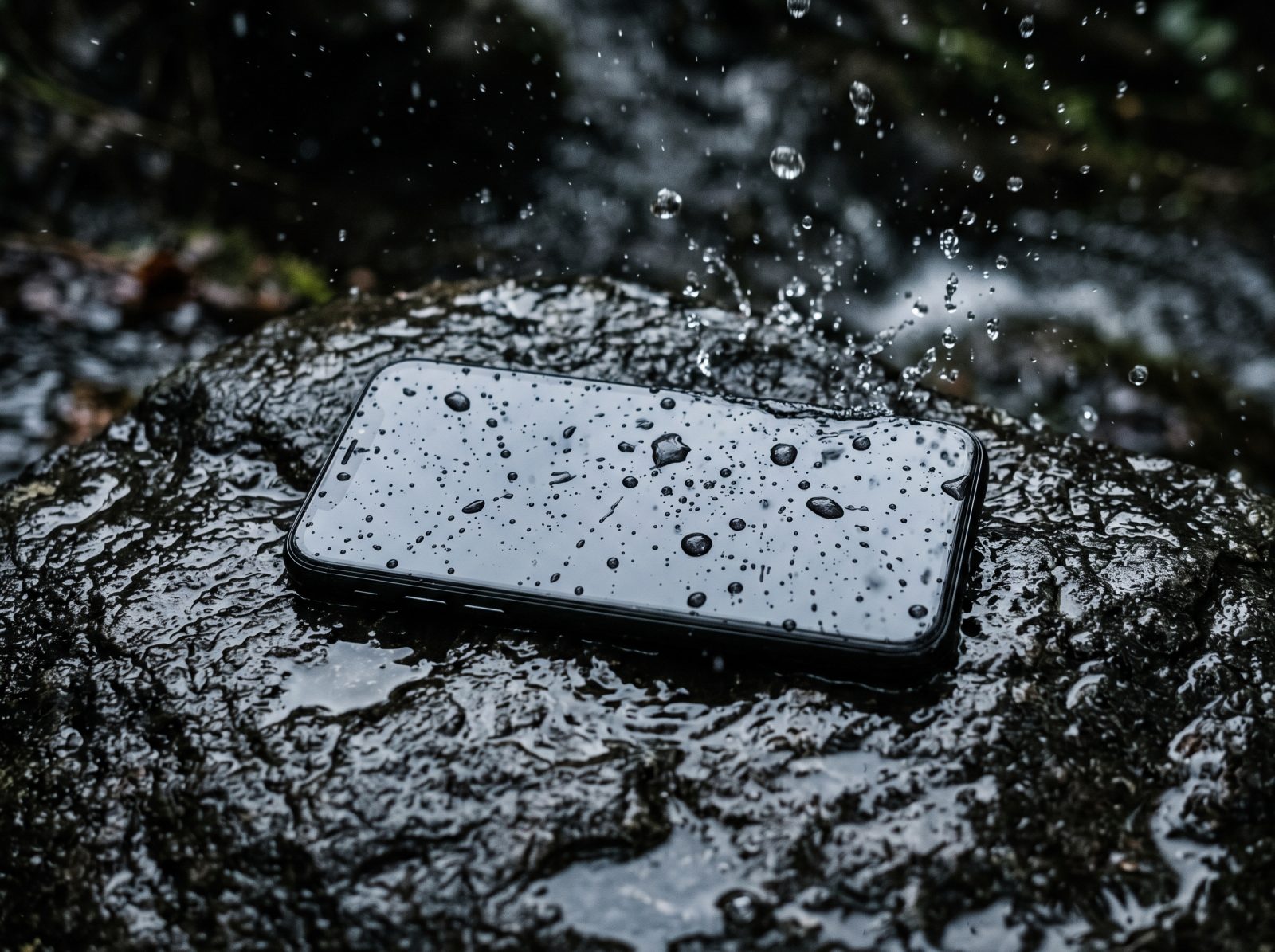
IP Certification: IP68 / IP69
The Ingress Protection code (IP) is an international standard defined by the International Electrotechnical Commission (IEC 60529). It classifies the level of protection against the intrusion of solid objects and liquids using two digits:
- First digit (6) – Solids: Dust-tight. The number 6 is the highest rating: not a single grain of dust, sand, or dirt can penetrate the crevices of the casing.
- Second digit (8 & 9) – Liquids:
- 8 certifies continuous immersion in fresh water beyond 1 metre (typically 1.5 m to 2 m for 30 minutes).
- 9 (or 9K) is rarer: it guarantees resistance to high-pressure, high-temperature water jets (such as industrial steam cleaning).
Beware the pitfall: Water resistance is never guaranteed for seawater (whose salt corrodes rubber seals and connectors) nor for chlorinated swimming pool water. Furthermore, manufacturers almost never honour their commercial warranty in the event of liquid damage, as mechanical wear and minor impacts degrade water tightness over time.
2. The display: dissecting the visual window
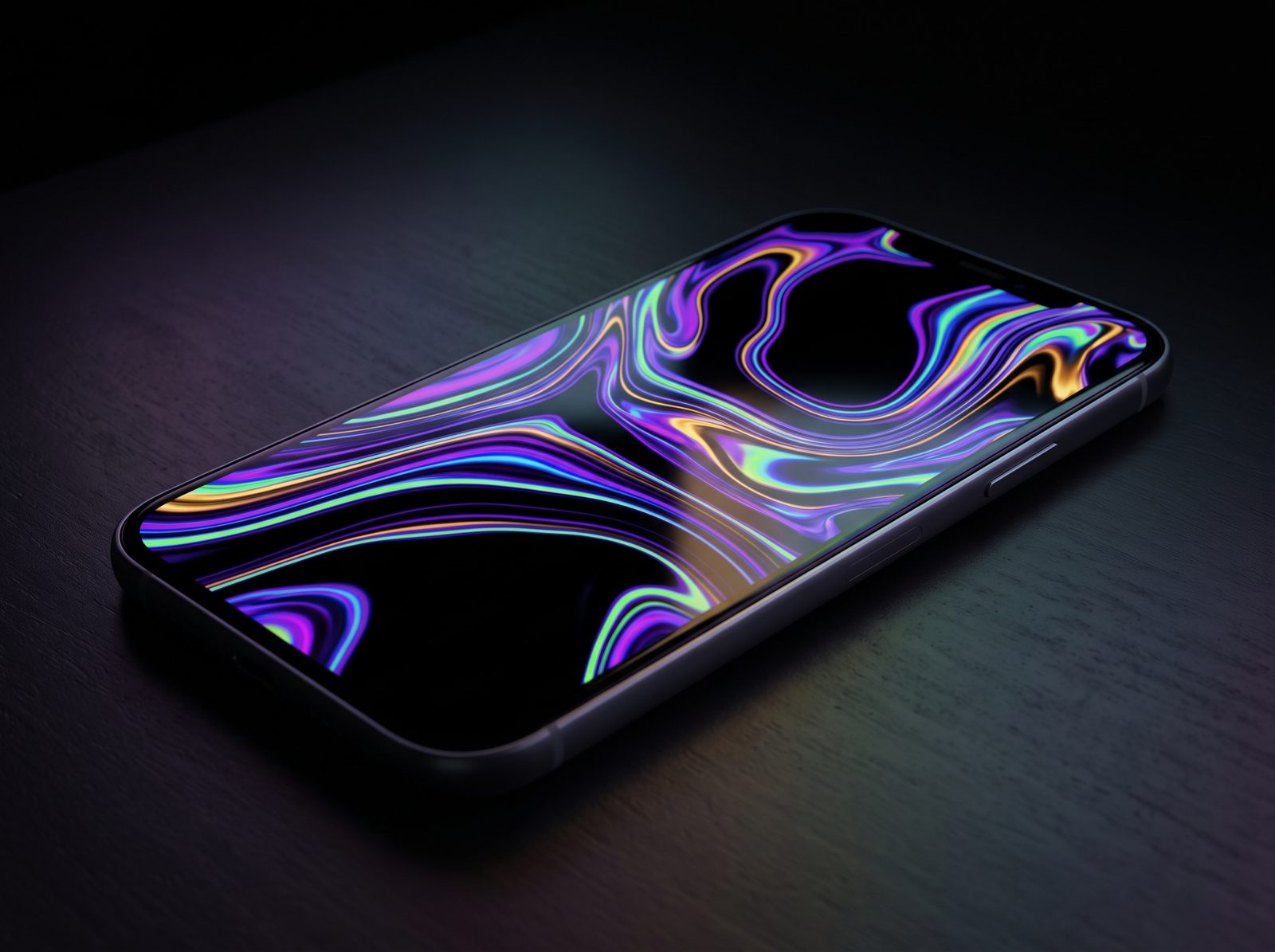
The screen is the most heavily used component of a smartphone. It is also the device’s primary power consumer.
Size (6.82 inches) and Resolution (3120 x 1440)
- Size in inches: This corresponds to the diagonal length of the display panel (one inch equals 2.54 centimetres). A 6.82-inch screen therefore measures 17.32 cm diagonally.
- Resolution (3120 x 1440 pixels): This is the total number of elementary picture elements displayed (height multiplied by width), designated here as QHD+ (Quad High Definition). This represents more than 4.49 million independent luminous points.
- Pixel density (ppi): Dividing the number of pixels by the physical screen area yields the density in pixels per inch. Here, it reaches roughly 500 ppi. By way of comparison, a human eye with standard 20/20 vision is incapable of distinguishing individual pixels beyond 350 to 400 ppi at a normal reading distance (30 cm). Such sharpness ensures smooth typefaces and a complete absence of aliasing, even though it places an increased computational burden on the graphics processor.
AMOLED Technology
Unlike traditional LCD panels, which require global backlighting via white LEDs positioned beneath or along the edges of the display, AMOLED (Active-Matrix Organic Light-Emitting Diode) technology relies on organic diodes that emit their own light independently.
- True black: To display black, the sub-pixel simply switches off completely. It emits no photons whatsoever. The contrast ratio thus becomes theoretically infinite.
- Energy savings: Enabling dark mode (black backgrounds across applications and the system) switches off a significant portion of the screen’s pixels, substantially reducing the strain on the battery.
Refresh Rate (144 Hz) and VRR
The refresh rate, expressed in Hertz (Hz), indicates how many times per second the displayed image is redrawn.
- A standard screen operates at 60 Hz (60 frames per second).
- At 144 Hz, the screen displays 144 frames per second (a refresh every 6.9 milliseconds).
- Benefit: System animations, social media feeds, and compatible video games enjoy spectacular visual fluidity and heightened touch responsiveness.
- VRR (Variable Refresh Rate): The refresh rate adapts in real time to the content being displayed to eliminate stuttering and screen tearing.
LTPO Technology: The Energy Regulator
Running a screen at a continuous 144 Hz in QHD+ resolution would drain the battery within a few hours. This is where LTPO (Low-Temperature Polycrystalline Oxide) technology steps in.
On a conventional OLED panel using LTPS thin-film transistors (amorphous silicon being the preserve of LCD screens), the refresh rate is either fixed or shifts across rigid steps (60 Hz, 90 Hz, 120 Hz). By contrast, this phone’s LTPO display can modulate its refresh rate from 1 to 144 Hz in real time, in an entirely seamless manner:
- Reading an e-book or looking at a static photograph? The screen drops automatically to 1 Hz (1 refresh per second).
- Watching a film shot at standard cinema frame rates? It switches to 24 Hz.
- Scrolling through a web page? It ramps up instantaneously to 144 Hz beneath your finger.
This invisible gymnastics dramatically curbs the panel’s power consumption.
Peak Brightness (3600 nits)
The nit (or candela per square metre, denoted cd/m²) is the international unit of luminance, measuring the intensity of light emitted by a surface in a given direction.
- Typical indoor lighting requires between 200 and 400 nits.
- Under harsh summer sunlight, a screen becomes difficult to read below 800 to 1,000 nits.
- The reality of 3,600 nits: This record figure does not mean that the entire screen blares out 3,600 nits continuously (which would burn your retinas and destroy the panel through overheating). Rather, it refers to local peak brightness, achieved for fractions of a second across a tiny window of the display when playing back an intensely bright HDR scene (the glare of an explosion, sunlight glinting off water). Full-screen maximum brightness in daylight (High Brightness Mode or HBM) typically hovers between 1,400 and 1,600 nits.
HDR10+ and Dolby Vision
These two standards designate High Dynamic Range (HDR) video transmission protocols.
Unlike standard dynamic range (SDR) video, which is restricted to 8 bits (16.7 million colour shades), HDR leverages a bit depth of 10 or 12 bits (over one billion shades). The hallmark of Dolby Vision and HDR10+ is their use of dynamic metadata: brightness, contrast, and colour grading are adjusted shot by shot, or even frame by frame, ensuring detailed shadows without blown-out highlights.
3. Processor and memory: the engine under the bonnet
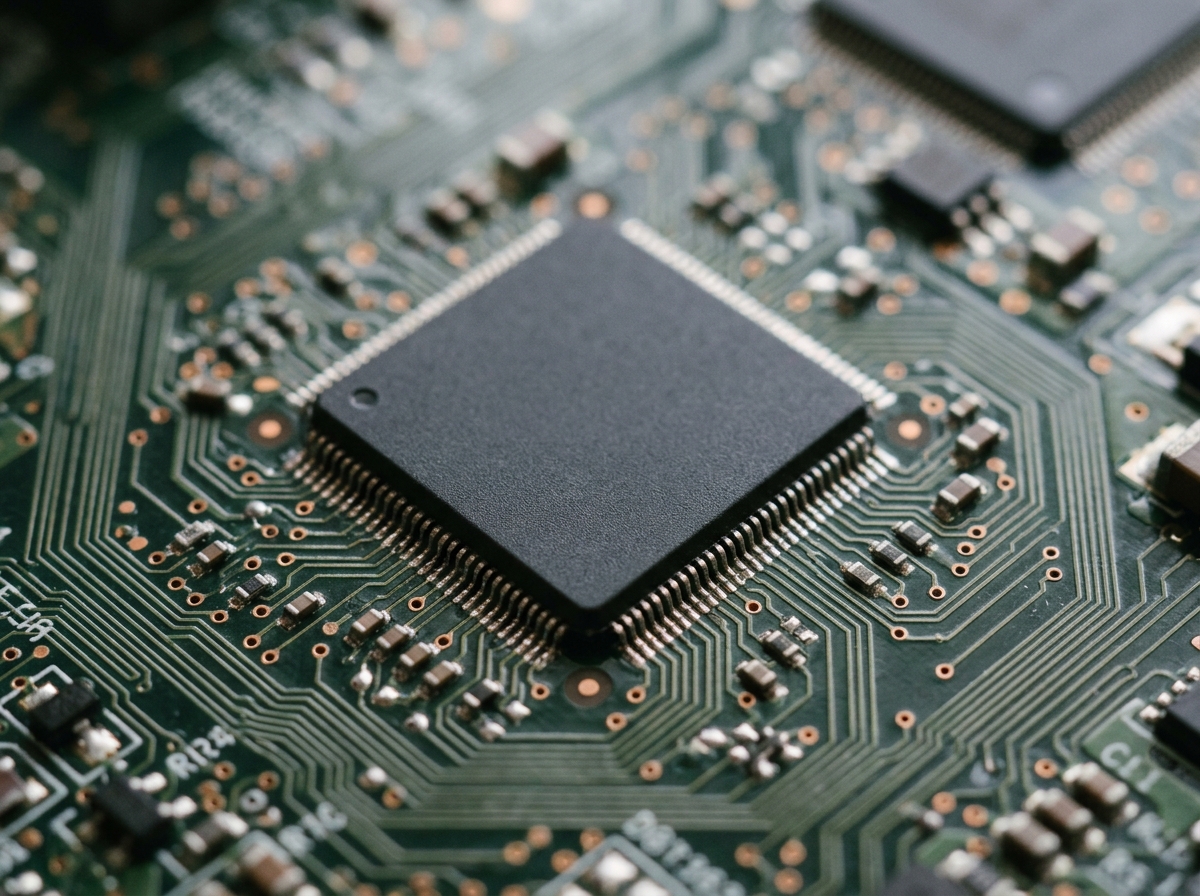
People often speak of a smartphone’s “processor”, but this is a misnomer. A smartphone does not merely house a standalone CPU like a desktop computer, but rather a SoC (System on Chip), which consolidates onto a single integrated circuit the central processing unit, graphics chip, neural processing unit (NPU), image signal processor (ISP), and all communication modems.
The CPU: Octa-Core and Clock Speed (4.61 GHz)
The CPU (Central Processing Unit) handles the sequential computing tasks of the operating system and applications.
- Octa-Core (8 cores): The processor is divided into eight discrete physical computing units. Far from identical, these cores adopt a heterogeneous architecture (derived from the ARM big.LITTLE concept):
- 2 ultra-fast “Prime” cores (up to 4.61 GHz): Dedicated to critical, bursty tasks (lightning-fast app launches, heavy rendering, peak workloads).
- 6 “Performance” cores: Dedicated to sustained workloads (3D gaming, multi-tab browsing) with an optimal thermal balance.
- Clock speed (4.61 GHz): Expressed in gigahertz, it indicates that the core can execute up to 4.61 billion clock cycles per second. The higher the frequency, the faster the computation; however, heat generation escalates exponentially, as dissipated power is proportional to the clock frequency and the square of the supply voltage.
Manufacturing Process Node: 3 nm (nanometres)
A nanometre represents one billionth of a metre (ten to the power of minus nine metres). In microelectronics, this number historically denoted the gate length of transistors. Today, it serves primarily as a commercial designation reflecting component integration density across the silicon wafer.
- Why is this crucial? The smaller the process node (3 nm), the more transistors can be etched onto a microscopic surface area (tens of billions onto a chip the size of a fingernail).
- The dual benefit: Electrons travel shorter distances between logic gates. This yields higher processing speeds and a drastic drop in power consumption, limiting thermal build-up and warding off thermal throttling (forced performance throttling to prevent overheating).
The Graphics Processor: Adreno 840
The GPU (Graphics Processing Unit) specialises in matrix and massively parallel computing. Its role is to render 3D polygons, textures, lighting effects, and particle physics in video games, as well as providing hardware acceleration for the user interface. A GPU of this generation supports hardware-accelerated ray tracing, a rendering technique that physically simulates the behaviour of light rays (mirror reflections, refraction through water, realistic soft shadows) in real time.
System Memory: RAM (12 GB or 16 GB)
Random Access Memory (RAM) is ultra-fast yet volatile memory: its contents vanish as soon as the device is powered off.
- The device packs 12 or 16 GB of LPDDR5X memory.
- It preserves the exact state of background applications so they can be resumed instantaneously without reloading.
- On a modern smartphone, generative AI models running locally on-device (on-device LLMs) alone demand between 3 and 6 GB of dedicated, permanently allocated RAM to operate smoothly. Having 16 GB guarantees that applications will not be prematurely terminated by Android’s memory management (Low Memory Killer).
Storage: ROM (512 GB or 1 TB)
This is the non-volatile memory (persisting after power-off) where your photos, 4K/8K videos, applications, and operating system are stored. At this tier, storage uses the UFS 4 protocol (Universal Flash Storage), capable of sequential read speeds exceeding 4,000 MB/s. This directly dictates app installation speeds and overall system responsiveness when handling large files.
4. The camera system: optical and computational laboratory
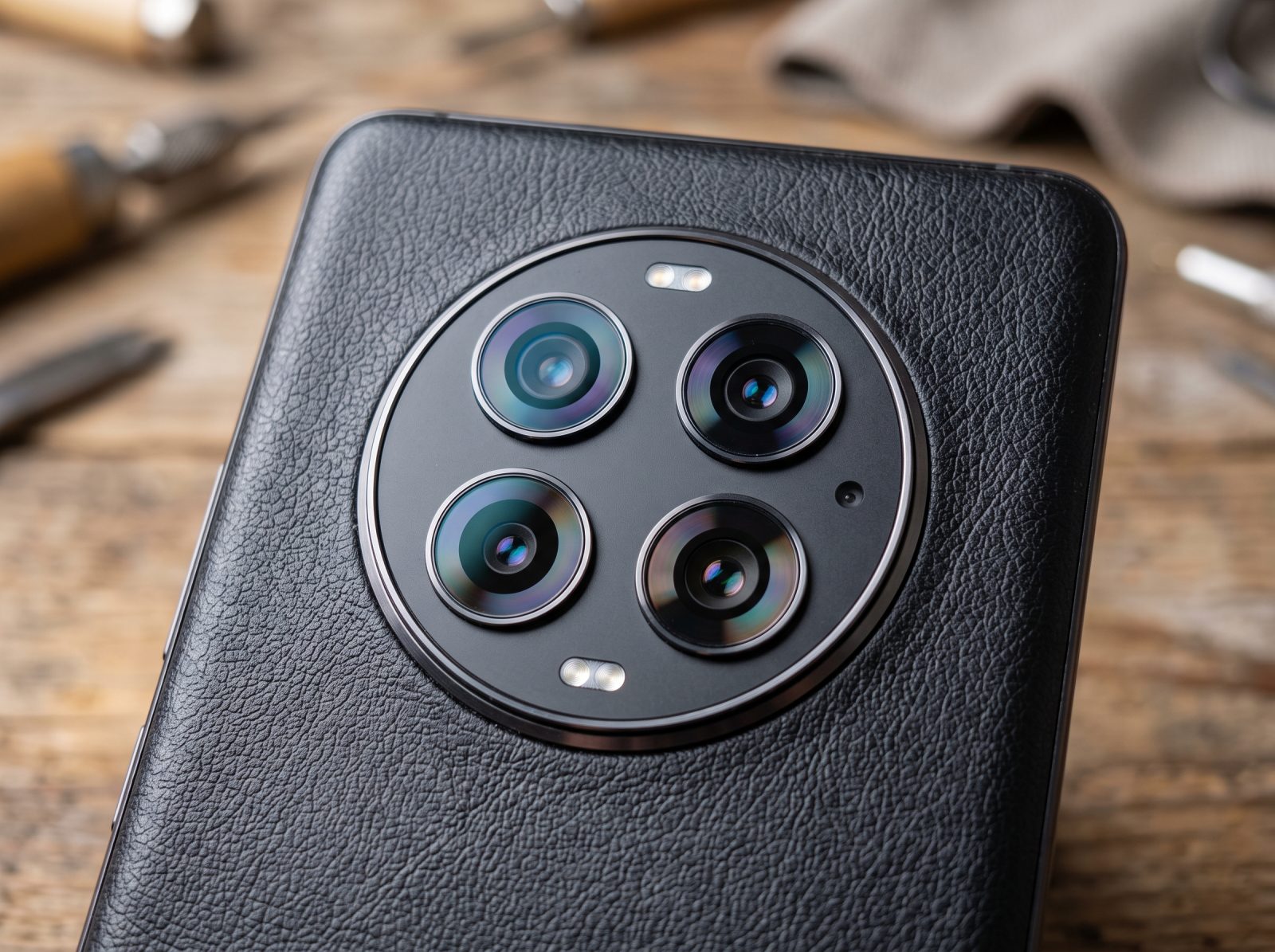
The camera of a contemporary smartphone is no longer a simple dark chamber: it is a miniaturised optomechanical assembly driven by deep-learning algorithms.
The Megapixel Myth (MP)
A megapixel represents one million pixels. A 200 MP sensor generates a raw image containing 200 million picture elements.
Yet having 200 megapixels does not mean your photo will look 16 times better than one taken with a professional 12-megapixel full-frame camera.
Optical physics imposes an inescapable constraint: with the physical sensor constrained to a few square millimetres, cramming 200 million light receptors onto it means shrinking each individual photosite to sub-micron scales (often under 0.6 micrometres). Consequently, each photosite captures very few photons, producing high digital noise in low-light conditions.
To circumvent this issue, modern sensors utilise pixel binning (grouping pixels 4-in-1 or 16-in-1):
- In bright daylight, the sensor exploits its full 200 MP resolution to capture fine detail or enable lossless digital zooming.
- In low light, the processor merges the electrical charges of 16 adjacent photosites to form an ultra-bright virtual “super-pixel”, generating a clean, sharp, grain-free 12.5-megapixel final photo.
Aperture: Decoding the f-number (F1.5, F2.0, F2.2, F3.4)
Aperture, denoted f/N, is a dimensionless optical ratio representing the lens focal length (denoted f) divided by the diameter of the entrance pupil (denoted D): the f-number N equals focal length f divided by diameter D.
Fundamental rule: The smaller the number after the “F”, the wider the aperture opens, and the more light reaches the sensor.
- F1.5 (Main lens): This is a very wide aperture for a smartphone. It lets in a massive amount of light, facilitating night photography without driving up ISO levels (artificial sensitivity that introduces grain) and producing natural optical background blur (bokeh) without relying on software trickery.
- F3.4 (Secondary telephoto lens): The aperture is narrower because the long focal length demands complex optical elements. This sensor requires ample ambient light to achieve its full potential.
The Quad-Camera Setup: Why Four Modules?
A DSLR camera uses a variable optical zoom lens whose glass elements physically shift back and forth. Within the slender profile of a smartphone (8.7 mm), such a mechanism is virtually impossible to accommodate. Engineers circumvent this physical constraint by lining up several distinct cameras, each possessing a fixed focal length:
| Optical module | Sensor | Role and mechanics | Benefit to the user |
|---|---|---|---|
| Wide-Angle (Main) | Sony LYT-901 (200 MP, F1.5) | Physically very large sensor (Sony’s LYTIA range). | The heart of the camera. Maximum shutter speed, exceptional sharpness by day and by night. |
| Short Telephoto | Omnivision OV52A (200 MP, F2.2) | Intermediate 3x optical zoom. | Ideal for portraiture: preserves facial proportions without flattening perspective. |
| Periscope Telephoto | Samsung S5KJN1 (50 MP, F3.4) | Light hits a right-angle prism, travels along a lens tunnel through the chassis, then reaches the sensor. | Long-range zoom providing 10x optical magnification without protruding from the chassis. |
| Ultra-Wide-Angle | Sony LYT-600 (50 MP, F2.0) | Very short focal length offering a wide field of view. | Panoramas, landscapes, architecture, and close-up macro photography thanks to integrated autofocus. |
5. Battery and charging: banishing low-battery anxiety
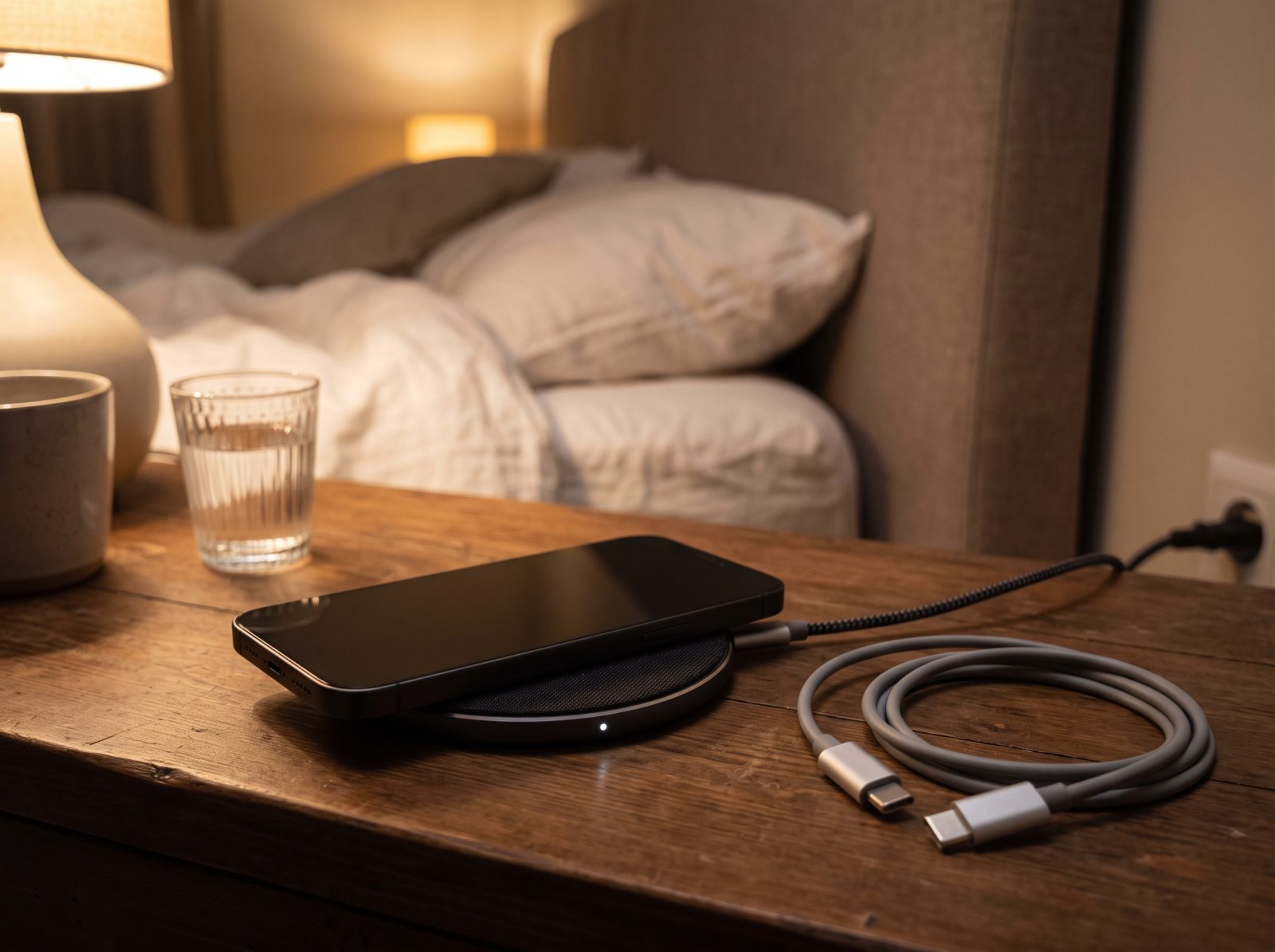
The power subsystem guarantees the smartphone’s day-to-day availability. It is one of the areas that has advanced most rapidly of late, powered by novel battery chemistries.
Capacity: 7050 mAh
The milliampere-hour (mAh) measures the amount of electric charge a battery can deliver over one hour at its nominal voltage (roughly 3.85 V).
- Historically, flagship devices struggled to surpass 5,000 mAh without ballooning into unwieldy bricks thicker than 10 mm.
- A rating of 7050 mAh inside an 8.7 mm chassis demonstrates the adoption of silicon-carbon (Si-C) anodes. By replacing the anode’s traditional graphite with silicon enriched with carbon nanotubes, volumetric energy density rises by 20 to 30%.
- Real-world battery life: Even with a 144 Hz display and a powerhouse processor, such capacity easily delivers two full days of standard use away from the mains.
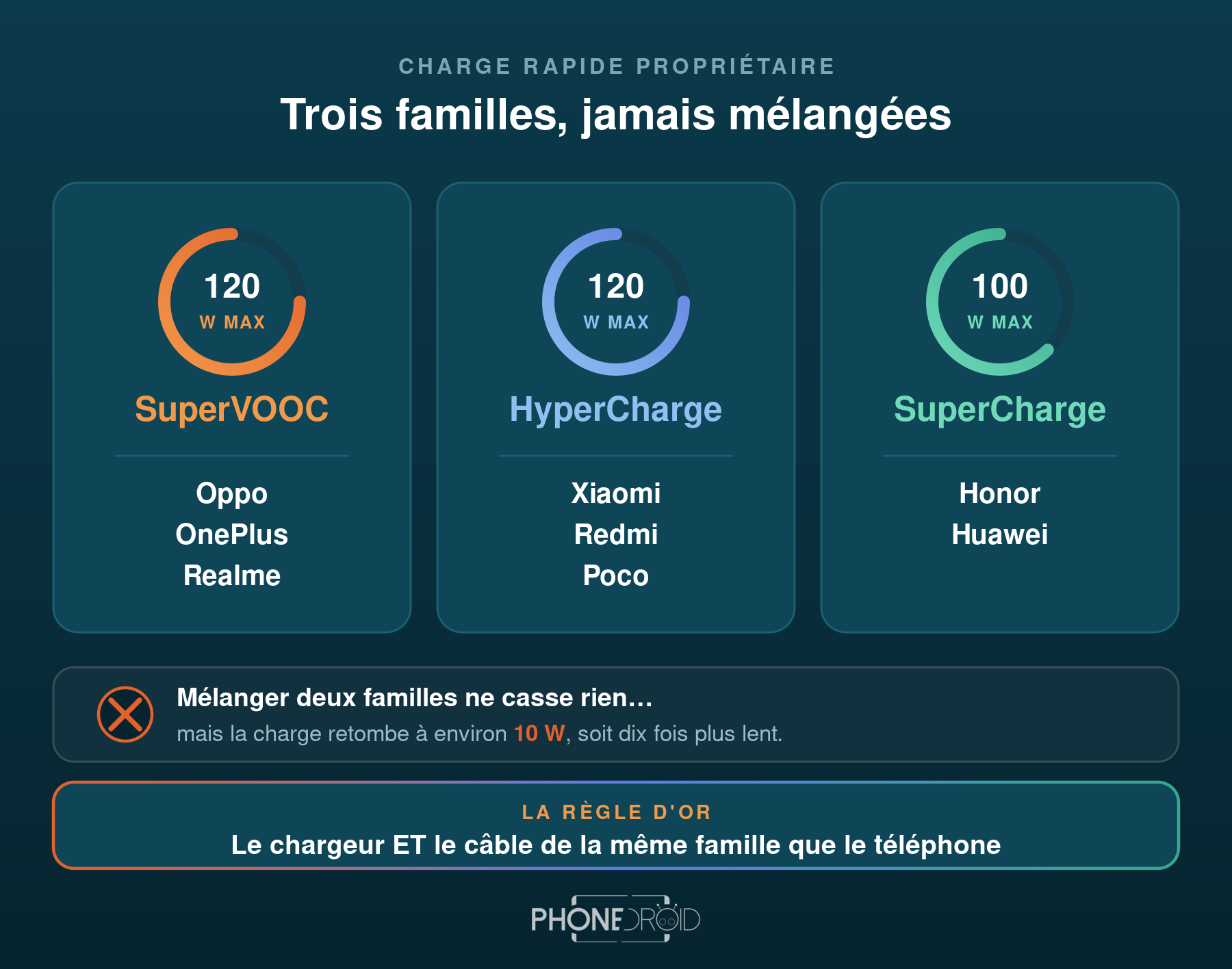
Fast Wired Charging (100W SuperVOOC)
Electrical power, expressed in Watts (W), is the product of voltage and current: power in watts equals voltage in volts multiplied by current in amperes.
Delivering 100W of power into a single battery cell without precautions would cause internal temperatures to surge excessively, degrading the chemical layers. To overcome this hurdle at high wattages, manufacturers routinely divide the battery into two discrete cells connected in series. Each cell thus receives a fraction of the total power, curtailing heat build-up and optimising energy transfer. Fast charging protocols continuously monitor temperatures via dedicated thermal sensors, automatically throttling back the wattage in stages as the battery fills up to safeguard its lifespan.
Wireless Charging: 50W AirVOOC
Inductive wireless charging relies on Faraday’s law of electromagnetic induction: a copper transmitter coil within the charging pad creates an oscillating magnetic field that induces an electric current in a receiver coil situated beneath the faux-leather back of the phone.
- At 50W, inductive charging generates more heat than wired charging owing to losses in magnetic coupling (efficiency hovers between 70% and 80%). Miniature fans are therefore frequently built into fast wireless chargers to dissipate this heat.
6. Connectivity and networks: the invisible airwaves
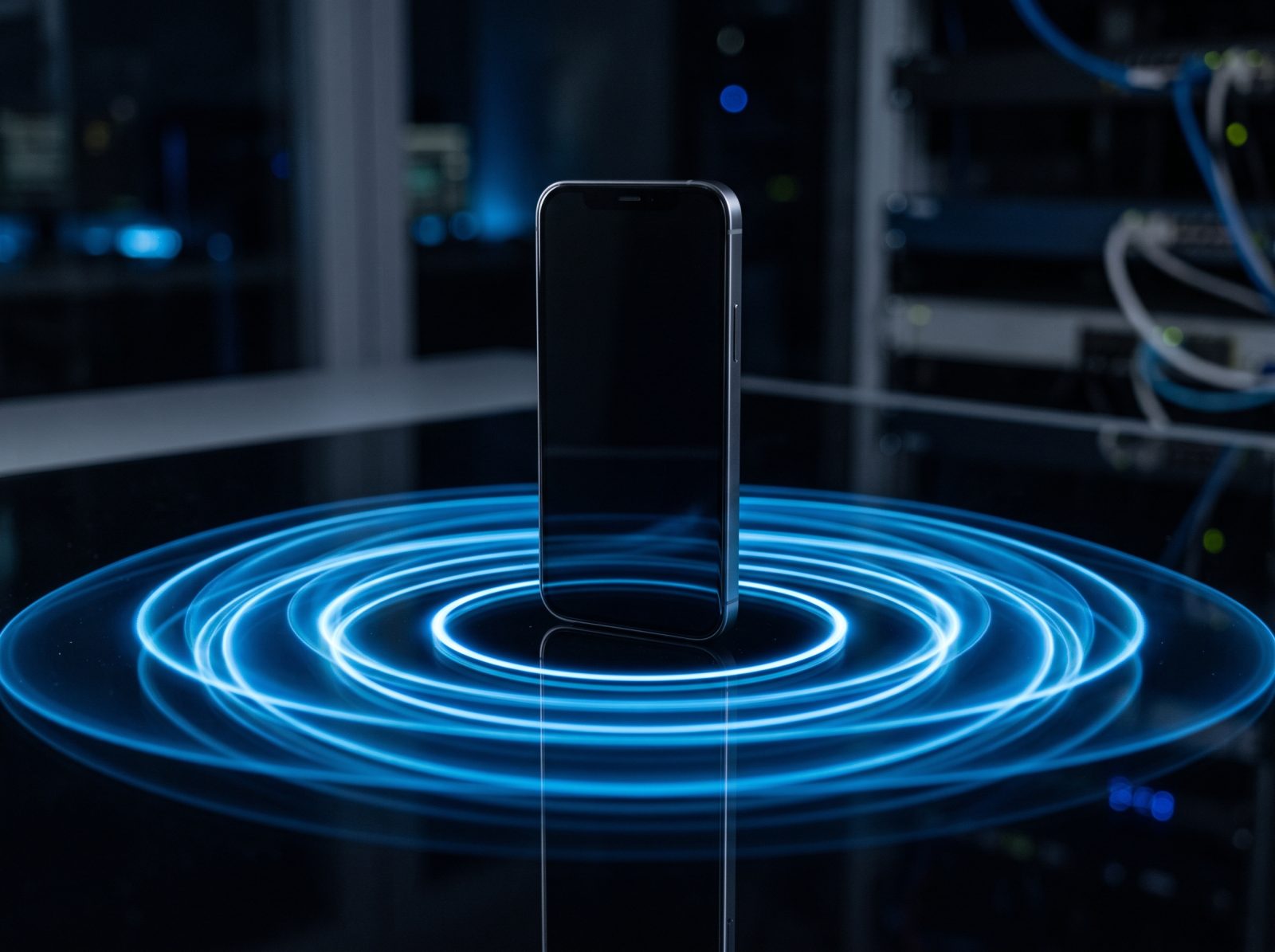
A modern smartphone is a radio-frequency transceiver capable of juggling a dozen distinct protocols concurrently.
From 2G to 5G
- 2G / 3G: Legacy protocols (GSM, UMTS) currently being phased out across Europe and reserved for emergency calls and rural coverage blackspots.
- 4G (LTE-Advanced): Handles the bulk of global mobile data traffic, with real-world download speeds ranging from 50 to 300 Mbps.
- 5G (Sub-6 GHz and mmWave): Leverages new frequency bands (notably the 3.5 GHz band) alongside 4×4 MIMO (multiple antennas) and beamforming (focusing radio waves directly towards the handset). It delivers speeds in excess of one gigabit per second and cuts network latency fivefold, which is crucial for cloud gaming and telemedicine.
Dual SIM and eSIM
- Dual physical SIM: Allows two nano-SIM cards to be inserted into the tray to keep work and personal numbers separate.
- eSIM (embedded SIM): A microscopic electronic chip soldered directly onto the motherboard. It cannot be removed: its operator profile is downloaded via software using a simple QR code. It simplifies switching mobile plans and enables instantaneous activation of local tariffs when travelling abroad.
Wi-Fi 7 (802.11be)
Wi-Fi 7 represents a technological leap over Wi-Fi 6E:
- Ultra-wide 320 MHz channels: Spectral motorways doubled in bandwidth across the 6 GHz band.
- 4096-QAM modulation: Each radio signal transmits 20% more data compared to 1024-QAM.
- MLO (Multi-Link Operation): Previously, a smartphone connected to either the 2.4 GHz, 5 GHz, or 6 GHz band. With MLO, Wi-Fi 7 bonds these bands simultaneously. If one frequency encounters interference (such as an active microwave oven on 2.4 GHz), packets seamlessly reroute through the other channels without the slightest dropout. Theoretical peak speeds break past the 40 Gbps mark.
Bluetooth 6.0
Beyond high-resolution wireless audio streaming via advanced codecs (LDAC, aptX Lossless, LC3), Bluetooth 6.0 introduces Channel Sounding:
- This technology enables centimetre-accurate two-way distance measurement between two Bluetooth devices.
- This turns your smartphone into a virtually tamper-proof digital car key (shielding against relay attacks where a thief intercepts your key fob’s signal from afar) and boosts the reliability of item-tracking networks.
NFC (Near Field Communication)
A very short-range radio link (less than 4 cm) operating at 13.56 MHz. It is governed by strict cryptographic protocols to secure contactless payments (via Google Wallet), public transport ticketing, or instantaneous pairing of accessories.
Geolocation: GPS and A-GPS
- GPS (Global Positioning System): An American network of medium-Earth-orbit satellites broadcasting atomic clock time signals. By measuring the time taken for signals from at least 4 satellites to reach the phone’s chip, the device triangulates its latitude, longitude, and altitude. Although the specification sheet mentions only GPS here, modern handsets almost universally track equivalent constellations, namely Galileo (Europe), GLONASS (Russia), and BeiDou (China).
- A-GPS (Assisted GPS): Cold-starting a GPS receiver can take several minutes to download satellite orbital ephemerides. A-GPS pulls these orbital data via the 4G/5G mobile network in a couple of seconds, allowing for near-instantaneous positioning.
7. Software, security, and longevity
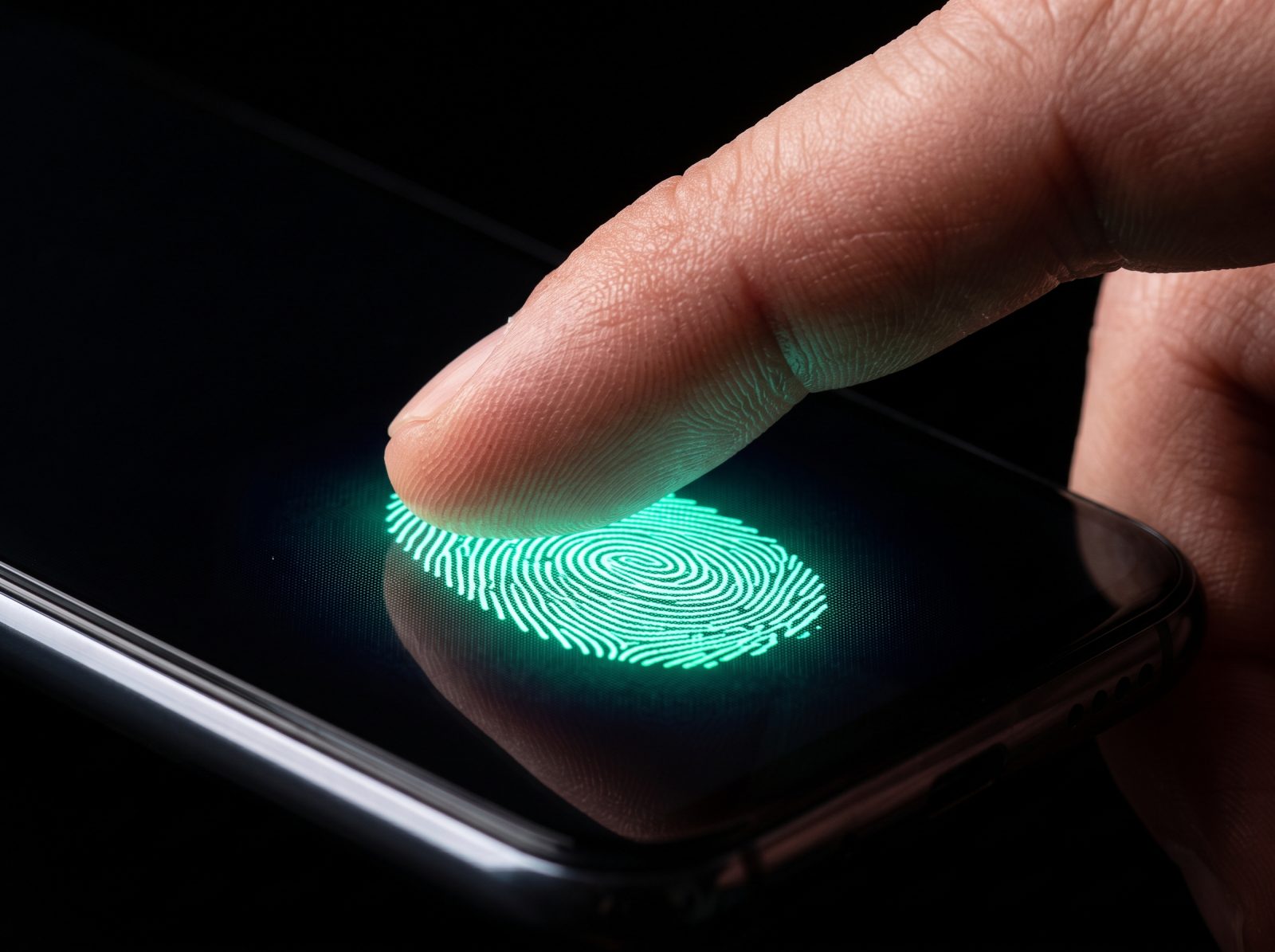
Hardware is useless without the software that drives it and keeps it secure every day.
Operating System: Android 16 and ColorOS
- The Linux kernel & Android: The underlying foundation developed by Google oversees CPU task scheduling, hardware drivers, and the security sandbox (each app executes within an isolated container unable to access another’s data without explicit permission).
- ColorOS: Oppo’s proprietary software “skin” or overlay. It redesigns the user interface, introduces advanced multitasking features (floating windows, smart sidebar), fine-tunes RAM management, and implements aggressive battery-saving algorithms for idling applications.
Update Policy: 5 Years
A fundamental consideration for both the environment and your data security:
- Major OS updates: These introduce new interfaces and features (e.g. moving from Android 16 to Android 17 and then 18).
- Security patches (SPL – Security Patch Level): Rolled out on a monthly or quarterly basis, they patch zero-day vulnerabilities discovered in the kernel or component firmware. Five years of support ensures your device remains safe for banking and business apps without exposure to critical vulnerabilities throughout that lifecycle.
Fingerprint Sensor
While the specification sheet simply confirms the presence of a biometric sensor without detailing its implementation, several technologies are currently deployed across the smartphone market:
- Capacitive sensor: Frequently mounted on the edge of the device (within the power button), it measures shifts in electrical charge when skin ridges make contact. It is a swift, proven, and particularly cost-effective solution.
- In-display optical sensor: A miniature camera situated beneath the OLED panel brightly illuminates your fingertip through the pixels and captures a two-dimensional photograph of your friction ridges. While effective, it can struggle with wet or dirty fingers and can be blinding in a pitch-black room.
- In-display ultrasonic sensor: A piezoelectric transducer emits ultrasonic pulses that bounce off the skin to map the ridges and pores of the fingertip in three dimensions. It functions flawlessly even with wet fingers, produces no blinding glare at night, and is exceedingly difficult to spoof.
Google Services (GMS)
Confirmation that the handset has received Google Mobile Services certification: official access to the Google Play Store, Play Protect security APIs, Google Pay for card payments, and vital backend services for third-party apps (such as Uber and WhatsApp) that depend on Google’s push notification architecture (FCM).
8. Health, environment, and repairability: the overlooked numbers
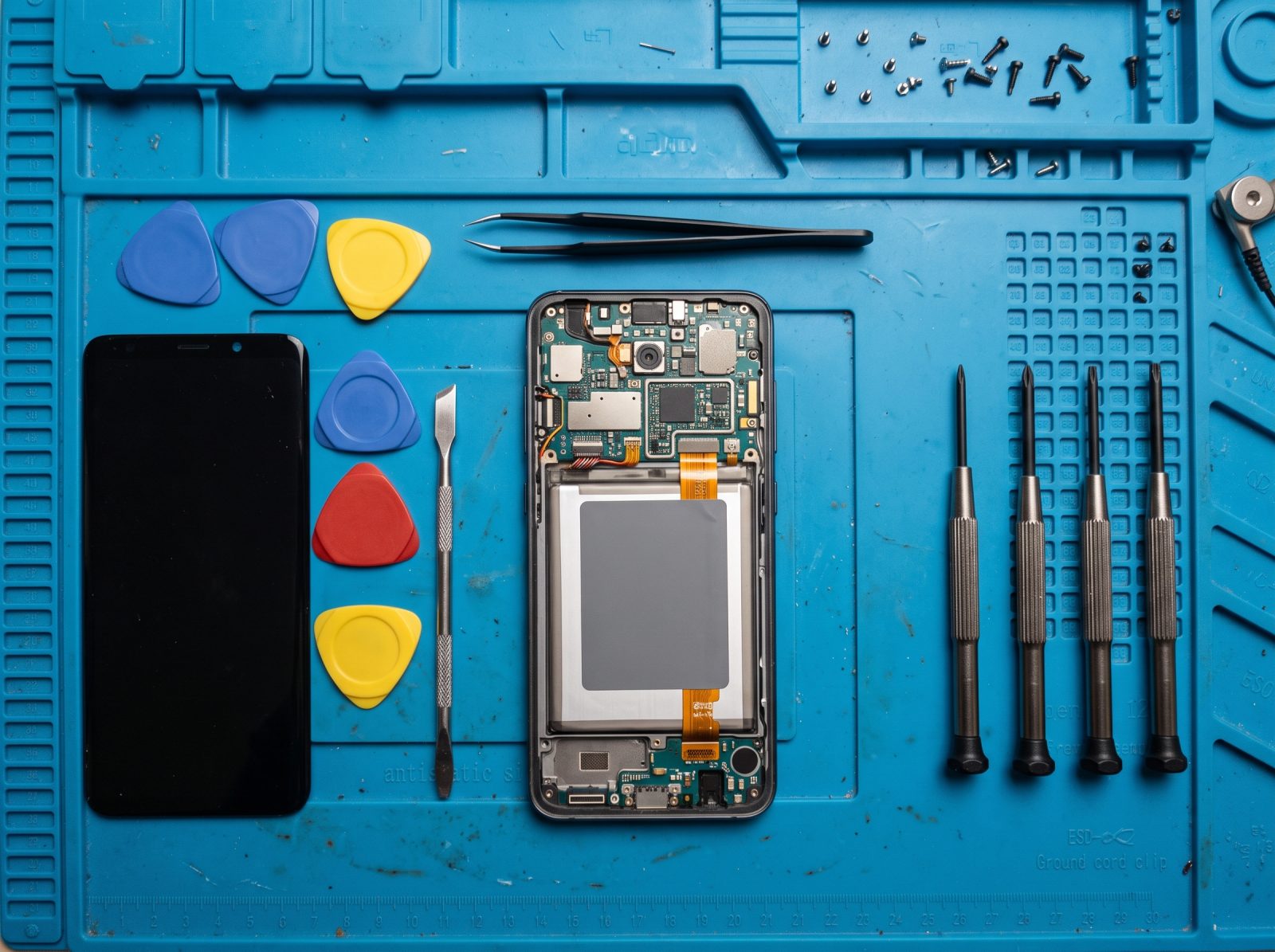
Behind the spec sheet lie health and environmental metrics mandated by regulators.
SAR (Specific Absorption Rate)
The SAR quantifies the rate at which energy carried by radio-frequency electromagnetic fields is absorbed by human tissue when operating the device at maximum power. It is expressed in Watts per kilogram (W/kg).
European regulations enforce three strict limits:
- Head SAR (limit: 2.0 W/kg): Measured with the device held against the ear during a phone call. Here: 0.985 W/kg.
- Torso SAR (limit: 2.0 W/kg): Measured with the handset slipped into a jacket or shirt pocket (5 mm from the torso). Here: 1.279 W/kg.
- Limb SAR (limit: 4.0 W/kg): Measured when holding the device in hand or carrying it in a tight trouser pocket. Here: 2.971 W/kg.
All three figures fall comfortably below legal ceilings.
What SAR does not tell you: The figure quoted on the spec sheet represents the maximum emission level measured under laboratory conditions during worst-case transmission scenarios (antennas transmitting at full power to reach a distant mobile mast). In everyday use within good network coverage, automatic power control throttles emissions down to levels far below this theoretical maximum.
Energy Class: A
Indicated on the spec sheet, this grade originates from the European energy label that has become mandatory for smartphones. This framework rates the energy efficiency of devices on a scale running from A (most efficient) to G.
This standardised label also provides several fundamental pieces of information:
- The device’s battery life per full charge cycle.
- The number of charge cycles the battery can withstand before dropping below 80% of its rated capacity.
- Mechanical drop resistance against repeated falls, rated on an A-to-E scale.
- The IP rating for protection against water and dust ingress.
European legislation further imposes rigorous longevity requirements on manufacturers: at least 5 years of operating system updates following the end of commercial availability, alongside spare parts availability for a minimum duration of 7 years.
Repairability Index: 3.62 / 5
Contrary to a common misconception, this score is not the French repairability index scored out of 10, but the European repairability index scored out of 5. Introduced on 20 June 2025 as part of the EU energy label for smartphones, it is also rendered as a rating from A (easiest to repair) to E.
A score of 3.62/5 for a flagship smartphone rated IP68 and IP69 is commendable: ensuring such ingress protection requires hermetically sealing the aluminium chassis and faux-leather rear with water-resistant gaskets and adhesives, making opening the casing and replacing the battery more delicate without specialised tools, whilst nevertheless preserving satisfactory access to critical components.
In the Box: A Complete Package
Under the pretext of environmental sustainability, almost every premium brand (Apple, Samsung, Google) has eliminated the charging brick and protective case from retail packaging. The inclusion of an original bundled charger in the box of the Oppo Find X9 Ultra represents a welcome, direct saving and ensures you can immediately harness the device’s full charging capabilities without facing protocol incompatibilities.
Summary guide: the universal reference matrix
To ensure you are never misled by marketing claims again, keep this technical survival glossary in mind:
| Component / Term | What marketing promotes | What you should actually look for |
|---|---|---|
| Display (LTPO / Hz) | Fixed 144 Hz for smoothness | The ability to drop down to 1 Hz to preserve battery life. |
| Brightness (Nits) | Record-breaking 3600-nit local peak | Sustained full-screen brightness (HBM > 1200 nits for direct sunlight). |
| Processor (nm / GHz) | Gigahertz figures and raw benchmark scores | Process node (3 nm) and thermal management to prevent throttling. |
| Camera (MP / Zoom) | The sheer extravagance of 200 Megapixels | Physical sensor size and optical aperture (F1.5 > F2.4). |
| Battery (mAh / W) | Ultra-fast charging speed in Watts | Raw capacity in mAh and chemistry used (Silicon-Carbon). |
| Ingress Protection (IP) | “The phone can go underwater” | The IP68/IP69 rating protects against accidents, but warranty excludes liquids. |
| SAR (W/kg) | An alarming figure without context | Compliance with legal thresholds (< 2 W/kg head) and mobile reception quality. |
By learning to read between the lines of these specification sheets, you will no longer be choosing a blind assortment of staggering numbers: you will be choosing an engineering balance tailored to your everyday needs.