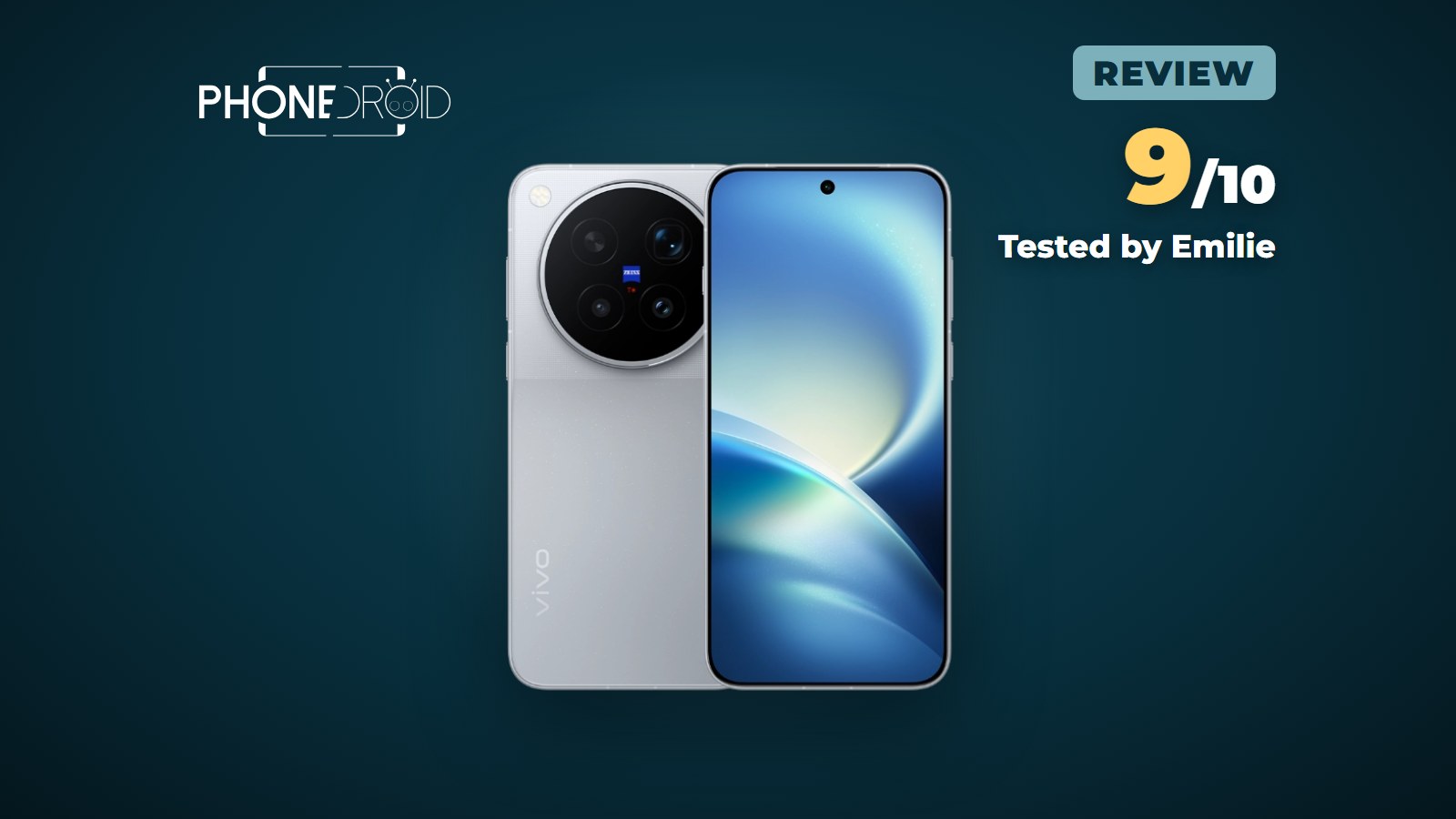
📌 Updated 12 November 2026 The technical profile of the presumed Vivo X500s is becoming clearer. Designed as a versatile (“all-in-one”) large-screen flagship, the device is set to confirm its 6.85-inch flat LTPO panel (2K+, 144Hz) and adopt a 64-megapixel periscope telephoto lens with a mid-sized sensor, an upgrade over the 50MP module (3.5x optical zoom) of the X300s. It would also pack a new high-end MediaTek Dimensity 9-series chip as well as a battery exceeding its predecessor’s 7,100 mAh capacity. Already rumored to feature a 68MP square front sensor (IMX05A), this model remains expected in spring 2027 in China alongside the X500 Ultra, while the main X500 lineup will launch in India on November 26.
While the Vivo X500 made its debut in China this past September, the manufacturer is already preparing the mid-cycle refresh of its flagship lineup. Early technical information regarding an upcoming “S” series model points toward a device firmly focused on a large-screen format. Although the commercial name of this smartphone has not yet been formally confirmed, the brand’s usual release schedule and naming convention naturally point to the Vivo X500s.
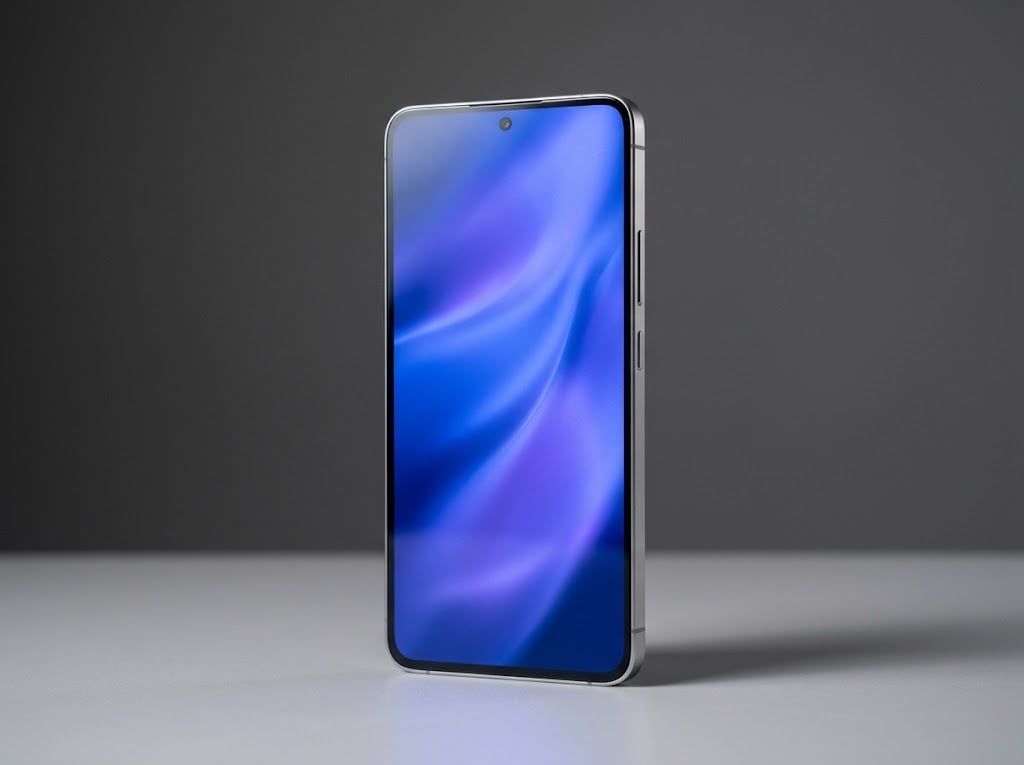
A Giant Display Approaching the Vivo X500 Pro Max
For this mid-cycle iteration, Vivo is currently testing an approach centered on a very large display area. The engineering prototype being tested features a 6.85-inch LTPO panel with a 2K+ resolution and a 144Hz refresh rate. Additionally, this screen is flat on all four sides, confirming the current appeal of flat front panels in the high-end segment.
This 6.85-inch diagonal marks a clear break from the standard Vivo X500. Launched in September in China, the latter features a more compact 6.59-inch LTPS AMOLED display, limited to a 1.5K resolution (2750 × 1260 pixels) despite its smooth 144Hz refresh rate. By adopting a 6.85-inch 2K+ panel, the presumed Vivo X500s would offer a notable advantage in both screen size and display sharpness over the base model, thus replicating the gap that already separated the Vivo X300 from its X300s counterpart.
More interestingly still, these specifications bring this prototype directly in line with the current top of the catalog, the Vivo X500 Pro Max. That ultra-high-end model also relies on a 6.85-inch LTPO AMOLED display delivering 3168 × 1440 pixels (2K) at 144Hz. However, caution is warranted: since these details come from an engineering sample, Vivo may still modify the diagonal, resolution, or panel type before finalizing the retail version.
An Upgrade Over the Vivo X300s and Remaining Technical Unknowns
If these specifications are retained through to release, the Vivo X500s will mark a solid step forward compared to its predecessor. Released last March, the Vivo X300s was the first X-series model to go beyond 120Hz to reach 144Hz, but it settled for a 6.78-inch panel with a 1.5K resolution. It was launched alongside the Vivo X300 Ultra, which was equipped with a 6.83-inch flat AMOLED display in 2K (3168 × 1440 pixels) at 144Hz. The upcoming X500s would therefore surpass the X300s in both size and resolution, while also slightly exceeding the diagonal of the X300 Ultra.
Beyond this promising display—whose uniform bezels, diagonal, and refresh rate match the format rumored for the upcoming Vivo X500 Ultra—several key elements of the configuration are starting to take shape for this model designed as a versatile large-screen flagship. The smartphone is thus expected to rely on a new high-end MediaTek Dimensity 9-series chip, a battery surpassing the 7,100 mAh of the X300s (which was equipped with a Dimensity 9500), and a 64-megapixel periscope telephoto lens with a mid-sized sensor (compared to a 50MP Sony LYTIA 602 module with 3.5x optical zoom on the previous generation), while a 68-megapixel square front camera sensor (IMX05A) is being tested for an upcoming “S” model that could be this Vivo X500s rather than a Vivo S70 or S80. As a reminder, the standard Vivo X500 packs a MediaTek Dimensity 9600M chip paired with a 7,500 mAh battery supporting 90W wired and 40W wireless charging, while the Vivo X500 Pro Max integrates a Dimensity 9600 Pro SoC and an 8,000 mAh battery. It remains to be seen how the X500s will be positioned between these two models.
Rumored Vivo X500s Specifications
| Specification | Vivo X500s (prototype) | Vivo X500 | Vivo X500 Pro Max |
|---|---|---|---|
| Display | 6.85-inch LTPO, flat on all 4 sides | 6.59-inch LTPS AMOLED | 6.85-inch LTPO AMOLED |
| Resolution | 2K+ | 1.5K (2750 × 1260 pixels) | 2K (3168 × 1440 pixels) |
| Refresh Rate | 144 Hz | 144 Hz | 144 Hz |
| Processor | MediaTek Dimensity 9-series (exact model unspecified) | MediaTek Dimensity 9600M | MediaTek Dimensity 9600 Pro |
| Battery | Over 7,100 mAh | 7,500 mAh | 8,000 mAh |
| Charging | Unknown | 90W wired / 40W wireless | 90W wired / 40W wireless |
| Camera | Rear: 64MP periscope telephoto (mid-sized sensor) / Front: 68MP square sensor (IMX05A, to be confirmed) | Triple: 50MP main, 50MP ultra-wide, 64MP telephoto | Triple: 50MP main, 50MP ultra-wide and macro, 200MP telephoto |
Vivo X500s Price and Availability
At this stage, Vivo has not officially communicated on the existence, price, or release date of the Vivo X500s. Nevertheless, the Vivo X500s and Vivo X500 Ultra are now expected together in the first half of 2027—possibly around March or April in China—in line with the joint launch of the Vivo X300s and X300 Ultra last March. However, nothing confirms this timeline for the moment, as the device is still in the testing phase.
Conclusion
With this Vivo X500s in preparation, the brand seems keen to bridge the display gap between its 6.59-inch 1.5K Vivo X500 and its imposing X500 Pro Max. By betting on a large 6.85-inch flat panel with a 2K+ resolution at 144Hz, this mid-cycle variant would mark a clear evolution over the X300s. We will now have to wait to find out the exact model of its MediaTek Dimensity 9-series chip, its precise battery capacity, and the rest of its rear camera sensors.
In the meantime, you can browse our selection of Vivo smartphones in their global versions.
Tutorials
See all Hasselblad, Zeiss, Leica, ARRI: what the camera partnerships on our smartphones are really hiding
- Guide: decode your smartphone’s spec sheet!
- New smartphone: 10 settings to change right away (Xiaomi, Vivo, Oppo, Honor)
- Switching to Android: how to transfer everything without losing a thing
- How to check your battery’s real health
- A 120W charger on an 80W phone: is it risky?