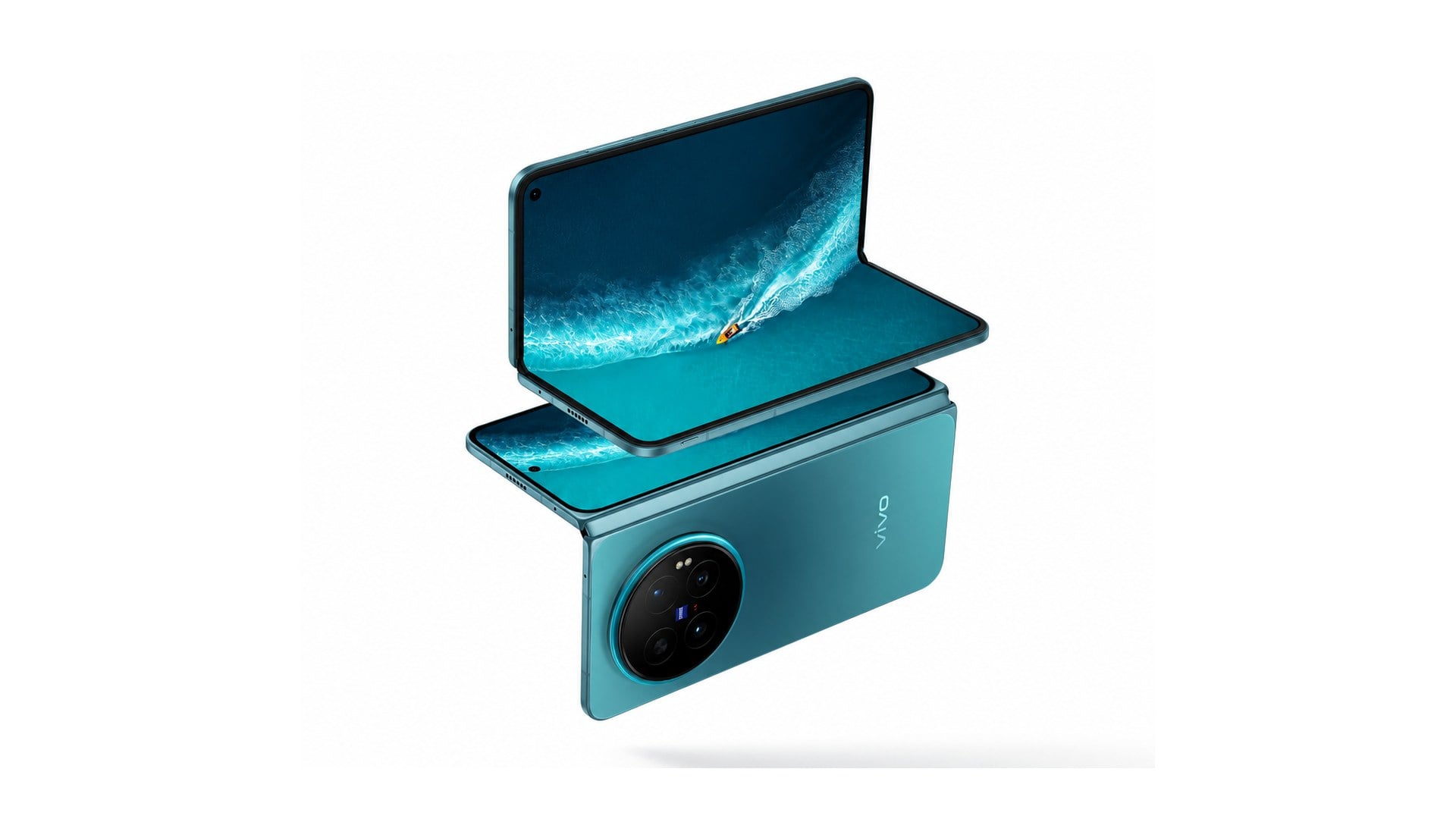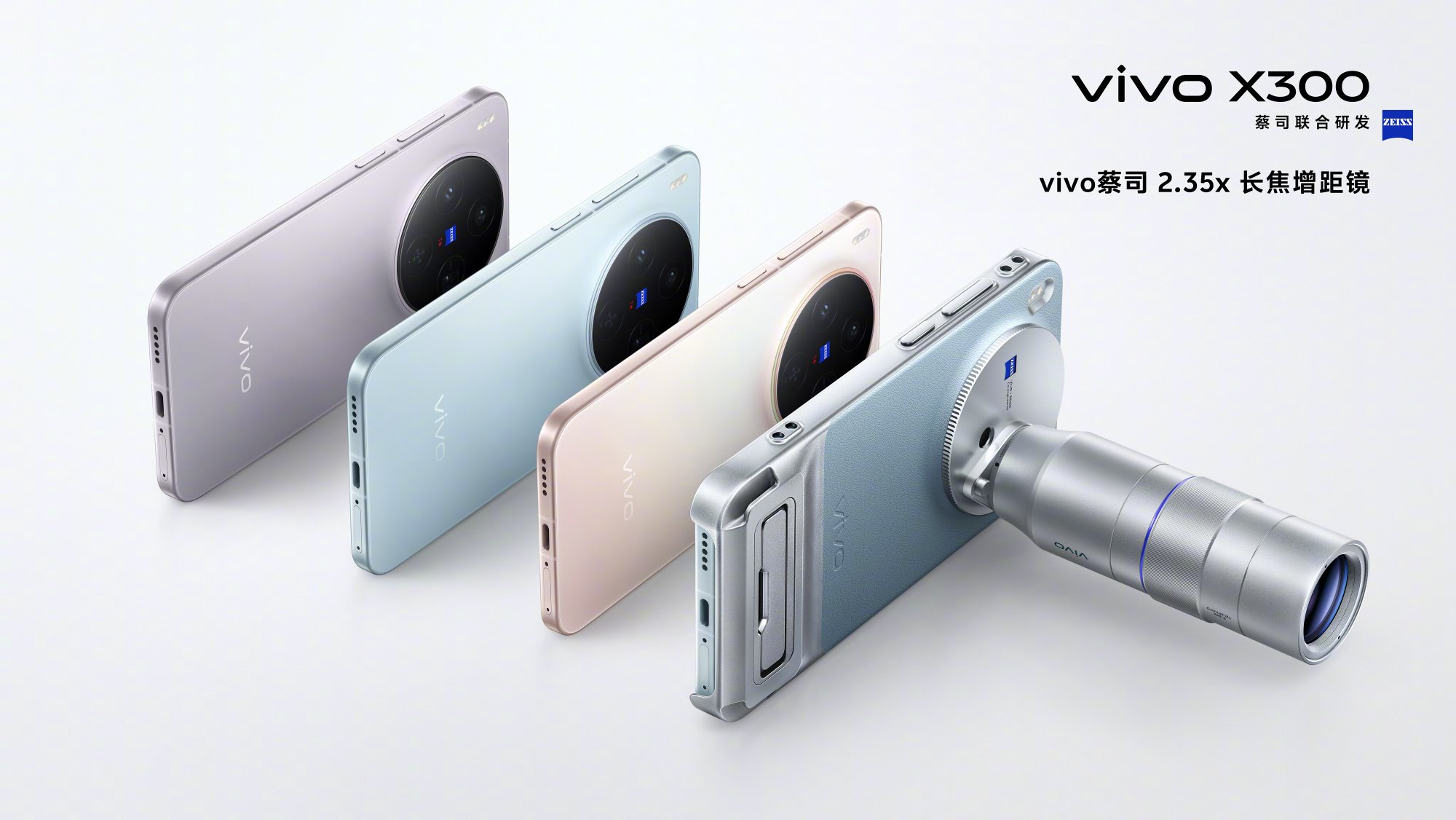
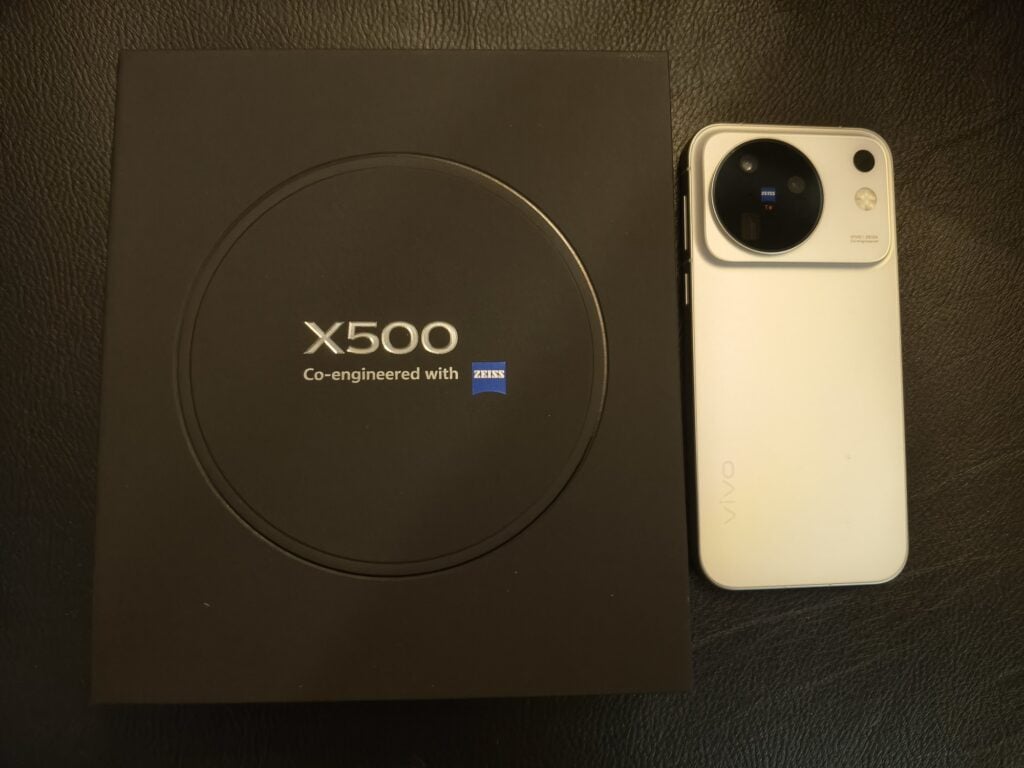
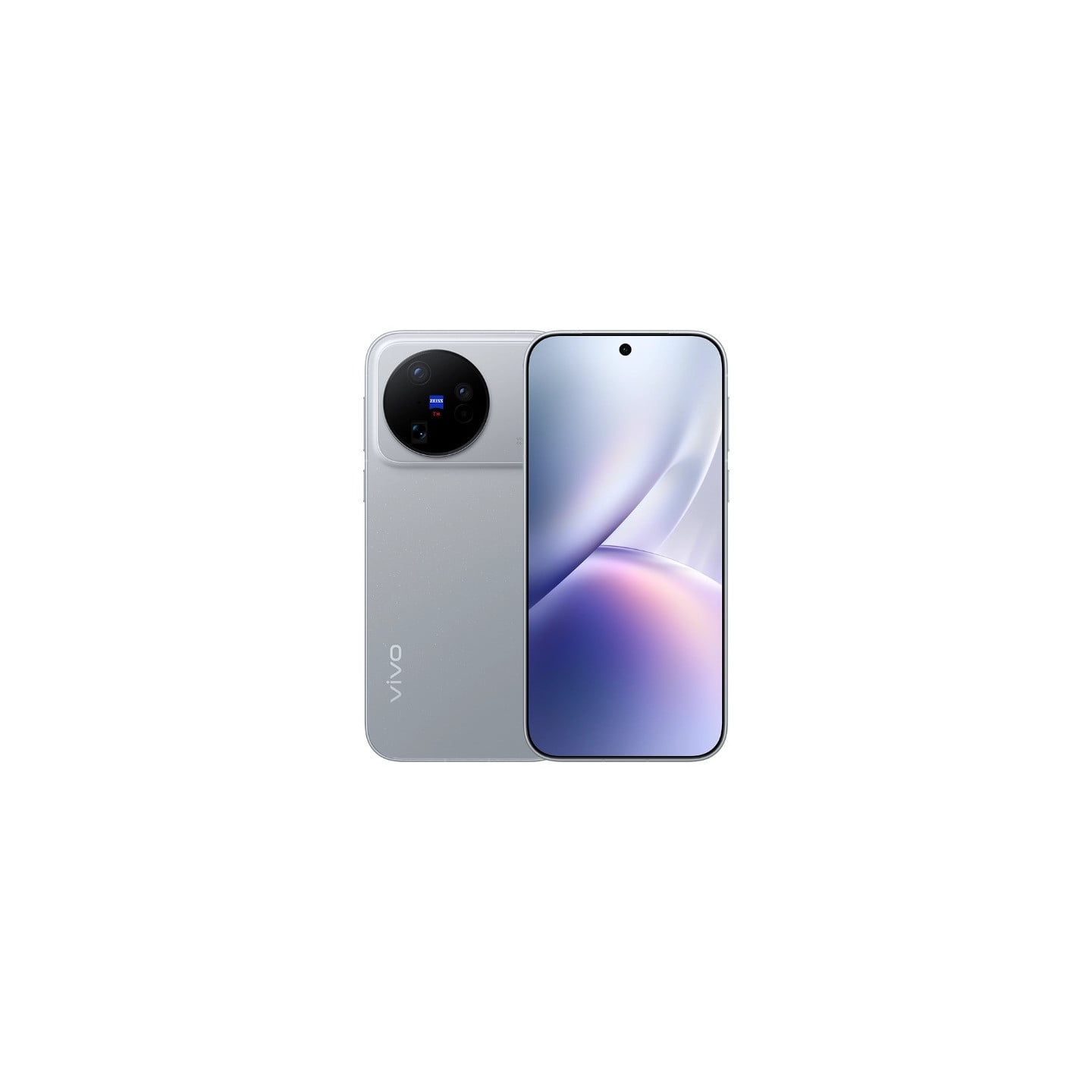
After two weeks spent with heavyweights like the Vivo X500 Pro Max and the Oppo Find X10 Pro Max, switching back to a more sensible size with the standard Vivo X500 felt like a breath of fresh air. Sold by PhoneDroid at €1,249.90, a noticeably more affordable price than its bigger siblings, this model sets out to prove that you don’t need to lug around a 230-gram-plus brick to enjoy a complete high-end experience. I kept it in my pocket for a full week as my main phone, juggling Pokémon GO and Pokémon TCG sessions, YouTube videos, Instagram scrolling and photo walks. And honestly, in day-to-day use, I never once missed the Pro Max models.
Quick verdict
The Vivo X500 is the pleasant surprise of the year’s closing months. Far lighter, easier to handle and more comfortable day to day than the Pro Max models, it still delivers colossal battery life thanks to its 7,500 mAh cell, flawless smoothness on OriginOS (Android 17) and a very convincing Zeiss-branded camera system. All of that comes in a flat 8.1 mm body that finally fits comfortably in the hand, doesn’t wobble on a table and even ships with its 90W charger in the box.
What we like
- A slim (8.1 mm), light (211 g) and ergonomic design that stays perfectly stable when laid flat.
- A huge 7,500 mAh battery, with a 90W FlashCharge fast charger included in the box.
- Very solid everyday photography (Sony LYT-828 sensor, 64 MP telephoto and 50 MP front camera), almost on a par with the Pro Max models.
What holds it back
- Long-range zoom is, unsurprisingly, a notch below the Vivo X500 Pro Max.
- The more compact 6.59-inch flat screen will appeal less to fans of giant displays for films and series.
- A non-LTPO panel, a shame at this price.
Who is it for? The Vivo X500 is aimed at anyone who wants the best of Vivo’s technology (excellent photos, two to three days of battery life and rock-solid smoothness) without putting up with the weight and bulk of an oversized smartphone.
Our measurements
Hands-on video
You’ll find the YouTube video shot by the PhoneDroid team just below, so you can judge its size for yourself. As the video shows very clearly, its balanced proportions, flat screen with slim bezels and thin profile are a game changer compared with the Pro Max models.
Vivo X500: what’s in the box, design and handling
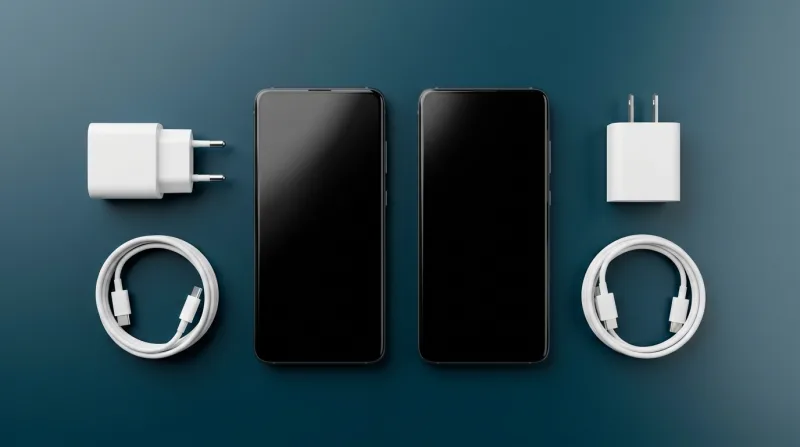
The first surprise comes as soon as you open the box: while almost every rival now settles for a bare cable, Vivo is being generous. Inside you’ll find the phone, a USB-C cable, the user guide and, above all, the 90W FlashCharge fast charger included as standard! It’s a real money-saver and a practical bonus, sparing you a trip back to the till just to get full charging speed.
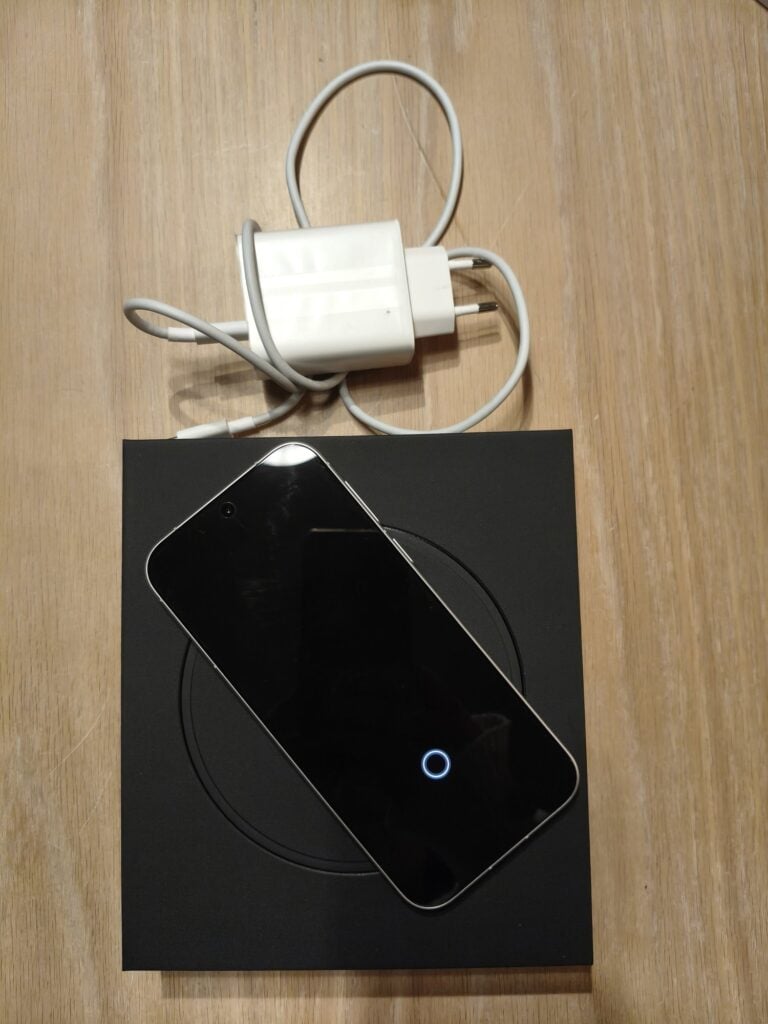
From the very first second in hand, what a relief! After juggling the Vivo X500 Pro Max (225 g) and the Oppo Find X10 Pro Max, both of which are anything but light, picking up the Vivo X500 with its 211 grams and compact dimensions (157 x 74.5 x 8.1 mm) completely changes everyday use. The phone is slim, light, sits naturally in one hand and doesn’t strain your wrist in bed at night or while walking down the street.
Another detail that makes all the difference day to day: the rear camera module is much better integrated and far less protruding than on the Pro Max models. As a result, when you lay the Vivo X500 flat on a desk or café table to type a message, it stays perfectly stable instead of rocking from side to side. It also offers maximum water and dust resistance thanks to its dual IP68 and IP69 certification: the 6 guarantees complete protection against dust, the 8 covers prolonged immersion in fresh water, and IP69 certifies protection against powerful high-temperature, high-pressure water jets.
Vivo X500 display
Naturally, a more manageable size means a slightly smaller diagonal: here you get a 6.59-inch flat screen. Is that a problem? Not at all! Quite the opposite: I found this flat panel with its slim bezels very pleasant and more than big enough for watching YouTube videos, reading messages or scrolling through my Instagram feed in total comfort, with no distortion at the edges and no accidental palm touches.
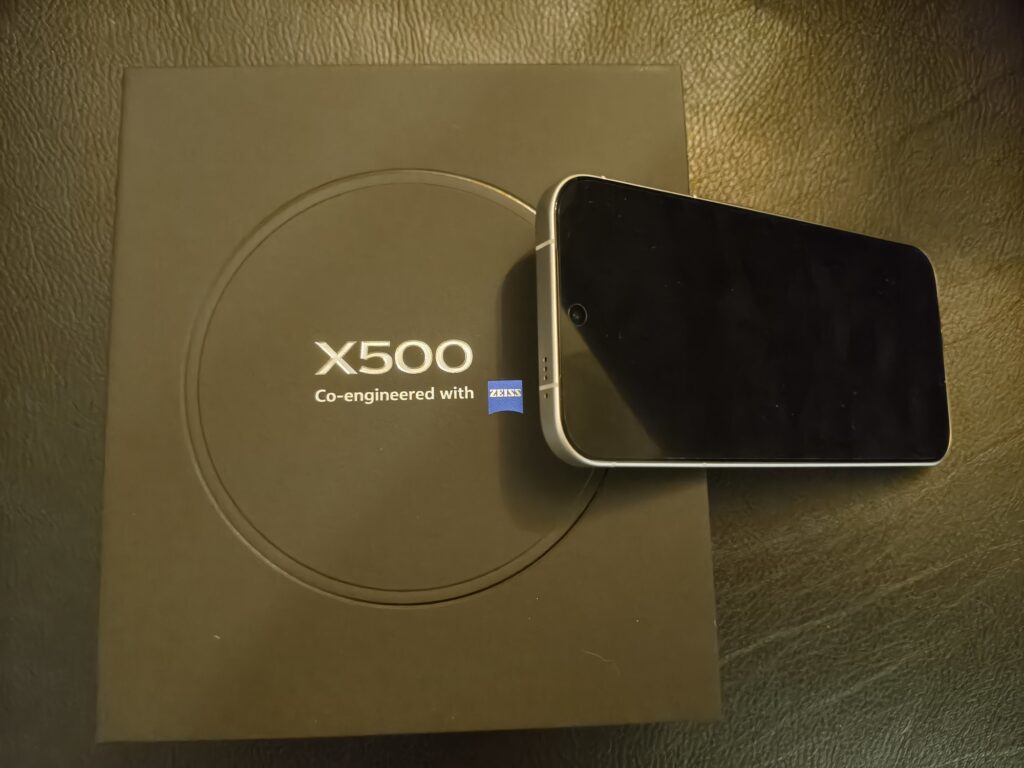
On the technical side, this LTPS AMOLED panel offers 1.5K resolution (2750 x 1260 pixels, or 459 ppi) and goes up to a 144 Hz refresh rate (redrawing the image 144 times per second for flawlessly smooth visuals in menus and compatible games). Outdoors, its record peak brightness of 4,000 nits (and 2,000 nits across the full screen) keeps everything perfectly legible in the harshest sunlight. Conversely, in total darkness before bed, the panel can dim down to 1 nit to spare your eyes without ever dazzling, while also supporting Dolby Vision and HDR10+ with 100% coverage of the P3 colour gamut.
Vivo X500 performance and gaming
Don’t be fooled by its more modest size: under the hood, the Vivo X500 packs as much punch as the biggest models. Throughout my week of use, the phone was exemplary in its responsiveness. Everything is simple, smooth and instant: jumping from Instagram to YouTube, opening the camera on the fly or navigating menus all happen without the slightest hiccup.
To test it in games, I put it through my usual routine of Pokémon GO and Pokémon TCG. Both titles run flawlessly, whether during booster-pack opening animations or on an outdoor walk with GPS and 5G constantly on. Better still, the frame stays perfectly cool in hand, with no unpleasant heat even after half an hour.
On paper, the Vivo X500 is powered by the MediaTek Dimensity 9600M chip built on a 3 nm process (8 cores clocked up to 4.21 GHz), paired with the Mali G1 Ultra GPU, backed by 12 GB of LPDDR5X Ultra RAM and 512 GB of ultra-fast UFS 4.1 storage in the version sold by PhoneDroid. In short: you get the raw power of a genuine flagship in a slim 8.1 mm body, with plenty of headroom for many years to come.
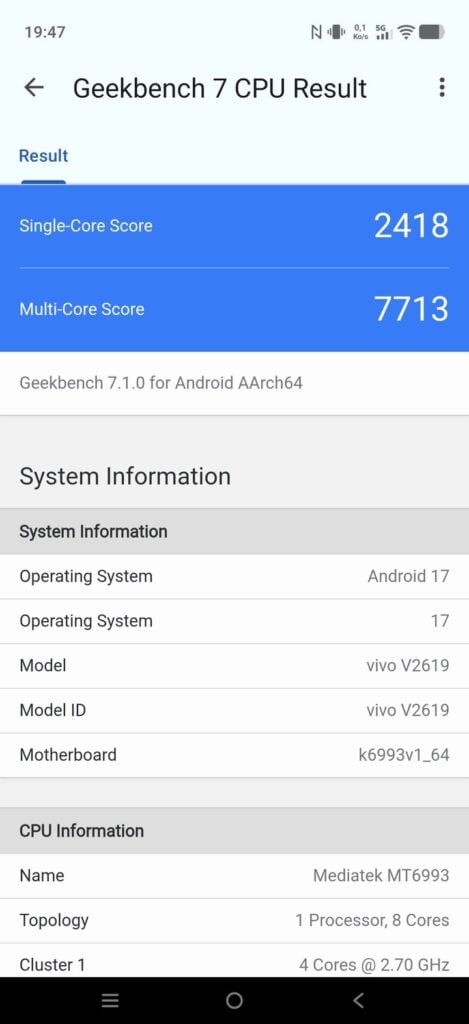
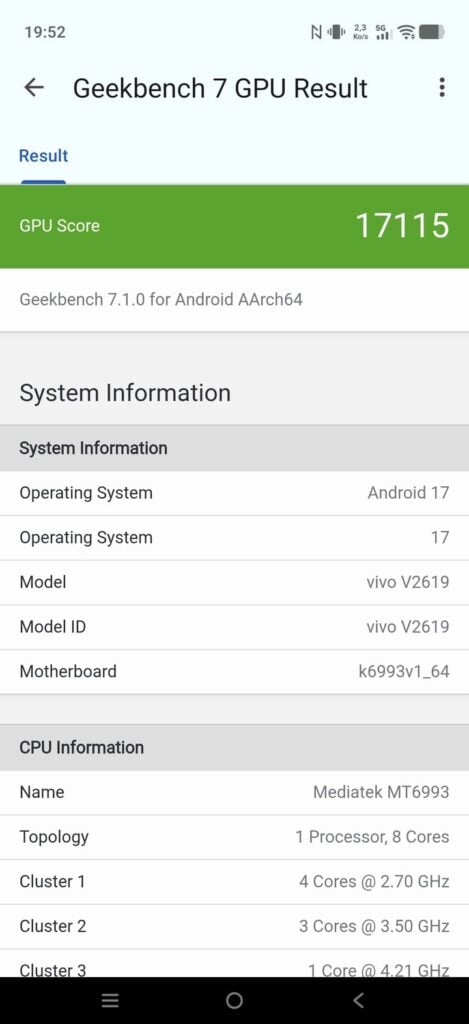
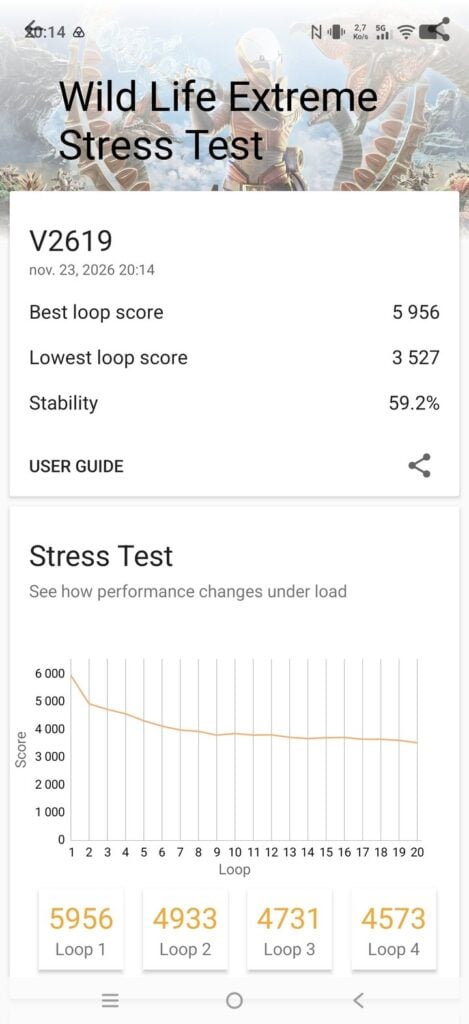
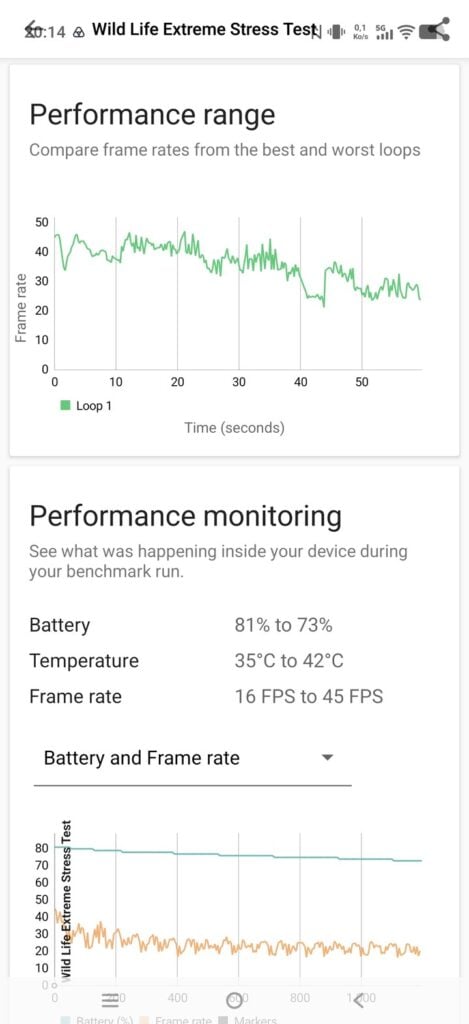
Photo and video: a pleasant surprise against the giants
You might have feared that Vivo would sacrifice the camera to keep this standard model’s weight and price down. Not at all! Also backed by Zeiss optics, with a particularly consistent triple-camera setup, the Vivo X500 has nothing to be ashamed of next to pricier models. In everyday shooting, I enjoyed using it just as much as the Pro Max models. For zoom and tricky scenes, though, its bigger siblings keep the upper hand.
1. Daylight landscape (Sony LYT-828 main camera)
In daylight, the 50 MP Sony LYT-828 main sensor (large 1/1.28-inch format, very bright f/1.69 aperture) produces truly superb photos. Detail is abundant, sharpness is crisp and Zeiss processing keeps that natural, balanced colour rendering that stays true to life. Exposure is well handled, avoiding blown-out skies while keeping shadows readable.

2. Ultra-wide (50 MP)
The 50 MP ultra-wide sensor (Samsung S5KJN1, f/2.0 aperture) stays nicely consistent with the main camera. Colours remain uniform and distortion at the edges of the frame is well controlled, so you can capture architecture and landscapes with even sharpness across the whole scene.


3. Optical and long-range zoom (64 MP periscope telephoto)
This is, of course, the one area where its bigger sibling, the Vivo X500 Pro Max, keeps a clear lead at extreme magnifications. Even so, the Vivo X500 carries a genuine 64 MP periscope telephoto (Sony LYT-610, f/2.6 aperture) offering razor-sharp native 3.1x optical zoom, backed by advanced CIPA 5.5 optical stabilisation that effectively compensates for small hand movements. Up to 10x hybrid zoom in daylight, shots stay sharp and perfectly usable.


4. Backlit scenes and night photography
When shooting into a low sun, HDR (High Dynamic Range, which merges several exposures in a fraction of a second) balances contrast effectively. Once night falls, the very wide f/1.69 aperture of the Sony LYT-828 sensor and the night mode take over brilliantly: urban scenes stay bright, sharp and very low in noise, with Zeiss processing eliminating stray flare.


5. Portrait, macro, selfie (50 MP) and video
Portrait mode makes full use of the 64 MP telephoto and Zeiss optical effects, delivering soft, natural background blur (bokeh). Macro mode allows precise close-ups of flowers and textures. On the front, Vivo hasn’t cut corners, fitting a 50 MP Samsung S5KJN1 sensor (f/2.0 aperture) that produces highly detailed selfies, while 4K video at 60 frames per second offers very effective stabilisation while walking.


Vivo X500 battery life and charging
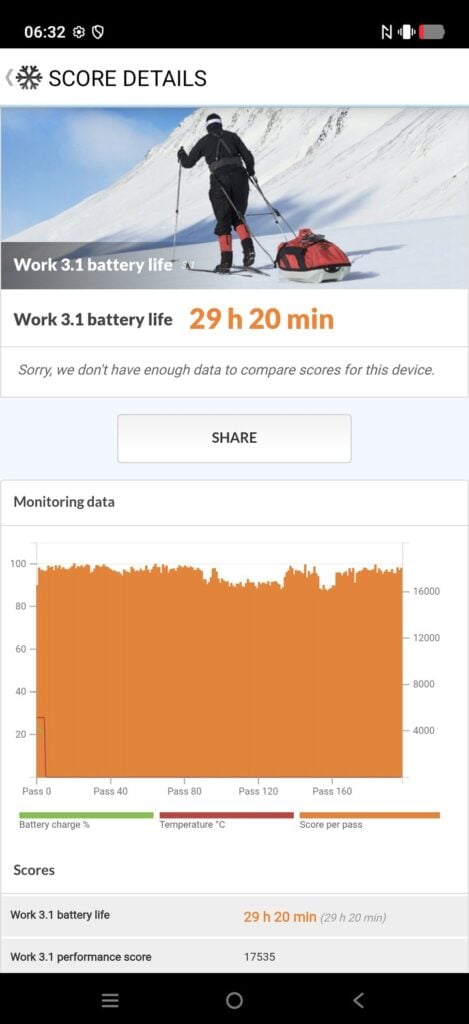
This is probably the phone’s greatest technical feat: how did Vivo manage to fit a giant 7,500 mAh battery (7,270 mAh rated) into a body just 8.1 mm thick and weighing 211 grams? Thanks to very high energy density combined with the outstanding efficiency of the 3 nm Dimensity 9600M chip, the Vivo X500 delivers battery life that is simply astonishing.
Over my test days, busy as they were with Pokémon GO sessions on 5G, Pokémon TCG, several YouTube videos and long stretches scrolling Instagram, the battery seemed to barely drain at all. By bedtime I still had plenty in reserve, which means you can comfortably count on two to three days of typical use without reaching for a charger (and well over a day and a half of continuous heavy use).
To top up, the Vivo X500 relies on 90W FlashCharge wired fast charging (with the charger included in the box!), which takes the battery from 0 to 100% in just 43 minutes, as well as fast wireless charging at up to 40W, handy on a charging stand at your desk or on the bedside table.
Software and interface
The Vivo X500 runs Android 17 with the OriginOS skin, and I found it even simpler and more pleasant to use day to day thanks to the ergonomics of its 6.59-inch flat screen. Everything falls naturally under the thumb, and the menus are clean, responsive and free of slowdowns, with very well thought-out personalisation and multitasking options. Vivo also guarantees 5 years of software updates, offering real peace of mind for the long run.
The version sold by PhoneDroid comes with the full suite of Google services built in (Google Play, Google Pay, Maps, Gmail, YouTube, Android Auto) along with every language, each with a properly translated interface. You also get handy everyday AI tools (photo editing with a magic eraser, instant translation, note summaries).
Network, audio and security
Nothing to report on calls and connectivity: 5G and 4G reception proved very stable on the move. The Vivo X500 is compatible with European and global carriers across 2G/3G/4G/5G, including the essential B20 (800 MHz) and n28 (700 MHz) bands for solid reception in rural areas and inside buildings. It supports dual SIM and eSIM, Wi-Fi 7, Bluetooth 6.0, GPS/A-GPS, FM radio and NFC.
The stereo speakers deliver clear, balanced sound for watching YouTube videos without earphones. Finally, the 3D ultrasonic in-display fingerprint reader (which maps the ridges of your finger using sound waves, with no bright flash) provides instant, secure unlocking, even with damp fingers.
How it compares
Versus the Vivo X500 Pro Max (available from PhoneDroid): The big brother keeps the edge on extreme zoom and screen size, but the standard Vivo X500 turns out to be much lighter (211 g vs 225 g), slimmer (8.1 mm) and stable on a table, and it offers colossal endurance from its 7,500 mAh battery, with a 90W charger included, at a gentler price.
Versus the Oppo Find X10 Pro Max (available from PhoneDroid): Noticeably lighter and less bulky than the Oppo (211 g vs 233 g), the Vivo X500 is far more pleasant to hold and offers almost equally impressive battery life (29 h 20 min vs 32 h 18 min in the same test). For photography, the Oppo stays ahead, especially for zoom, but the X500 still takes lovely everyday shots.
Who is it for?
Right for you if…
- You want a high-end phone that’s slim (8.1 mm), light (211 g) and comfortable to use one-handed.
- You’re after exceptional endurance (7,500 mAh battery) that can handle games, YouTube and social media for two to three days without flagging.
- You want great Zeiss-branded photos with a genuine 64 MP periscope telephoto, plus a 90W charger included in the box.
Not for you if…
- You love very large screens of close to 6.8 inches for viewing comfort.
- You absolutely need the best long-range zoom on the market beyond 10x (in which case, look at the Vivo X500 Pro Max).
Frequently asked questions (FAQ)
Is the Vivo X500 compatible with 5G networks in Europe?
Yes, the Vivo X500 is fully compatible with the 4G and 5G networks of European and global carriers, including the 700 MHz (n28) and 800 MHz (B20) bands that are essential in rural areas, and it supports dual SIM as well as eSIM.
What real-world battery life does the 7,500 mAh battery deliver?
Thanks to its 7,500 mAh capacity and the efficiency of the 3 nm Dimensity 9600M chip, the Vivo X500 easily lasts two to three days of typical use without recharging, and well over a day and a half of continuous heavy use (Pokémon GO, YouTube, Instagram, GPS).
Is a charger included in the Vivo X500 box?
Yes, good news: Vivo includes the 90W FlashCharge fast charger and a USB-C cable right in the box. The phone also supports fast wireless charging at up to 40W.
What is the difference between the Vivo X500 and the Vivo X500 Pro Max?
The Vivo X500 offers a more compact flat design (6.59 inches) that’s slimmer (8.1 mm) and lighter (211 g), with no protruding camera bump to unbalance the phone on a table, while still packing a huge 7,500 mAh battery and a 64 MP periscope telephoto. The Pro Max mainly stands out with a larger screen and even more advanced photo zoom.
Conclusion: strengths and weaknesses
Emilie’s verdict · 9/10
All things considered, the Vivo X500 may well be the smartest choice in the whole range. Where the Pro Max variants demand a massive footprint and a weight that can become tiring day to day, this standard version manages to pack the core of the high-end experience into a flat design that’s light (211 g), slim (8.1 mm) and perfectly balanced. With its monumental 7,500 mAh battery that never tires even under Pokémon GO, YouTube and Instagram, its 90W charger included in the box, the smoothness of OriginOS on Android 17 (with 5 years of updates guaranteed) and its lovely Zeiss-branded shots (Sony LYT-828 sensor, 64 MP periscope and 50 MP selfie camera), it delivers the essentials of a flagship without the weight of the priciest models. If you want comfort without the compromises, this is clearly the one I recommend.
Strengths
- Slim (8.1 mm), light (211 g) and comfortable to use one-handed.
- Perfectly stable when laid flat on a table (well-integrated camera module).
- Record battery life thanks to the 7,500 mAh battery, with a 90W FlashCharge fast charger included in the box.
- Lovely everyday photos (50 MP Sony LYT-828 f/1.69 + 64 MP Zeiss periscope telephoto + 50 MP front camera).
- Bright 144 Hz flat AMOLED screen (4,000 nits, Dolby Vision) and 5 years of software support on Android 17 / OriginOS.
Weaknesses
- Long-range photo zoom a notch below the Vivo X500 Pro Max.
- A 6.59-inch screen, more modest than on the Pro Max models.
- Non-LTPO panel, a shame at this price.
Our guides
All guides Chinese Version Smartphones: The (False) Bargain to Avoid!
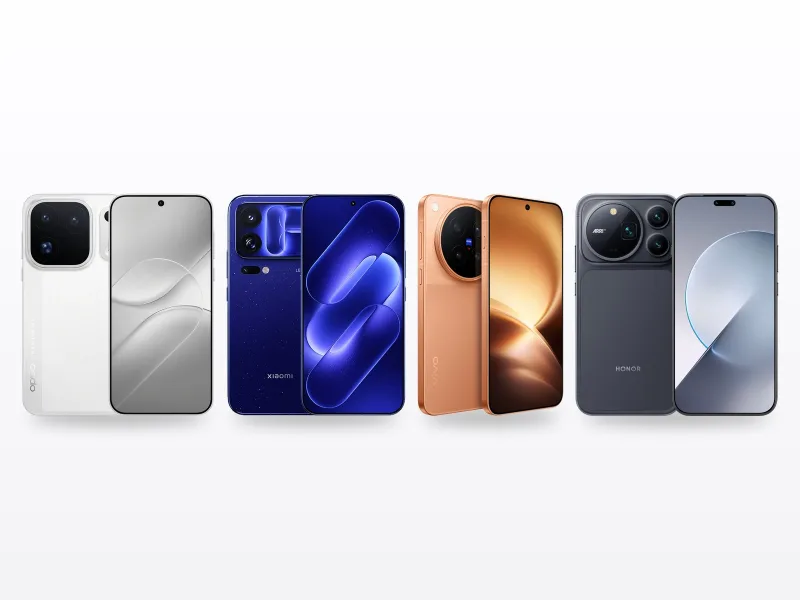
- Hasselblad, Zeiss, Leica, ARRI: what the camera partnerships on our smartphones are really hiding
- 4G/5G Bands in Europe, VoLTE, Wi-Fi Calling and eSIM: What to Know Before Buying
- ColorOS, OriginOS, HyperOS, MagicOS: Which Android Skin Should You Choose?
- How to check your battery’s real health
- New smartphone: 10 settings to change right away (Xiaomi, Vivo, Oppo, Honor)