
The world of performance and mobile gaming smartphones has just reached a new technical milestone. On 28 October 2026, iQOO officially unveiled its highly anticipated iQOO Neo 12 in China. Long confined to the role of an affordable alternative tasked with democratising the raw power of latest-generation processors, the Neo line is undergoing a profound transformation this year. By integrating a 2K AMOLED panel clocked at 185 Hz, a colossal 9,000 mAh battery and an active cooling fan housed within an IP68- and IP69-certified chassis, this new model no longer settles for following closely on the heels of market flagships: it surpasses them across several key criteria.
However, this feat of engineering goes hand in hand with a major upheaval in the commercial positioning of the range. Whilst its predecessors stood out through aggressive pricing, the iQOO Neo 12 posts a spectacular price increase of nearly 69% on its starting price compared to the iQOO Neo 11, to the point of overlapping with the pricing tier of the brand’s flagship. Here is a detailed look at the specifications, architectural choices and prices of this extraordinary smartphone.
A two-stage strategy that shakes up the hierarchy against the iQOO 16
True to its staggered release strategy already proven during the previous generation with the iQOO 15 and Neo 11, the vivo subsidiary chose to separate the launch schedule of its two major line-ups in autumn 2026. The iQOO 16 thus opened proceedings in China on 29 September 2026, setting the benchmark for the ultra-high-end segment: a 6.85-inch 2K OLED display at 165 Hz, a Snapdragon 8 Elite Extreme Gen 6 processor, an 8,400 mAh battery, dual fast charging (100 W wired and 40 W wireless) and a triple 50-megapixel camera setup including a periscope telephoto lens.
A month later, the iQOO Neo 12 takes the stage independently with a bold technical proposition that shakes up the manufacturer’s internal hierarchy. Across three fundamental parameters for gamers and power users — display refresh rate, battery capacity and heat dissipation — the Neo 12 gains the upper hand over the iQOO 16:
- It pushes the display refresh rate to 185 Hz at 2K resolution, compared to 165 Hz on the flagship model;
- It raises its battery capacity to 9,000 mAh, which is 600 mAh more than the battery in the iQOO 16;
- It introduces an active mechanical cooling fan built directly into the casing, whereas the flagship relies on passive cooling.
This trade-off is explained by a focus resolutely geared towards pure performance. Whilst the iQOO 16 spreads its manufacturing costs across a versatile three-sensor camera system and an inductive charging coil, the iQOO Neo 12 concentrates its industrial resources on endurance, thermal stability and display speed.
Display: a brighter and more power-efficient 185 Hz 2K AMOLED panel
It is in the display department that the iQOO Neo 12 achieves one of its most striking advances over the Neo 11. The device drops its predecessor’s 144 Hz frequency to adopt a large 6.83-inch flat AMOLED panel featuring a 2K resolution of 3,200 × 1,440 pixels, delivering a pixel density of 514 pixels per inch (ppi), capable of reaching a refresh rate of up to 185 Hz.
This panel simultaneously improves upon brightness, organic sub-pixel longevity and power management:
- Sharply increased brightness: the panel reaches a full-screen peak brightness of 2,200 nits, with a manual maximum threshold set at 1,000 nits in professional mode. This represents a 22% gain in full-screen peak brightness compared to the Neo 11, ensuring exemplary outdoor legibility.
- Optimised energy efficiency: despite moving to 185 Hz and maintaining 2K resolution, the screen posts a 27% reduction in power consumption and an 18% improvement in luminous efficacy in direct comparison with the panel of the iQOO Neo 11.
- Dedicated display driver chip: to handle the bandwidth demanded by a 2K feed clocked at 185 Hz without weighing down overall power consumption, the smartphone integrates an independent display driver chip. This consumes 30% less power than the equivalent component fitted last year on the Neo 11.
To match this visual refresh speed, the manufacturer has equipped the Neo 12 with the same touch control chip as that of the iQOO 16. In supported games, the handset supports an instantaneous touch sampling rate climbing up to 5,000 Hz as well as a multi-finger sampling rate reaching 500 Hz. In competitive shooters or fast-paced action titles, this combination delivers near-instantaneous responsiveness between the player’s gesture and the on-screen rendering.
Performance and gaming: Snapdragon 8 Elite Gen 5, Q3 chip and native 185 fps
Under the bonnet, the iQOO Neo 12 relies on a hardware pairing built for heavy workloads. The heart of the system rests on the Qualcomm Snapdragon 8 Elite Gen 5 SoC, which delivers a 20% increase in CPU performance compared to the previous generation. This main chip is paired with 12 GB or 16 GB of LPDDR5X Ultra RAM and UFS 4.1 internal storage available in 256 GB, 512 GB or 1 TB (with no microSD expansion slot).
To offload the central processor during extended gaming sessions, iQOO introduces its new proprietary gaming chip, dubbed Q3. This co-processor boasts a 60% leap in computing performance whilst improving its energy efficiency by 40% compared to its predecessor.
The alliance of the Snapdragon 8 Elite Gen 5 and the Q3 chip unlocks access to advanced graphics features:
- Over 50 games compatible with native 185 fps: the catalogue of titles capable of natively exploiting the panel’s maximum frequency exceeds the fifty-game mark right from launch.
- Simultaneous super-resolution and frame interpolation: the Q3 chip enables 2K upscaling (super-resolution) and frame interpolation (185 fps) to run concurrently, offering both maximum display sharpness and extreme fluidity.
- Full-scene ray tracing: the smartphone supports full-scene ray tracing, making it possible to render realistic lighting, shadows and reflections in real time within compatible graphics engines.
Ice Dome active cooling and IP68/IP69 certification: the engineering feat
Maintaining a frame rate of 185 fps at 2K resolution without suffering from thermal throttling requires an extraordinary heat dissipation system. For the first time in this range, the iQOO Neo 12 integrates a hybrid thermal architecture dubbed “Ice Dome”, which combines large-scale passive cooling with active mechanical ventilation.
The system revolves around a 17 × 17 mm active cooling fan housed within the chassis. Equipped with three speed settings, this micro-fan is capable of moving up to 9,770 cm³ of air per minute to directly expel heat generated by the internal components. It works in tandem with a vast 8.2K (8,200 mm²) 3D vapour chamber, whose design alone improves heat dissipation by 15% compared to the iQOO Neo 11.
The true industrial feat, however, lies in the handset’s environmental protection. Whilst the presence of air vents and a rotating turbine usually condemns gaming smartphones to vulnerability against water and dust, the iQOO Neo 12 secures IP68 and IP69 certifications for the entire phone, whilst the fan-cooled module itself benefits from an IPX8 and IPX9 rating. The device thus withstands both prolonged immersion and high-pressure, high-temperature water jets, all whilst maintaining active airflow.
Record battery life: a 9,000 mAh battery with a 5th-generation silicon anode
The other standout selling point of this specification sheet lies in its “Blue Ocean” battery. Having already made a strong impression last year with the 7,500 mAh unit in the Neo 11, the brand goes a step further by equipping the iQOO Neo 12 with a 9,000 mAh battery, representing an increase of 1,500 mAh (+20%) from one generation to the next.
To house such an energy reserve without turning the smartphone into an unusable brick for everyday use, the manufacturer employs a single-cell fifth-generation silicon anode technology, boasting an energy density of 916 Wh/L. This chemistry incorporates 33% more silicon than the previous model’s battery. As a result, the handset promises endurance capable of easily covering two full days of heavy use or mobile gaming marathons far from any mains socket.
On the charging front, the iQOO Neo 12 retains 100 W wired power and forgoes wireless charging, which remains the preserve of the iQOO 16. Gamers will, however, appreciate the inclusion of bypass charging: when the cable is plugged in mid-game, power is supplied directly to the motherboard without passing through the battery cells, thereby preserving the chemical longevity of the battery whilst limiting internal heat build-up.
Photography, “Contender” design and features under OriginOS 7
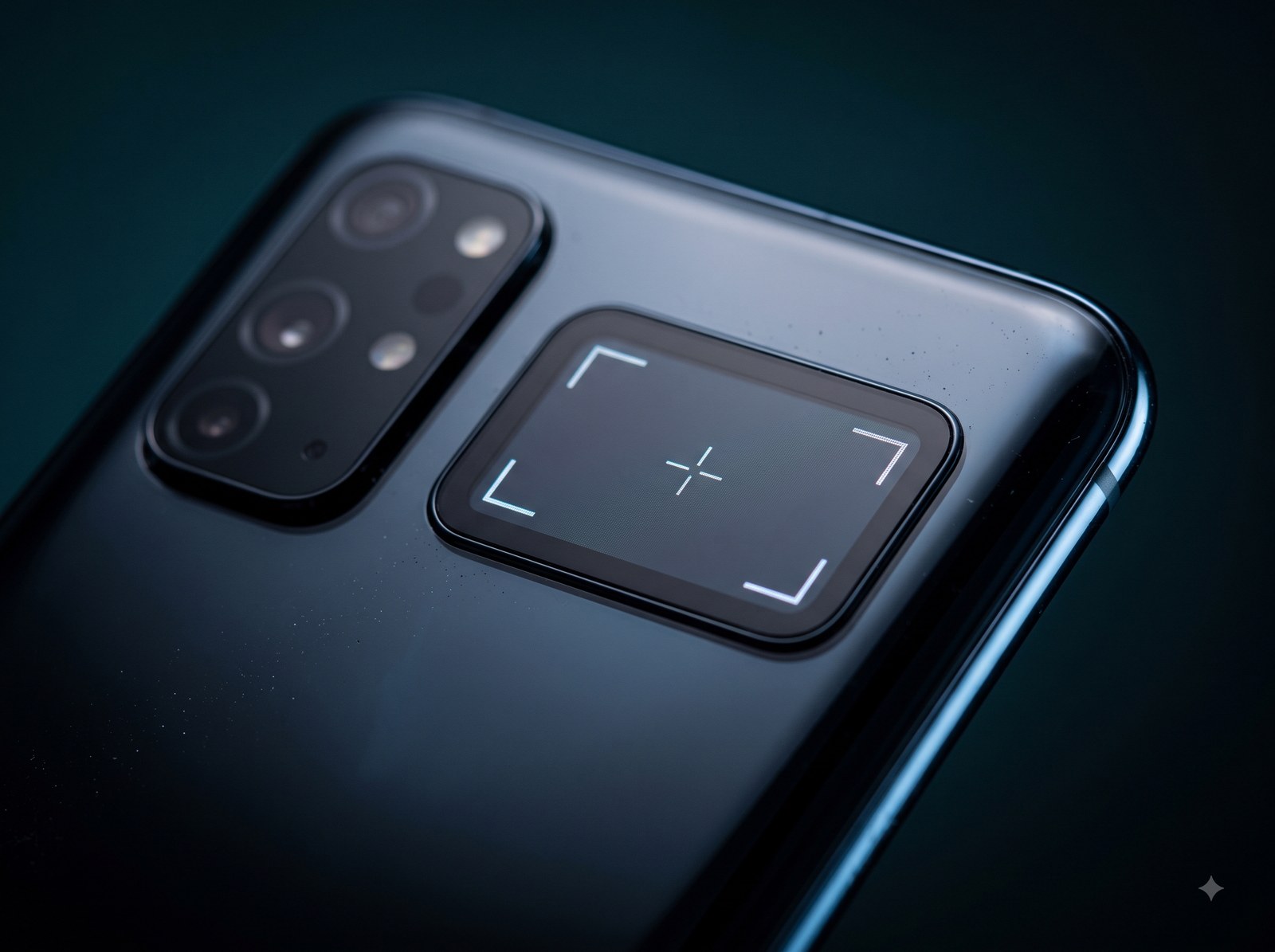
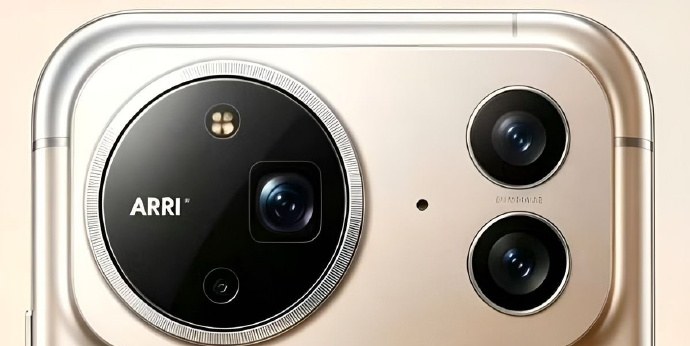
In keeping with the tradition of the Neo line, the camera department prioritises the essentials without seeking to rival specialist camera phones. Indeed, the megapixel count remains identical to that of its predecessor, although the main sensor evolves:
- 50 MP main sensor: this is now a 1/1.56-inch Sony IMX921 module, topped with an f/1.88 aperture lens and equipped with optical image stabilisation (OIS). As a reminder, the iQOO Neo 11 also featured a 50 MP sensor of the same size (1/1.56-inch) and aperture (f/1.88), but relied on the Sony LYT-700V unit.
- 8 MP ultra-wide-angle sensor: this supports the main module for landscape or architectural shots. No dedicated telephoto lens is present on the rear.
- Video and selfies: the rear camera array is capable of recording video footage in up to 8K, whilst the front camera housed in the screen’s punch-hole relies on a 16 MP sensor.
Aesthetically, the iQOO Neo 12 adopts a metal frame and boasts contained dimensions considering its 9,000 mAh battery and built-in fan: 163.42 × 75.89 mm in height and width. The phone comes in three distinct finishes:
- Swift Shadow Black (black): 8.5 mm thick with a weight of 225 grams;
- Frostblade Blue (blue): 8.5 mm thick with a weight of 226 grams;
- Contender (“Zhengfeng”): a special edition sporting a dynamic silver-white finish developed in partnership with the China Academy of Art, measuring 8.67 mm thick with a weight of 229 grams.
Finally, the software side is handled straight out of the box by OriginOS 7 based on Android 17. The connectivity and biometric suite is comprehensive, featuring Wi-Fi 7, Bluetooth 5.4, NFC, an infrared blaster and an under-display ultrasonic fingerprint sensor. Notably, the USB-C port exclusively supports digital headphones when used for wired audio.
Comparison table: the iQOO Neo 12 against the iQOO Neo 11 and iQOO 16
| Specification | iQOO Neo 12 | iQOO Neo 11 | iQOO 16 |
|---|---|---|---|
| Launch (China) | 28 October 2026 | October 2025 | 29 September 2026 |
| Display | 6.83″ flat AMOLED, 3,200 × 1,440 (514 ppi) | 6.82″ AMOLED, 2K | 6.85″ flat AMOLED, 3,168 × 1,440 |
| Refresh rate | Up to 185 Hz | Up to 144 Hz | Up to 165 Hz |
| Full-screen brightness | 2,200 nits | — | 2,800 nits |
| Processor | Snapdragon 8 Elite Gen 5 + Q3 chip | Snapdragon 8 Elite | Snapdragon 8 Elite Extreme Gen 6 + Q4 chip |
| Memory and storage | 12 or 16 GB LPDDR5X Ultra, 256 GB to 1 TB UFS 4.1 | Up to 16 GB, up to 1 TB | 12 or 16 GB LPDDR5X Ultra, 256 GB to 1 TB UFS 4.1 |
| Cooling | 17 × 17 mm active fan + 8.2K 3D vapour chamber | Vapour chamber, fanless | 8,500 mm² vapour chamber, fanless |
| Battery | 9,000 mAh | 7,500 mAh | 8,400 mAh |
| Charging | 100 W wired, bypass charging, no wireless | 100 W wired | 100 W wired, 40 W wireless |
| Rear camera | 50 MP Sony IMX921 (1/1.56″, f/1.88, OIS) + 8 MP ultra-wide-angle | 50 MP Sony LYT-700V (1/1.56″, f/1.88) + 8 MP ultra-wide-angle | 50 MP (1/1.3″) + 50 MP ultra-wide-angle + 50 MP 3x periscope |
| Front camera | 16 MP | — | 32 MP |
| Water resistance | IP68 / IP69 (IPX8 / IPX9 fan) | IP68 / IP69 | IP68 / IP69 |
| Operating system | OriginOS 7 (Android 17) | OriginOS 6 (Android 16) | OriginOS 7 (Android 17) |
| Dimensions and weight | 163.42 × 75.89 × 8.5 to 8.67 mm, 225 to 229 g | — | 163.75 × 76.90 × 8.30 to 8.55 mm, 222.5 to 229.8 g |
| Starting price (China) | 4,399 yuan (≈ €592) | 2,599 yuan (≈ €350) | 5,999 yuan (≈ €807) |
Price and availability: a spectacular price hike that redefines the Neo range
Whilst the specification sheet of the iQOO Neo 12 impresses with its boldness, its pricing structure marks a clean break with the history of the range. The combined integration of a 185 Hz 2K display, a 9,000 mAh silicon battery, a waterproof active fan and LPDDR5X Ultra / UFS 4.1 memory translates into soaring prices on the Chinese market.
The iQOO Neo 12 is sold in China in five configurations (indicative conversions calculated at the European Central Bank rate on 27 October 2026, i.e. €1 = 7.4343 yuan, excluding import duties):
- 12 GB + 256 GB: 4,399 yuan (approximately €592);
- 16 GB + 256 GB: 4,799 yuan (approximately €646);
- 12 GB + 512 GB: 5,099 yuan (approximately €686);
- 16 GB + 512 GB: 5,499 yuan (approximately €740);
- 16 GB + 1 TB: 6,499 yuan (approximately €874).
The figures speak for themselves: with an entry price set at 4,399 yuan, the iQOO Neo 12 costs 1,800 yuan more than the iQOO Neo 11 at launch (2,599 yuan), representing a steep increase of around 69%. Even more revealing of this change in status, the top-tier variant equipped with 16 GB of RAM and 1 TB of storage (6,499 yuan) carries a higher price tag than the starting price of the iQOO 16 in China (5,999 yuan).
Regarding a potential release outside China’s borders, no international launch has been announced for the time being. Caution is all the more warranted given that the iQOO Neo 11 was never launched in India — historically the brand’s key international market — casting strong uncertainty over a global rollout for this Neo 12.
At PhoneDroid, we sell global versions. Neo-series smartphones generally don’t launch internationally, or only under a different name: we’ll keep a close eye on any global equivalent of the Neo 12. In the meantime, browse our Vivo smartphones in stock.
Conclusion: the birth of a fully-fledged gaming ultra-flagship
With the iQOO Neo 12, the traditional boundary between the supercharged mid-ranger and the premium flagship is shattered. By choosing to no longer hold back its Neo series to protect its flagship, iQOO delivers a formidable gaming machine: a 185 Hz 2K panel backed by a dedicated chip, a Snapdragon 8 Elite Gen 5 and Q3 chip pairing with full-scene ray tracing, a giant 9,000 mAh battery and IP68/IP69-certified active fan cooling.
In return, this radical move upmarket brings an end to the highly accessible pricing that had previously made the Neo family’s reputation. Now positioned between €592 and €874 in direct conversion, excluding import duties, the iQOO Neo 12 no longer seeks to be a mere budget compromise: it asserts itself as a true specialist flagship, designed for demanding gamers who prefer to invest in battery life, mechanical cooling and display speed rather than a periscope telephoto lens.
Tutorials
See all Hasselblad, Zeiss, Leica, ARRI: what the camera partnerships on our smartphones are really hiding
- Guide: decode your smartphone’s spec sheet!
- New smartphone: 10 settings to change right away (Xiaomi, Vivo, Oppo, Honor)
- Switching to Android: how to transfer everything without losing a thing
- How to check your battery’s real health
- A 120W charger on an 80W phone: is it risky?