📌 Update, 15 September 2026: Xiaomi has officially confirmed the Xiaomi 18 Pro series will launch in September in China. Its first teaser puts the rear screen centre stage: it now covers most of the Leica camera module and looks built to show AI-generated content. The image does not say which model it is, but it speaks for the whole series, making it very likely that the Pro Max keeps this screen, as it did last year.
Leaks are picking up pace around the next supersized flagship from Xiaomi. Well-known leaker Digital Chat Station, along with Chinese regulatory databases, has just delivered crucial details about the Xiaomi 18 Pro Max prototype. This technological showcase is shaping up to be one of the most extreme handsets the manufacturer has ever built, pushing every single hardware component to its limits.
The Xiaomi 18 Ultra is cancelled: the Pro Max takes the crown
To grasp just how excessive the Xiaomi 18 Pro Max spec sheet really is, you need to understand the manufacturer’s recent strategic decisions. Faced with industrial constraints and soaring component costs, the Xiaomi 18 Ultra has been shelved for this generation.
That decision has a direct and major impact on the shape of the line-up: the Xiaomi 18 Pro Max is no longer an in-between model slotted beneath an Ultra, it becomes Xiaomi’s absolute flagship for the whole of 2026-2027.
Every cutting-edge component originally earmarked for the Ultra — starting with the dual 200 MP sensors with LOFIC technology and a huge battery — has been transferred straight into this Pro Max. For mobile photographers and demanding users who were waiting for the Ultra, the Pro Max now stands as the only no-compromise option.
A giant flat 2K screen and power built on 2 nm
The Xiaomi 18 Pro Max keeps its status as a multimedia behemoth. Leaks point to a huge 6.9-inch flat OLED panel with 2K resolution. A world away from curved screens and their distracting reflections, this flat display is said to feature large rounded corners and razor-thin symmetrical bezels on all four sides, delivering remarkable visual immersion.
To drive that XXL display, Xiaomi is crossing a historic threshold by fitting Qualcomm’s upcoming Snapdragon 8 Elite Gen 6 (Pro variant), built on TSMC’s cutting-edge 2 nm process. This architectural shift promises a spectacular jump in graphics performance while drastically cutting heat output and power draw. That is precisely where the Pro variant differs from the standard version: the processor itself is strictly identical, with the gap coming down to the graphics block and the memory.
First Geekbench run: two cores cross 5 GHz
On the evening of 9 September, a Xiaomi 18 Pro Max unit went through Geekbench, giving us the first performance reading for this device. The listing identifies it under the Chinese reference M1544F and names its chip QTI SM8975: the internal number of the Pro variant of the Snapdragon 8 Elite Gen 6, whose commercial name Qualcomm has yet to settle.
What stands out is how the cores are arranged. Where previous generations lined up two tiers, this one has three:
- 2 cores at 5.11 GHz: the top of the architecture, kept for the work that cannot wait — opening an app, scrolling a heavy page. Qualcomm said this summer that its new Oryon core would reach 5 GHz, a mobile first; on this unit, the Snapdragon 8 Elite Gen 6 beats its own announcement.
- 3 cores at 4.03 GHz: the middle tier, which carries the bulk of everyday work without driving the temperature up.
- 3 cores at 3.74 GHz: the efficiency tier, which takes over as soon as the screen goes off or the task is light.
On results, the device posts 3,582 points single-core and 12,247 multi-core, while the graphics side — an Adreno 850 — records 26,210 points in OpenCL and 29,934 in Vulkan. One caveat belongs before any comparison: these are Geekbench 7 figures, and the scale has changed. Setting them against the Geekbench 6 scores everyone has been quoting for two years means nothing at all.
The listing also reads 10.96 GB of available memory, which points to a 12 GB configuration once the system’s reserved share is taken out, and a system on Android 17 — so HyperOS 4. This is a prototype: clock speeds and scores can still move before it reaches the shelves, and they usually move upwards.
Camera revolution: 200 MP LOFIC sensor, periscope and ultra-wide
The camera department gets a hardware upgrade with no equivalent on the market, designed to rival the best dedicated compact cameras. The rear array is built around a complete three-module set-up:
- 200 MP main sensor with LOFIC technology: this component packs dedicated capacitors (Lateral Overflow Integration Capacitor) able to soak up excess light charge. In practice, the technology widens dynamic range considerably, wiping out blown-out skies in bright sunshine while lifting the shadows in night-time city scenes.
- 200 MP periscope telephoto: a second oversized sensor dedicated to long-distance shots (with roughly 3x optical zoom) and supporting extremely precise macro photography.
- Ultra-wide sensor: an additional module calibrated to deliver distortion-free landscape and architecture shots.
On 16 September, Digital Chat Station detailed the Leica optics of the 18 Pro series, backed by hands-on photos: focal lengths from 17 to 75 mm, a periscope with 3.2x optical zoom at f/2.4 and an f/1.67 main camera. The tipster speaks of the series without singling out a model, and these figures match the roughly 3x zoom expected on this Pro Max. The details are in our Xiaomi 18 Pro article.
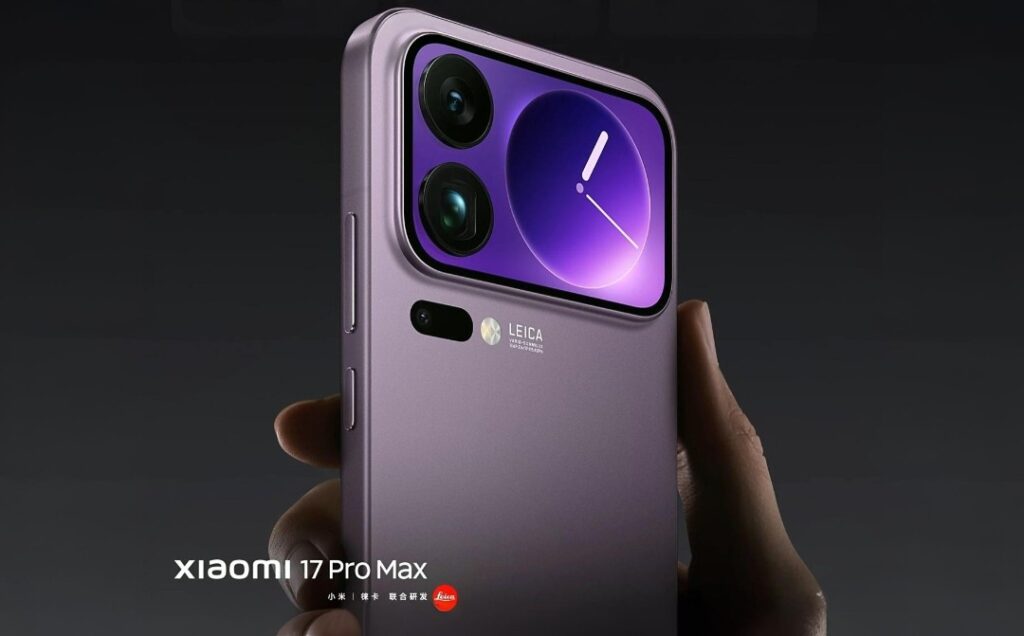
One question remains open: the secondary screen on the back. The leak only explicitly attributes it to the Xiaomi 18 Pro. But the Xiaomi 17 Pro Max officially had one last year, just like the 17 Pro, so it would be surprising to see the Pro Max go without it this time around.
On 15 September Xiaomi confirmed the Xiaomi 18 Pro series will launch in China in September, and its first teaser is entirely devoted to that rear screen. The image does not specify the model, but the message is about the series. The panel fills most of the Leica camera module and reads “生成中…” — “generating” — which suggests it will be able to display AI-generated content, beyond wallpapers and shortcuts. Xiaomi has promised more on 16 September.
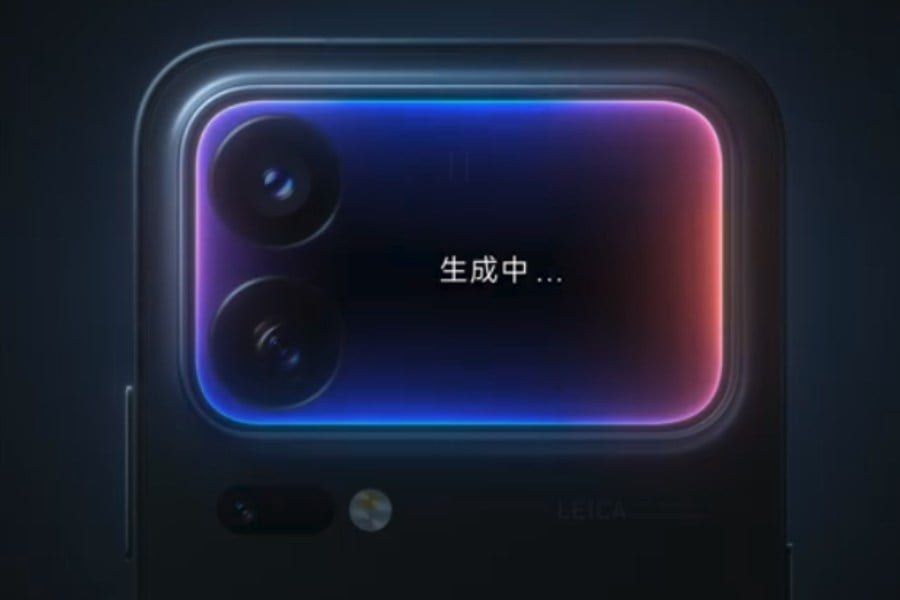
The emphasis makes sense: on the previous generation, users interacted with app cards on the rear screen more than 4 million times a day, and added more than 3.5 million wallpapers to it every day. All the more reason to expect the Pro Max to keep its rear screen too.
Colossal endurance: 8,000 mAh battery and certified 100 W charging
To feed a 6.9-inch 2K screen and a latest-generation chip, the handset will carry a colossal energy reserve. Industry reports mention a battery in the 8,000 mAh class, which Digital Chat Station previously put at 8,500 mAh. Even sticking to the cautious 8,000 mAh figure, that is a remarkable step up from the 7,500 mAh of the Xiaomi 17 Pro Max.
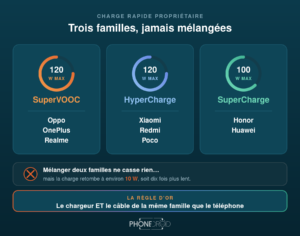
To top the tank back up quickly, the 3C certification (model M311AD) confirms 100 W wired Fast Charging, backed by 50 W wireless charging. An official Xiaomi 120 W charger covers that requirement with room to spare and remains compatible with the brand’s fast-charging protocols.
The package is rounded out by dual stereo speakers with enlarged chambers, an immersive haptic motor, plus certified support for the 5G N79 band and a UWB chip.
Expected Xiaomi 18 Pro Max specifications
Here is where things stand today. Lines taken from the Geekbench run of 9 September are marked as such; the rest come from official certifications and the matching leaks detailed above. We will update this table as Xiaomi confirms the missing entries.
| Component | Expected specification |
|---|---|
| Display | Flat OLED, 6.9 inches, 2K resolution, symmetrical bezels on all four sides |
| Processor | Qualcomm Snapdragon 8 Elite Gen 6 Pro (SM8975), 2 nm TSMC |
| Clock speeds | 2 cores at 5.11 GHz, 3 at 4.03 GHz, 3 at 3.74 GHz (Geekbench run) |
| Graphics | Adreno 850 |
| RAM | 12 GB (Geekbench run) |
| Software | HyperOS 4 (Android 17) |
| Main camera | 200 MP with LOFIC technology |
| Telephoto | 200 MP periscope, roughly 3x optical zoom, high-precision macro |
| Ultra-wide | Present, resolution not disclosed |
| Rear secondary screen | Highlighted by Xiaomi for the 18 Pro series (15 September teaser), model not specified |
| Battery | Around 8,000 mAh (8,500 mAh according to Digital Chat Station) |
| Charging | 100 W wired (3C-certified, model M311AD), 50 W wireless |
| Connectivity | 5G N79 band, UWB |
| Audio | Dual stereo speakers with an enlarged chamber |
| Launch | September 2026 in China (confirmed by Xiaomi) |
Pricing and availability: an ultra-premium positioning
All this cutting-edge hardware will have a predictable effect on the final bill. Expect at least 1,000 yuan more than the previous generation across the whole series, with the manufacturer fully embracing a resolutely premium price positioning for a model that now inherits everything the Ultra line stood for.
The Xiaomi 18 Pro Max is set to launch officially in China as early as September 2026 — Xiaomi confirmed it on 15 September — alongside the Xiaomi 18 Pro. The standard model, meanwhile, is not expected before December.
In summary
With its giant 6.9-inch flat screen, its dual 200 MP sensors including LOFIC technology, its huge battery and its certified 100 W charging, the Xiaomi 18 Pro Max immediately stands out as the most spectacular flagship of this end of year.
We will be following its official unveiling very closely so we can offer this exceptional model in Global Version on our online store. In the meantime, take a look today at our full range of Xiaomi smartphones certified for Europe.

![Xiaomi 18 Pro: The Compact Monster With Two 200 MP Sensors [UPDATE]](https://www.phonedroid.net/blog/wp-content/uploads/2026/09/xiaomi-18-pro-photos-en-main-face-dos.jpg)

![Oppo Find X10: unveiling on 22 September, dual 200 MP and 8,000 mAh [UPDATED]](https://www.phonedroid.net/blog/wp-content/uploads/2026/09/oppo-find-x10-rendu-officiel-qingcheng.jpg)