📌 Updated 14 October 2026 — New findings have shaken up expectations surrounding the Vivo X500e. The device has surfaced on the Google Play Console under model number V2648 — identical to that of the Vivo V80 —, featuring a Snapdragon 7 Gen 4 (SM7750) chip, 8 GB of RAM, and a resolution of 2750 x 1260 pixels. This spec sheet contrasts with the Bluetooth SIG certification for model V2656, which was associated with leaks pointing to a Snapdragon 8-series platform, a Sony IMX8 periscope telephoto lens, and Zeiss optics. Two possibilities remain on the table: a simple rebrand of the Vivo V80, or the existence of two distinct phones depending on the market.
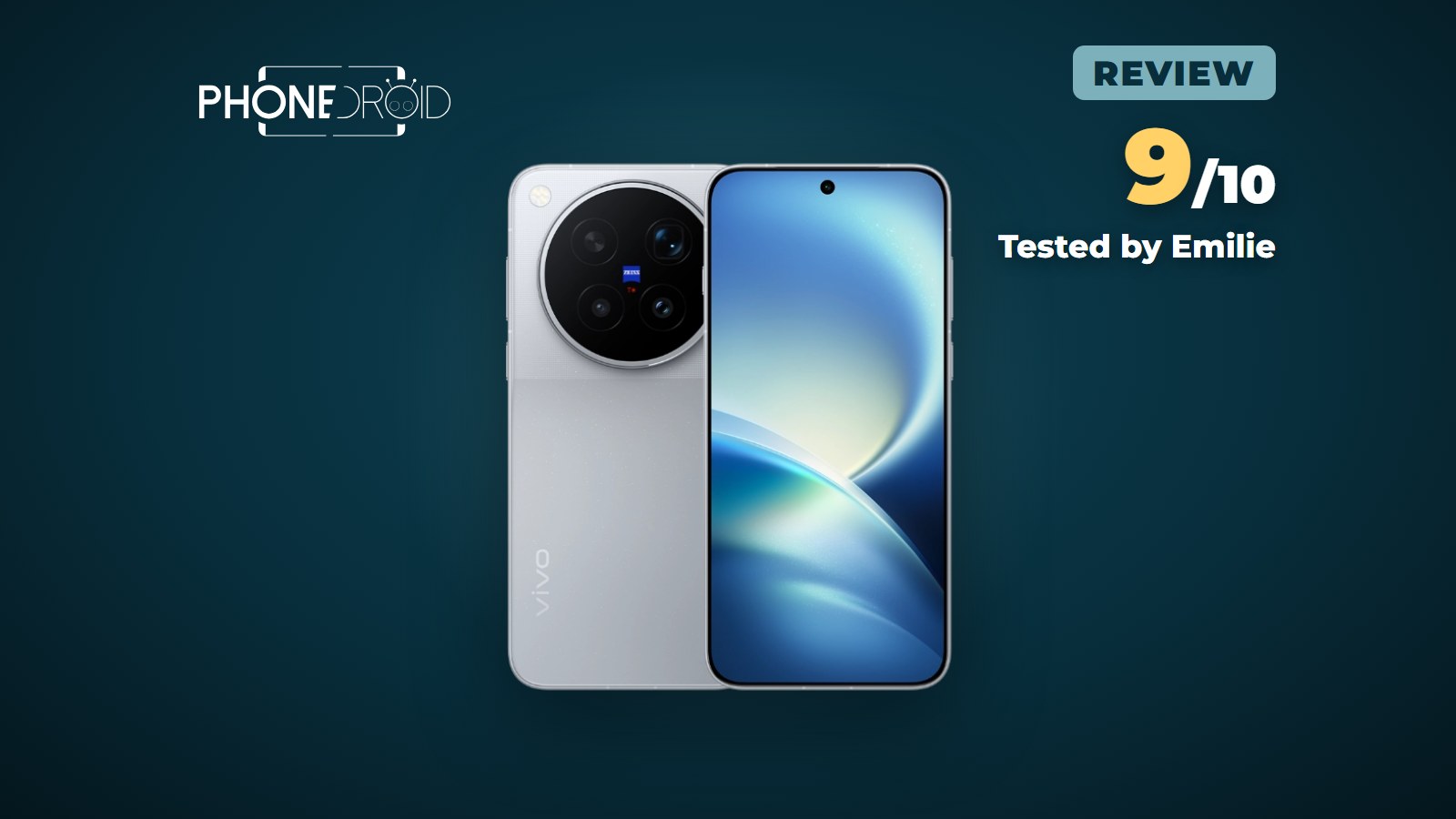
Within the X500 range from Chinese manufacturer Vivo — whose X500, X500 Pro and X500 Pro Max were made official in China and which will also include the Vivo X500 FE and X500e internationally — the Vivo X500e holds a place of its own. While the whole of the main series goes for MediaTek Dimensity 9600 chips, this “e” variant cuts against the rest of the catalogue by betting on a Qualcomm Snapdragon platform and a visual identity all its own.
Design: a square module that breaks the range’s rules
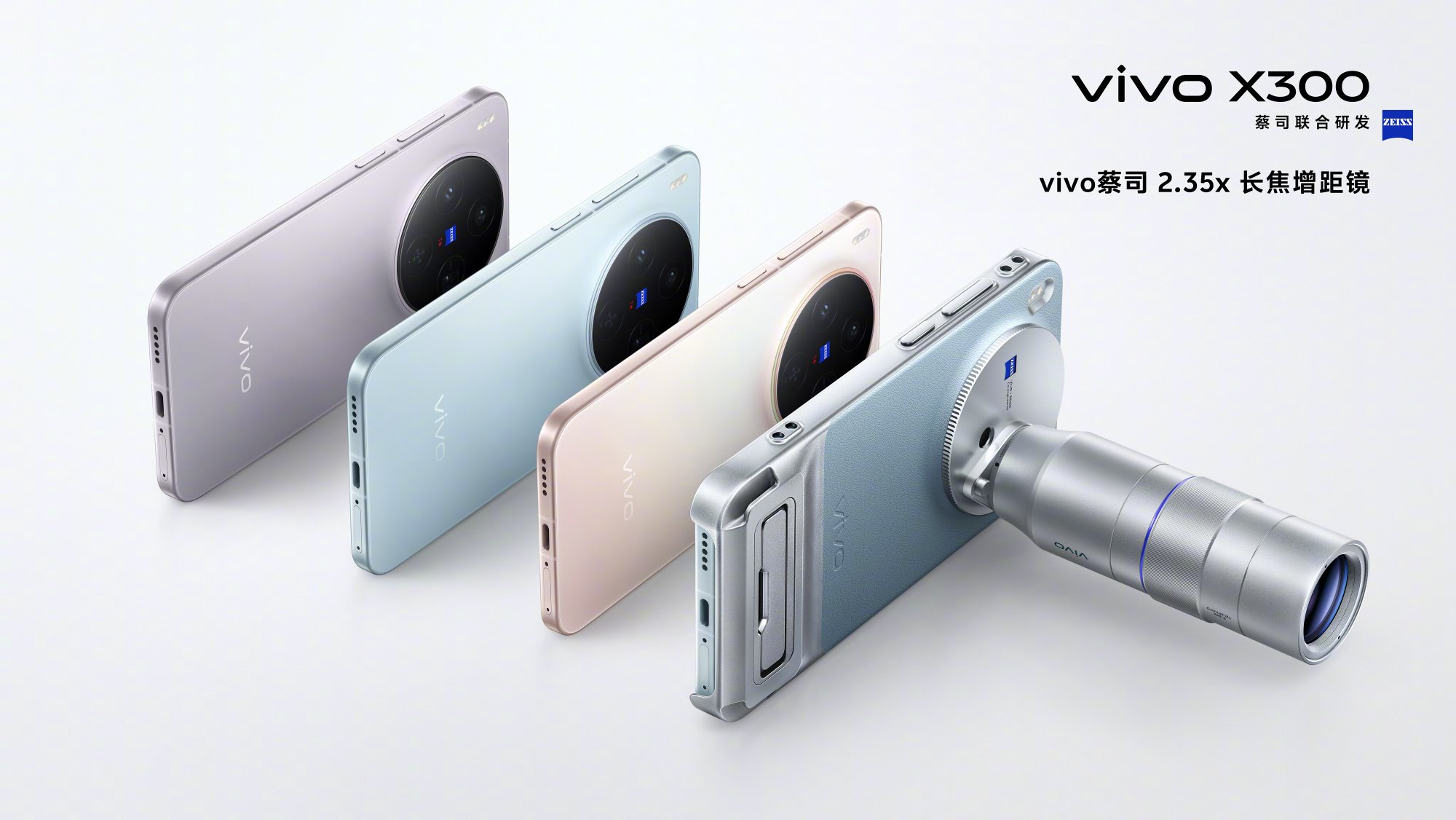
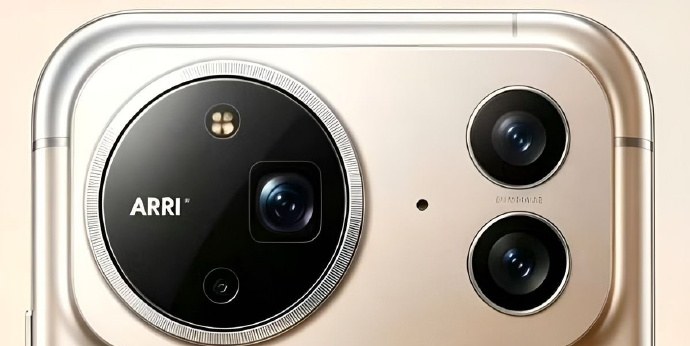
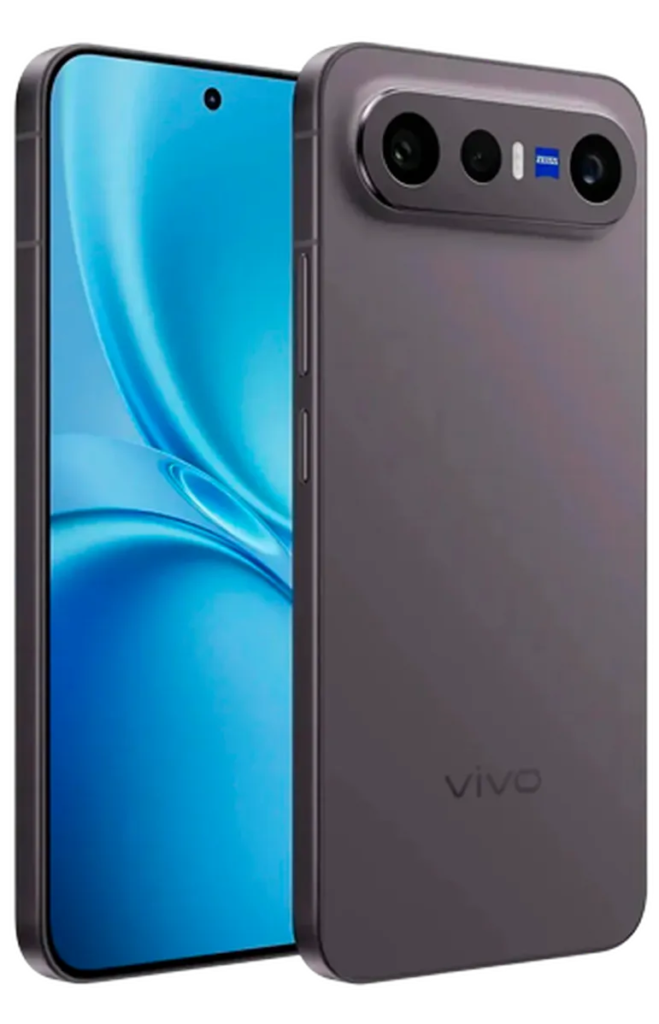
Aesthetically, the Vivo X500e will adopt a very different design language from its bigger siblings. The Vivo X500 Pro and Pro Max adopt a large circular camera block centred on the back; the standard Vivo X500, for its part, retains a round module shifted into the upper left corner.
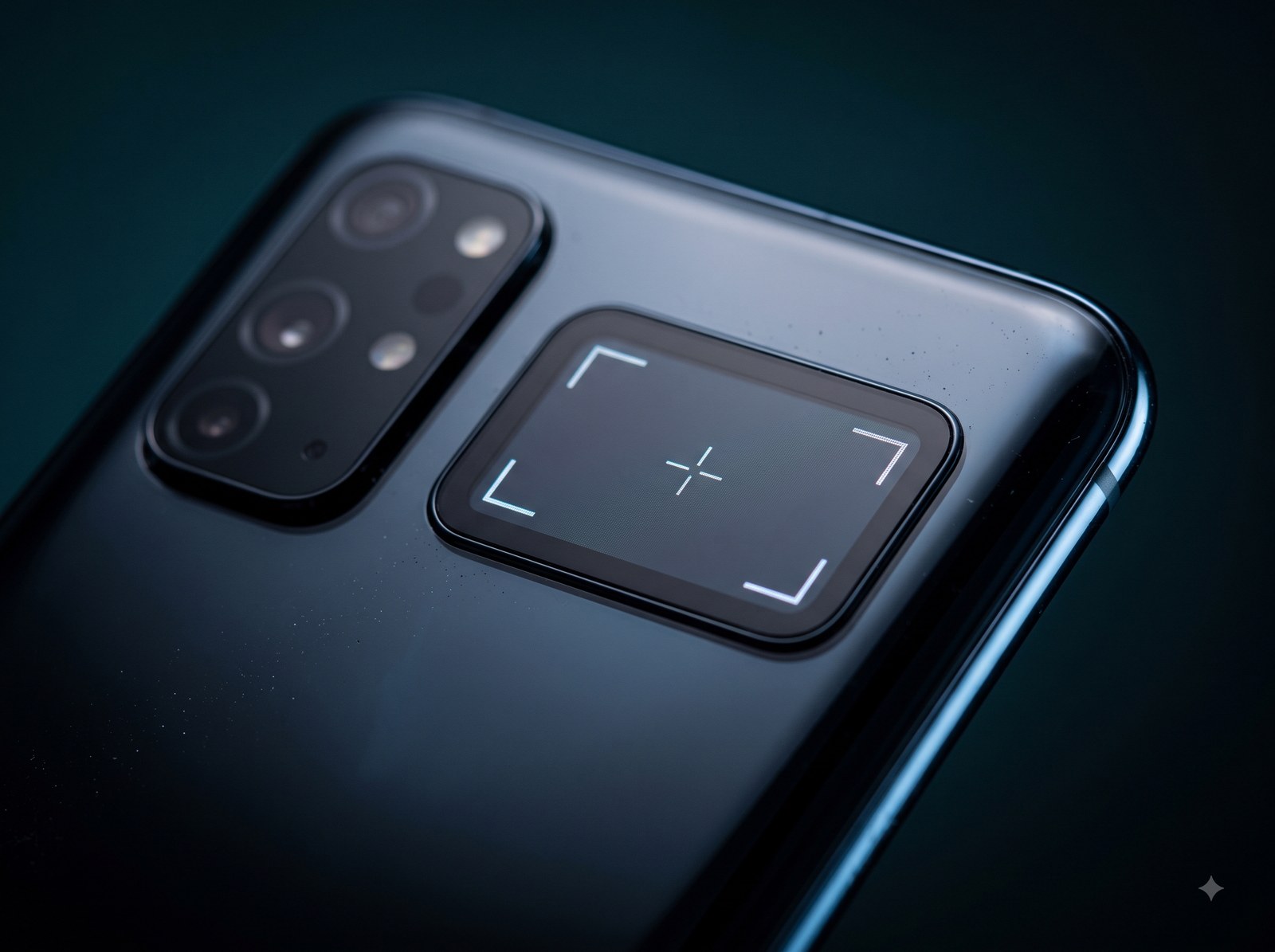
The X500e will be the only member of the family to carry a square camera module, positioned in the upper left corner. It is therefore the shape, not the position, that will set it apart from the standard model — a detail that will matter when choosing a case.
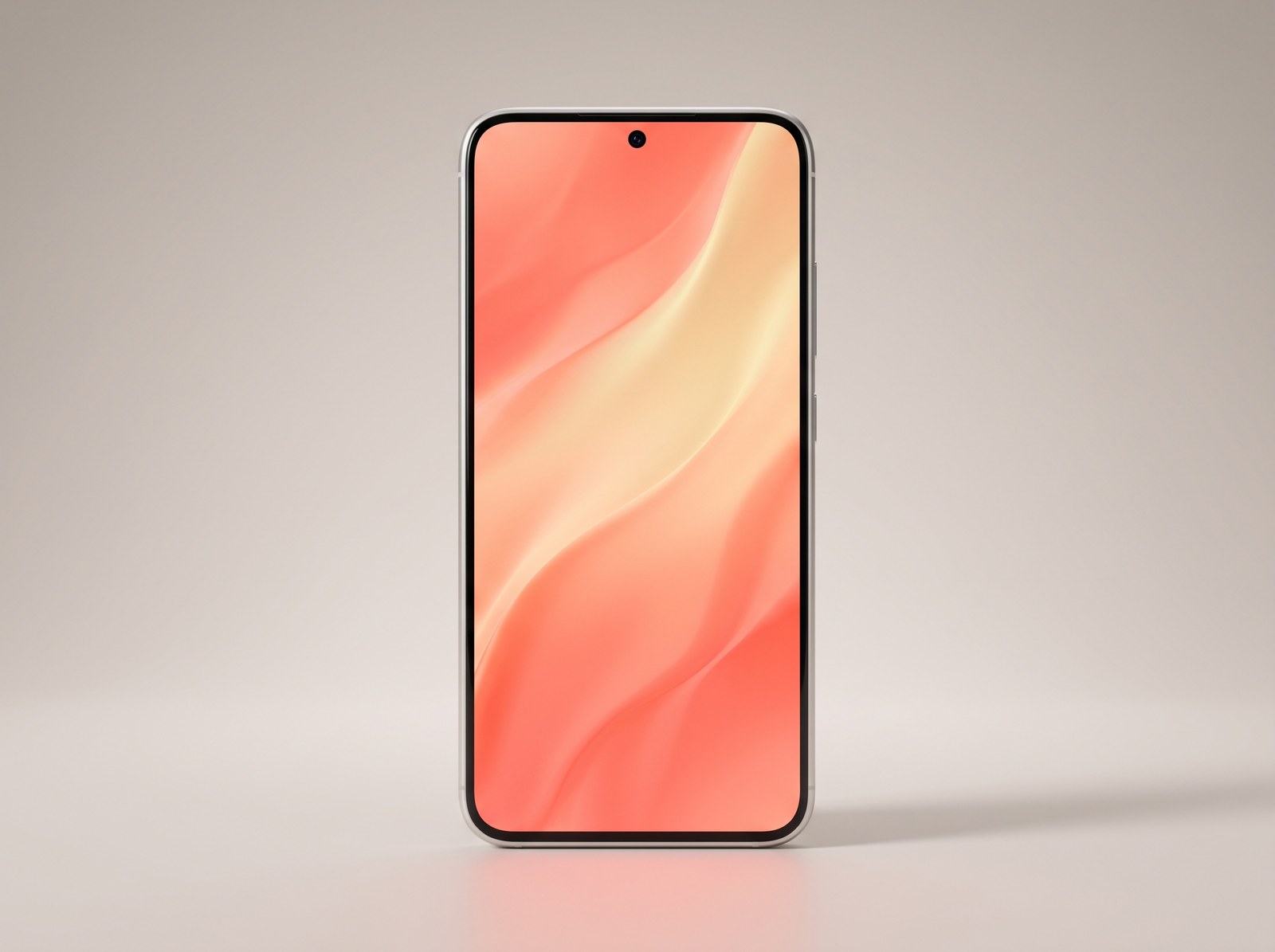
On the display side, the phone will be fitted with a flat 6.59-inch screen. This mid-size format offers a generous viewing area while keeping the phone comfortable to handle day to day, in line with the brand’s decision to drop curved panels for this generation in favour of flat displays with reduced bezels.
Performance: Snapdragon 8-series or Snapdragon 7 Gen 4?
This is one of the main questions surrounding the spec sheet: while early rumours pointed to an 8-series Snapdragon, its recent appearance on the Google Play Console mentions a Snapdragon 7 Gen 4 chip instead.
That architectural choice brings genuine differentiation. Snapdragon 8-series chips are known for the power of their Adreno graphics and the efficiency of their image signal processors (ISP), guaranteeing great stability in demanding games and excellent handling of real-time photo processing.
One caveat, however: between the possibility of an unspecified 8-series SoC and that of a Snapdragon 7 Gen 4 (SM7750) listed on the Google Play Console, the exact platform remains to be confirmed.
Camera: Zeiss partnership and Sony IMX8 periscope, or a more modest setup?
The camera department is now at the heart of the uncertainties surrounding the true identity of the Vivo X500e.
If the high-end model (V2656) materialises, the device will benefit from optical and software processing certified by Zeiss. Early leaks pointed to a 50 MP (1/1.28-inch) main sensor, an ultra-wide sensor, and a periscope telephoto based on a Sony IMX8-series sensor. This periscope module would be a major asset for capturing sharp, bright zoom shots without digital degradation.
On the other hand, if the X500e turns out to be a direct derivative of the Vivo V80 (model V2648), its camera configuration could be significantly more conventional, likely dropping the periscope zoom and the Zeiss branding in favour of a standard mid-range setup.
Naming and timing: what becomes of the FE range?
The X500e’s positioning also sheds light on the brand’s international strategy. Historically, the Vivo X300 FE was the global version of the China-only Vivo S50 Pro Mini. While it was thought that the Vivo X500e would replace the “FE” designation, reports indicate that the international line-up will indeed include both a Vivo X500 FE and a Vivo X500e.
Because of its Snapdragon processor, the Vivo X500e is not expected to launch at the same time as the rest of the X500 range: the three models were introduced on 21 September 2026 in China and are expected in Europe on 27 October (with sales starting on 5 November). While a launch in the first half of 2027 was initially suggested, securing its Bluetooth SIG certification (V2656) and its listing on the Google Play Console (V2648) point to an imminent official announcement, potentially as early as November 2026 or before the end of the year.
Expected Vivo X500e specifications
| Component | Expected specifications |
|---|---|
| Display | Flat, around 6.59 inches; 2750 x 1260 pixels according to the Google Play Console |
| Processor | Snapdragon 8-series according to early leaks (V2656), or Snapdragon 7 Gen 4 with 8 GB of RAM according to the Google Play Console (V2648) |
| Camera | Square module (upper left), Zeiss optics unconfirmed |
| Telephoto | Sony IMX8 periscope according to early leaks, uncertain if the X500e is based on the Vivo V80 |
| Design | Square module, the only one in the range (the others are round) |
| Estimated launch | November or late 2026 (Bluetooth SIG certification confirmed) |
In summary
The Vivo X500e finds itself at a crossroads within the X500 range. It now remains to be seen whether it will take the shape of an ambitious model equipped with a high-end chip and a Zeiss-tuned Sony IMX8 periscope zoom, a rebadged Vivo V80 powered by a Snapdragon 7 Gen 4, or if Vivo is actually preparing two distinct smartphones for different geographic markets.
This article will be expanded as further official announcements and technical leaks arrive. While you wait for its official unveiling, you can browse the full range of Vivo smartphones available on our shop, along with our selection of Vivo cases and Vivo tempered glass.
Tutorials
See all Hasselblad, Zeiss, Leica, ARRI: what the camera partnerships on our smartphones are really hiding
- Guide: decode your smartphone’s spec sheet!
- New smartphone: 10 settings to change right away (Xiaomi, Vivo, Oppo, Honor)
- Switching to Android: how to transfer everything without losing a thing
- How to check your battery’s real health
- A 120W charger on an 80W phone: is it risky?