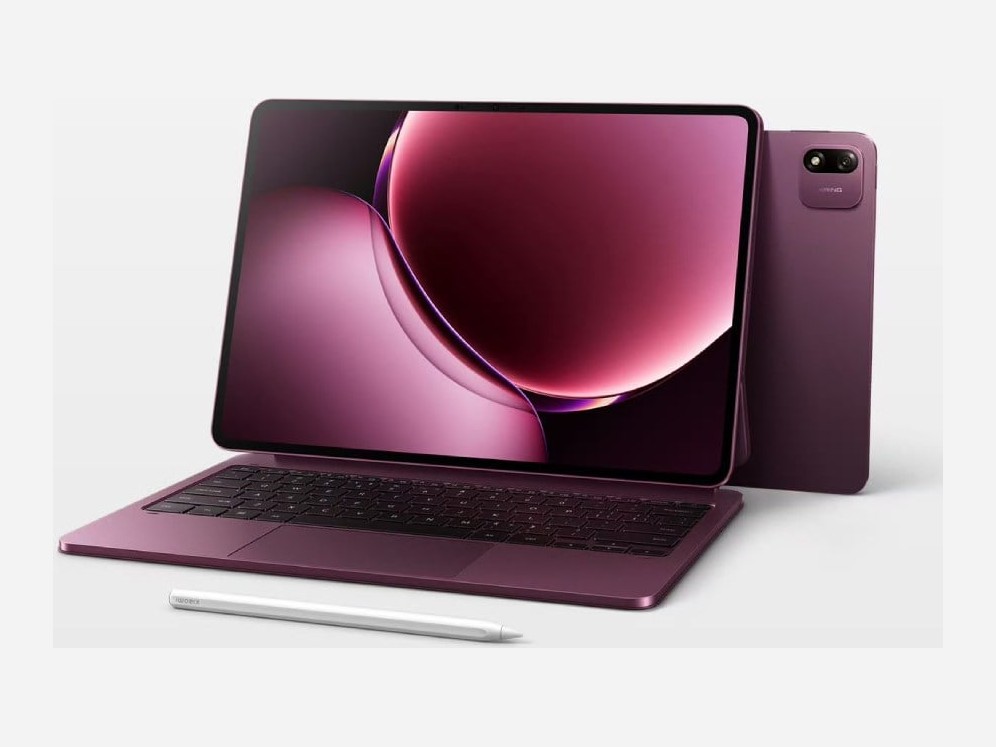
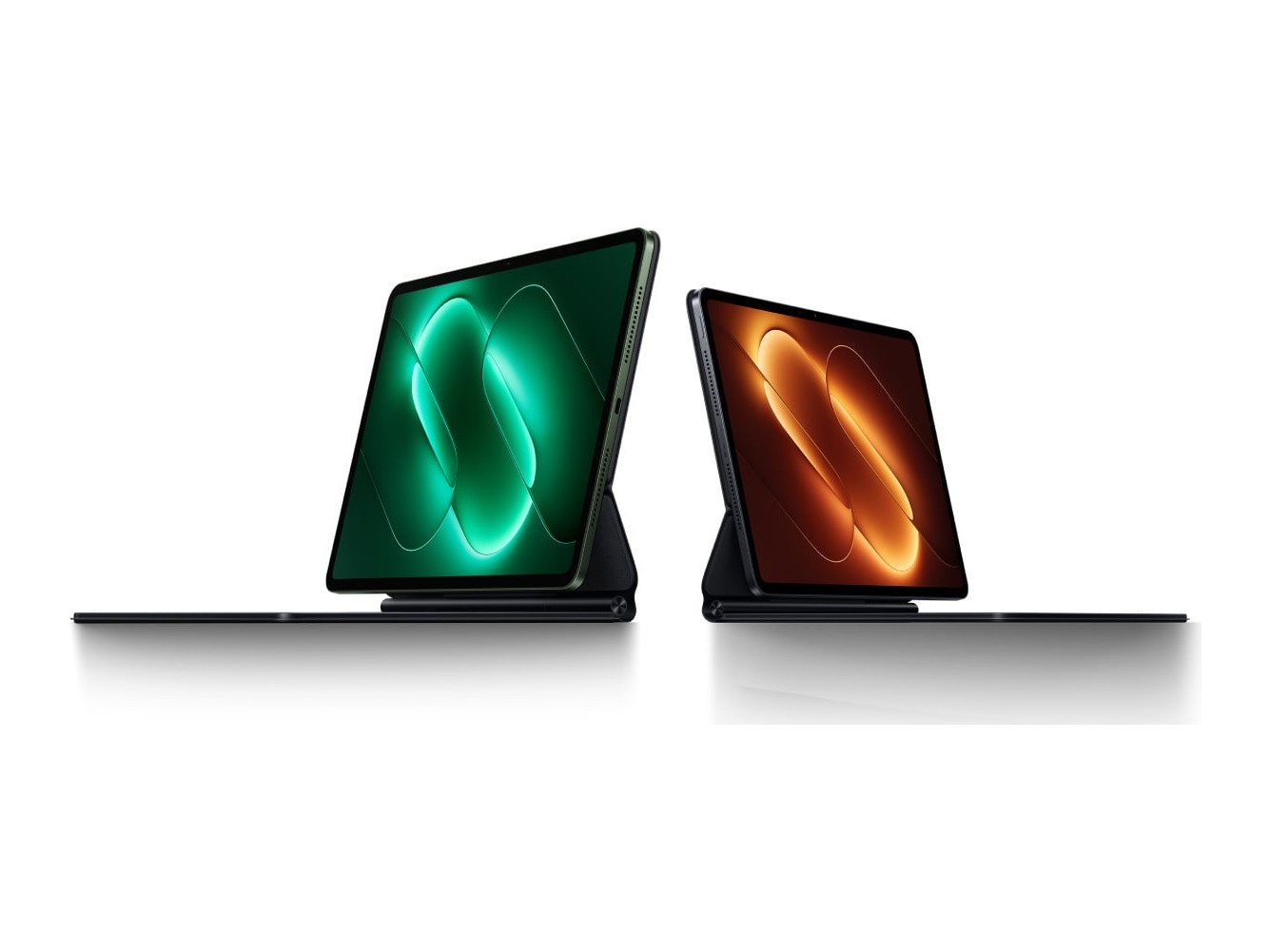
This is the headline announcement of the autumn for the Xiaomi ecosystem. At its autumn event dedicated to its next-generation flagships, the Chinese manufacturer officially unveiled the Xiaomi Pad 9 Pro Max alongside the Xiaomi 18 Fold foldable smartphone. A genuine industrial showcase, this giant tablet does more than stretch its chassis: it marks a historic break by becoming the world’s very first tablet powered by the brand’s proprietary processor, the XRING O3.
By combining an in-house computing architecture able to compete with computer chips, a 13.3-inch 3.4K panel tuned for creatives, a monster 12,000 mAh battery and an unprecedented DisplayPort video input, the Xiaomi Pad 9 Pro Max aims to redraw the line between a touch tablet and a professional monitor. Here is a detailed look at this new technological monster.
XRING O3 and LPDDR6 memory: the power of a computer chip
The XRING O3 processor is the main attraction of the device. Unveiled last month alongside the auxiliary XRING O100 and D100 chips, this platform designed by Xiaomi’s teams breaks with traditional mobile compromises:
- 10-core CPU architecture: it combines 2 high-performance C1-Ultra cores clocked at 4.35 GHz, 4 C1-Premium cores at 3.68 GHz and 4 C1-Pro cores at 3.15 GHz.
- Cutting-edge graphics: a Mali-G2-Ultra GPU with no fewer than 16 graphics cores for intensive 3D and multi-stream video editing.
- Raw performance: early Geekbench tests record multi-core scores above 14,000 points, with the manufacturer claiming combined CPU and GPU performance is now close to Apple’s M5 computer chip.
- LPDDR6 RAM: on the top 16 GB + 1 TB version, the tablet uses LPDDR6 memory supplied by CXMT, with dizzying speeds of up to 10,667 Mbps.
That wealth of power guarantees surgical responsiveness and makes it possible to run heavy artificial intelligence models directly on the device.
A 13.3-inch 3.4K panel and a nano-textured Soft Light option
The Xiaomi Pad 9 Pro Max makes a visual statement with its huge 13.3-inch LCD panel. The display has a very high 3,408 × 2,272-pixel (3.4K) resolution in a productivity-friendly 3:2 format.
The screen supports an adaptive refresh rate climbing to 144 Hz and reaches a peak brightness of 1,000 nits. Colour accuracy has been through demanding factory calibration, with a remarkable colour difference measured at ΔE ≈ 0.47, ensuring faithful rendering for graphic designers and photo retouchers.
The tablet comes in two display finishes: a standard version with glossy glass, and a top “Soft Light Screen” version with a nano-textured treatment designed to diffuse light and eliminate reflections without affecting image sharpness.
DP-in connectivity and HyperOS 4: turn the tablet into a second PC screen
It is in hardware connectivity that the Pad 9 Pro Max holds one of its most innovative features. Its USB-C port supports DP-in (DisplayPort input). In practical terms, this bidirectional wired link lets you connect the tablet directly to a desktop computer, a laptop or a handheld games console to use its 3.4K screen as a genuine secondary external monitor with very low latency.
On the software side, the tablet runs HyperOS 4 out of the box. The system takes a step forward in multitasking by letting you run up to six apps at once through freely adjustable split-screen layouts.
12,000 mAh battery, 120 W charging and eight speakers
To support this 13.3-inch workstation, Xiaomi has fitted a gigantic 12,000 mAh battery. Wired fast charging reaches 120 W, refilling that huge battery in record time.
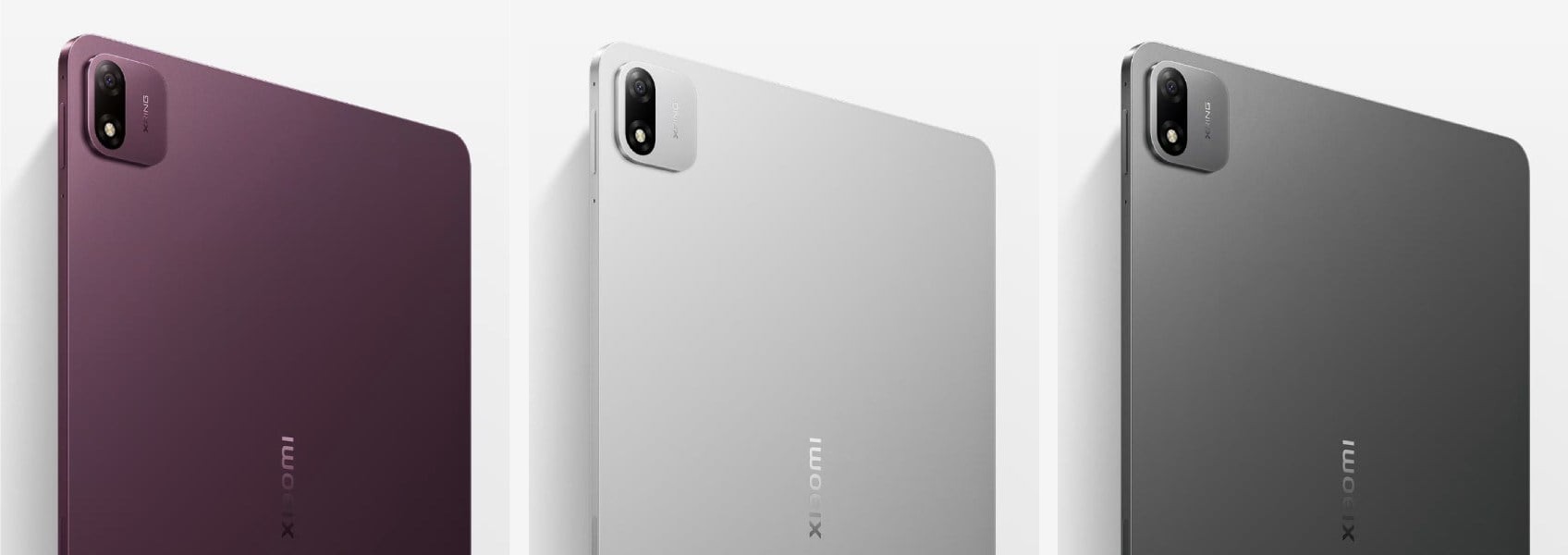
The mechanical integration commands admiration: the metal unibody chassis measures just 5.67 mm thick for a total weight of 645 grams. The back carries a “racetrack”-style camera module alongside the XRING chip branding. The multimedia equipment includes:
- An immersive spatial audio system made up of 8 speakers.
- An array of 6 microphones for clear voice capture and ambient noise cancellation.
- A 50-megapixel rear camera.
- A 32-megapixel front camera for flawless professional video calls.
Xiaomi Pad 9 Pro Max specifications
| Component | Official specifications |
|---|---|
| Display | 13.3-inch 3.4K LCD (3,408 × 2,272 px), 3:2, 144 Hz, 1,000 nits, ΔE ≈ 0.47 |
| Display finishes | Standard glossy glass or nano-textured Soft Light treatment |
| Processor | Xiaomi XRING O3 (10 cores: 2× 4.35 GHz + 4× 3.68 GHz + 4× 3.15 GHz) |
| Graphics (GPU) | 16-core Mali-G2-Ultra |
| RAM | Up to 16 GB (CXMT LPDDR6 at 10,667 Mbps on the 16 GB + 1 TB version) |
| Storage | Up to 1 TB |
| Battery & charging | 12,000 mAh · 120 W wired fast charging |
| Special connectivity | USB-C with DP-in (external monitor mode) |
| Audio & microphones | 8 stereo speakers · 6 microphones |
| Cameras | 50 MP rear · 32 MP front |
| Dimensions & weight | 5.67 mm thick · 645 grams (metal unibody chassis) |
| Software | HyperOS 4 (six-app split-screen multitasking) |
Xiaomi Pad 9 Pro Max price and availability
Pre-orders for the Xiaomi Pad 9 Pro Max are officially open in China:
- Starting price: 4,799 yuan (around $715).
- Top-of-the-range version (16 GB + 1 TB with nano-textured Soft Light display): 7,899 yuan (around $1,176).
Conclusion
With the debut of its in-house XRING O3 chip, its 13.3-inch 3.4K panel, its DisplayPort video input and 120 W charging in 5.67 mm, the Xiaomi Pad 9 Pro Max stands out as a feat of engineering and one of the most advanced tablets on the market. Xiaomi has since completed the family with the Pad 9 and the Pad 9 Pro. While waiting for a possible global version, browse our selection of tablets.

![Xiaomi 18 Pro: The Compact Monster With Two 200 MP Sensors [UPDATE]](https://www.phonedroid.net/blog/wp-content/uploads/2026/09/xiaomi-18-pro-photos-en-main-face-dos.jpg)
![Xiaomi 18 Pro Max: Heading for an Outrageous Spec Sheet [UPDATED]](https://www.phonedroid.net/blog/wp-content/uploads/2025/09/Xiaomi-17-Pro-Max.jpg)
![Oppo Find X10: unveiling on 22 September, dual 200 MP and 8,000 mAh [UPDATED]](https://www.phonedroid.net/blog/wp-content/uploads/2026/09/oppo-find-x10-rendu-officiel-qingcheng.jpg)