
📌 Update, 24 October 2026: A few days ahead of the official schedule initially set for 29 October, the global rollout of ColorOS 17 (based on Android 17) has already begun in stable version. The OnePlus 15 leads the way in India (firmware CPH2745_17.0.0.102(EX01)), while Oppo is rolling out the update to its Find X9, Find X9 Pro, Find X9 Ultra and Find X9s (in India, Indonesia and Malaysia) as well as the Find N6 foldable (in Thailand). The download weighs in at around 3.5 GB (500 to 540 MB for beta participants) and will gradually expand to other regions, ahead of an imminent launch for Realme.
It is done: ColorOS 17 is official. Oppo lifted the lid on the new version of its Android skin at its developer conference in China, with a promise summed up in a few words on its visuals: “ultra-smooth, understands you better”. After several weeks of closed beta, the brand is finally detailing what the update brings, and above all when it will reach your devices.
Here is what is in store: a model-by-model rollout schedule for Oppo, OnePlus and Realme, a reworked graphics engine, memory management that learns your habits, and a wave of artificial intelligence features that reaches the gallery, notes, calls and even the car. Let us take the full tour.
Official ColorOS 17 schedule: the dates in China
The very first to enjoy ColorOS 17 will not have to wait at all: the Find X10 range, unveiled on 22 September, ships with the new version out of the box, as do the OnePlus 16 and the Oppo Watch S2 smartwatch.
For devices already out there, Oppo has set the dates in China. As always, the newest models go first: the Find X9 series and the Find N6 foldable from 8 October, the Find X8 generation a week later, then a big wave on 26 November that reaches back to the Find X7 and Find N3, two generations back.
Oppo: phones, tablets and watches
| Date (China) | Oppo devices |
|---|---|
| 8 October 2026 | Find N6 and Find N6 Satellite Edition; Find X9 Ultra and X9 Ultra Satellite Edition, Find X9s Pro, Find X9 Pro and X9 Pro Satellite Edition, Find X9 |
| 16 October 2026 | Find N5 and Find N5 Satellite Edition; Find X8 Ultra and X8 Ultra Satellite Edition, Find X8s+, Find X8s, Find X8 Pro and X8 Pro Satellite Edition, Find X8; Pad 5 Pro, Pad Mini and Pad Mini Soft Light Edition tablets |
| 20 October 2026 | Watch X3 and Watch X3 Mini |
| 22 October 2026 | Reno 16 Pro and Reno 16 |
| 30 October 2026 | Watch X2 and Watch X2 Mini |
| 26 November 2026 | Find N3, Find N3 Collector’s Edition and Find N3 Flip; Find X7 Ultra and X7 Ultra Satellite Edition, Find X7; Reno 15 Pro, Reno 15 and Reno 15c; Reno 14 Pro and Reno 14; K15 Pro+, K15 Pro and K15; Pad 6 and Pad 6 Soft Light Edition, Pad 5 and Pad 5 Soft Light Edition, Pad 4 tablets; Watch S |
What about global versions?
This schedule covers Chinese versions. Oppo has now officially confirmed its unified international schedule: following announcements from its Indian and Japanese subsidiaries and the launch of the Find X10 and Find X10 Pro Max on 21 October in Majorca, the global rollout initially scheduled for 29 October 2026 has finally begun a few days early in several Asian countries. That is the one that matters to PhoneDroid customers: our official global-version models receive the update over the air (OTA), with Google services, as soon as Oppo releases it for Europe.
The numerous Reno and F-series models sold outside China now know their fate: they are included in the global schedule and will receive the update between late October 2026 and the first quarter of 2027. While the original Find X6 and Find N2 are still missing, Oppo has confirmed support for the Find N2 Flip foldable as well as the Reno 12 series, scheduled for the first quarter of 2027 internationally. With Oppo having unveiled its detailed international roadmap, find the full model-by-model schedule below.
Official global rollout schedule: dates for Oppo and OnePlus
The Find X10 series was the first to introduce ColorOS 17 internationally at its global unveiling on 21 October. Initially scheduled for 29 October 2026, the rollout for devices already on the market has finally started early for the first Oppo (Find X9, Find X9 Pro, Find X9 Ultra, Find X9s and Find N6) and OnePlus (OnePlus 15) flagships in several Asian markets, before expanding to other regions.
As a direct consequence of an internal reorganisation within the group, OnePlus and Realme smartphones and tablets will also receive ColorOS 17 globally, leaving OxygenOS 17 and Realme UI 8 behind. Realme’s schedule is covered in our dedicated article.
Since the rollout takes place in successive over-the-air (OTA) batches, a few days’ variance may be observed depending on countries and carriers. The download package weighs in at around 3.5 GB for stable version users (compared to 500 to 540 MB for those who were already taking part in the beta programme), but make sure to have at least 10 GB of free storage space for the installation.
Oppo: global rollout schedule
| Timeline (Global) | Eligible Oppo devices |
|---|---|
| 29 October 2026 | Find N6, Find X9 Ultra, Find X9s, Find X9 Pro, Find X9 |
| 30 October 2026 | Find N5, Find X8 Pro, Find X8, Reno16 Pro 5G, Reno16 5G, Reno16c 5G, Reno16 FS 5G, Reno16 F 5G |
| November 2026 | Find N3, Find N3 Flip, Reno15 Pro Max 5G, Reno15 Pro 5G, Reno15 Pro Mini 5G, Reno15 5G, Reno15 FS 5G, Reno15 F 5G, Reno15c 5G, Reno15 A, Reno14 Pro 5G, Reno14 5G, Reno14 5G Diwali Edition, Reno14 FS 5G, Reno14 F 5G, Reno14 F Dark Side Limited Edition, K14x 5G, K14 5G, K13x 5G, F33 5G, F31 5G, F29 5G |
| December 2026 | Reno13 Pro 5G, Reno13 5G, Reno13 FS 5G, Reno13 A, Reno13 F 5G, Reno13 F, K13 Turbo Pro 5G, K13 Turbo 5G, K13 5G, Pad 5, Pad 5 Matte Display Edition, Pad 3 Pro, Pad 3, Pad 3 Matte Display Edition |
| Q1 2027 | Find N2 Flip, Reno12 Pro 5G, Reno12 Pro 5G Manish Malhotra Limited Edition, Reno12 5G, F33 Pro 5G, F31 Pro+ 5G, F31 Pro 5G, F29 Pro 5G, Pad SE, Pad SE Matte Display Edition |
OnePlus: global rollout schedule
| Timeline (Global) | Eligible OnePlus devices |
|---|---|
| 29 October 2026 | OnePlus 15, OnePlus Pad 4 |
| 30 October 2026 | OnePlus 15R, OnePlus 13, OnePlus 13s |
| November 2026 | OnePlus Open, OnePlus 13R, OnePlus 12, OnePlus Nord 6, OnePlus Nord CE 6, OnePlus Pad 3 |
| December 2026 | OnePlus 12R, OnePlus 12R Genshin Impact Edition, OnePlus 11, OnePlus Nord 5, OnePlus Nord CE 6 Lite, OnePlus Nord CE 5, OnePlus Pad 2, OnePlus Pad Go 2 |
| Q1 2027 | OnePlus Nord 4, OnePlus N6, OnePlus N6x, OnePlus N6 Lite, OnePlus Pad Lite |
OnePlus and Realme: the dates in China
While ColorOS was previously reserved for the Chinese market for OnePlus and Realme, an internal restructuring now expands this skin globally, replacing OxygenOS 17 and Realme UI 8. On the OnePlus side, the OnePlus 15 and 15T lead the way on 8 October, and the update reaches back to the OnePlus 11 on 26 December:
| Date (China) | OnePlus devices |
|---|---|
| 8 October 2026 | OnePlus 15 and 15T |
| 16 October 2026 | OnePlus 13 and 13T; OnePlus Pad 3 Pro tablet |
| 20 October 2026 | OnePlus Ace 6, Ace 6 Ultra, Ace 6T and Ace 6T Genshin Impact edition |
| 26 November 2026 | OnePlus 12; Ace 5 Pro, Ace 5, Ace 5 Ultra and Ace 5 Racing Edition; Turbo 6V and Turbo 6; OnePlus Pad 2 Pro and Pad 2 tablets |
| 26 December 2026 | OnePlus 11 and 11 Jupiter Rock Edition; Ace 3 Pro, Ace 3 Genshin Impact edition and Ace 3V; Turbo 6X Pro and Turbo 6X; OnePlus Pad Pro and Pad tablets |
For Realme, the GT8 Pro is served on 8 October and the wave runs until 26 December with the GT6 and Realme 14. The model-by-model detail is in our article on Realme and ColorOS 17.
Smoother, and for longer: two new engines under the bonnet
Oppo built ColorOS 17 around one word, smoothness, and one idea: that it should not wear off over time. The new Fluid Design harmonises visual effects, animations and touch feedback across the whole system, with softer haptics to accompany every gesture.
- Aurora engine and fused rendering: the new generation of Oppo’s graphics engine plugs into the phone’s rendering architecture. The announced result: 25% less memory used when launching and running apps, and a rendering workload cut by 30%. Less work for the chip also means less heat and less battery drain.
- Tidal engine and app memory: it learns which apps you open, how often and for how long, and allocates resources accordingly. The feed you were scrolling or the half-filled form is still waiting when you come back: Oppo claims 55.6% more apps kept alive in the background.
- Foreground responsiveness: scrolling and loading 50% faster in third-party photo galleries, mini-programs launching 30% faster and switching between apps sped up by 15%.
These figures come from Oppo’s lab measurements, and the brand also promises six years of smoothness across its whole ecosystem. A bold commitment, and one that speaks directly to every buyer’s worry: watching their phone slow down update after update.


Visual overhaul: frosted glass and circular toggles
On pure looks, ColorOS 17 leaves flat blocks of colour behind for a visual language built on depth and translucency. The whole interface leans on a translucent frosted-glass effect, underlined by subtly luminous borders (contour glow) and a progressive background blur that adds relief without harming text legibility.
The most visible change day to day is in the quick settings panel and the Control Centre. Oppo drops the rounded square tiles inherited from previous versions in favour of fully circular toggles. The settings and edit icons have been redrawn to match that softer geometry.
The panel also gains wider volume and brightness sliders, for finer control:
- The volume slider now carries a quick mute button at its foot and shows the exact percentage at the top.
- As soon as you connect wireless earbuds, a dedicated icon replaces the standard speaker symbol to confirm the audio output at a glance.
Physics-based animations and a floating capsule navigation bar
How fluid an interface feels does not come from raw chip power alone, but from the way elements respond to your fingers. With ColorOS 17, Oppo introduces a rethought physics animation engine:
- Swiping between the notification shade and the Control Centre makes the visual layers separate with a bouncy animation, giving the impression of handling distinct physical objects.
The other significant ergonomic shift: a transparent floating capsule navigation bar. Replacing rigid tab bars in core system apps such as Phone, Notes and Recorder, this capsule lets you move from one section to another with a single horizontal thumb swipe, which makes one-handed use considerably easier.
Lock screen, flashlight and media player revisited
The attention to practical detail shows up in several corners of the system:
- Flux Themes and the lock screen clock: the vertical clock offers three distinct font styles and takes on the frosted-glass treatment with a contour glow. The Flux Themes also gain new interactive effects, and the lock screen animations gain in smoothness.
- A full-screen flashlight dimmer: borrowing an idea that appeared on iOS 26, the torch now opens onto a dedicated interface where brightness is adjusted with a single vertical swipe on the screen.
- An immersive media player: the audio playback widget adopts a “light field” aesthetic with added depth, while the progress bar animates like a moving comet.
- The Phone app: the call interface shows a noticeably larger end-call button, which cuts down on mistakes, and comes with a wider set of customisation options.
- The “Live Alert” charging animation: plugging in a charger triggers an animation wrapped in a brilliant glow, paired with a more spacious, enveloping charging tone.
Oppo AI: a gallery that edits and an assistant that takes the lead
This is the heart of the release. In the gallery, the new AI photo editor removes passers-by and distracting elements from a shot, fixes motion blur and adjusts colours and tones, suggesting edits and templates on its own. Its cleverest trick, reference image replication, applies the colours, lighting or skin tone of another picture to yours. Oppo relies on a large visual understanding model called “Da Vinci”, made up of six expert models (light, image quality, composition, colour, portrait, elements), and on native 2K ProXDR rendering to keep images natural.


- Memory gallery: the AI groups your photos and writes the captions to turn them into short illustrated stories. The gallery can also show pictures from third-party cameras and a NAS without taking up the phone’s storage.
- AI Notes: take notes while listening to a meeting, import a book, a video or an idea in one tap, then turn it into structured notes and an editable overview diagram. The tool even picks out the viewpoints and blind spots in your thinking. Oppo pairs it with a small AI accessory to wear all day, announced at 9.8 g with 24 hours of battery life: a short press sums up the key points, a long press asks it a question.
- Translation in your ear: paired with Oppo earbuds, the AI translates the other person in real time straight into your ears, and plays your answer through the phone’s speaker.
- Pai-Yi-Pai: point the camera at an object to identify it, make a document clearer, check the calories in a dish or connect to a Wi-Fi network.
The Xiao Bu assistant (also known as Breeno) moves up a gear. Its new personal space spots urgent matters, tracks your to-dos and priorities, and reminds you of an overdue bill or a forgotten booking. Its suggestions cover more than 700 everyday situations. When travelling, a single sentence is enough for it to build an illustrated itinerary, split into to-dos, transport, accommodation and precautions, with help for tickets, check-in and car hire.
Around town, navigation shows up in a live bubble that guides you on foot, by bus or by metro, down to the nearest exit and the stop where you get off. Xiao Bu also warns you if you are heading to the wrong airport or the wrong station, a safety net that would have saved more than one trip. Finally, one-tap quick notes save a parcel pickup code, a contact or an alarm so you never miss a ticket sale.
Car, watch and security: a tighter ecosystem
- Car+: the phone connects directly to the car, and the route you were following on foot moves to the car’s large display as soon as you start driving.
- Smartwatches: new gestures to control the phone from your wrist (double pinch to switch tracks or videos, wrist flip or double tap to go back, remote shutter for the camera), a FatMax fat-burning mode, customisable modular watch faces and workout sharing with the phone and tablet. Heart rate and calories show up live on every compatible device.
- Security: three AI-powered protections against cross-app scams, face-swap fakes and fraudulent calls.
- Accessibility: the AI reads out the text, buttons and images you touch, whether you are booking a ride, travelling or shopping, and gives spoken framing guidance when you take a photo. A new senior mode switches on an enlarged display, scam blocking and quick calls to relatives in one tap.


In summary: a substantial update for the Oppo ecosystem
With ColorOS 17, Oppo goes well beyond a fresh coat of paint: smoothness becomes a measurable, six-year commitment, and AI moves from gimmick to an assistant that anticipates. The Chinese schedule is ambitious, covering three generations of Find X and Find N devices in under three months.
For Europe and the global market, the schedule is now underway: following the presentation of the Find X10 and Find X10 Pro Max on 21 October in Majorca, the global rollout scheduled to start on 29 October 2026 has even started a few days early in Asia, and will gradually run through the first quarter of 2027. The complete breakdown of device-by-device rollout dates for Europe and the rest of the world is now available in the tables above. In the meantime, browse our global-version Oppo smartphones, ready for the update, along with our Oppo cases and Oppo tempered glass screen protectors.
Tutorials
See all Hasselblad, Zeiss, Leica, ARRI: what the camera partnerships on our smartphones are really hiding
- Guide: decode your smartphone’s spec sheet!
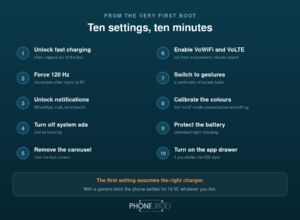
- New smartphone: 10 settings to change right away (Xiaomi, Vivo, Oppo, Honor)
- Switching to Android: how to transfer everything without losing a thing
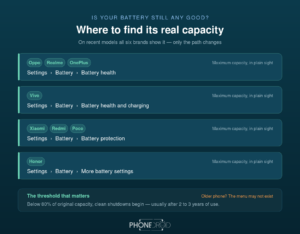
- How to check your battery’s real health
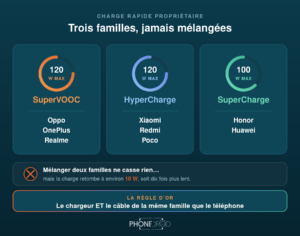
- A 120W charger on an 80W phone: is it risky?