
📌 Updated 17 September 2026 — Oppo has cleared up the last doubts about the Find X10’s spec sheet: it is official, the chip is indeed the Dimensity 9600M, charging reaches 80 W wired and 50 W wireless, and the 16 GB + 512 GB configuration comes with 12 GB of virtual memory. Launch on 22 September in China.
With the autumn wave of launches approaching, the Find range is about to make its return. Attention usually goes to the most extreme versions, yet the entry point of the family, the Oppo Find X10, is shaping up as an unusually aggressive proposition that refuses any discount compromise.
According to matching claims from tipsters Digital Chat Station and Smart Pikachu, the standard model comes with a first-rate spec sheet. Oppo has chosen not to hold back on the components that matter, giving the Find X10 hardware that competes directly with the best devices on the market.
Oppo’s product manager answers: “the standard version is top-notch”
On 2 September, Zhuo Shijie, product manager for the Find range at Oppo, opened a thread on Weibo: preparations for the launch event had just begun, and he offered to answer questions within the limits of what he could say. The replies came the next day, and two of them bear directly on the standard model.
The first question was blunt: other brands’ standard versions have regressed this year, what about yours? The answer carries no hedging: “the standard version is really top-notch, offering a complete solution from the start”. Coming from the person in charge of the range, a fortnight before the unveiling, that reads as a public commitment rather than a pleasantry.
The second came from a Find X8 owner asking whether the jump was worth it. The reply: “the standard version is a great all-in-one option; both the X8 and the X8 Pro are worth upgrading from”. Oppo is therefore placing the target for its entry model among owners of the X8 generation — those with the Find X8 or the Find X8 Pro, both still in our catalogue. Nothing was said about the more recent X9 generation.
The dual 200 MP gamble: a telephoto with no compromise
One of the most telling parts of the Find X10’s development concerns the choice of telephoto. In the spring, Oppo was running strict comparison tests: on one side a more modest 64-megapixel module (1/2-inch), on the other a 200-megapixel sensor (the Samsung HP5, at 1/1.56-inch). There was reason to fear a cost-driven decision on the standard model, but recent supply-chain confirmations indicate that Oppo has dropped the 64 MP option altogether: the whole range gets a 200 MP main camera and a 200 MP 3x periscope telephoto.
One caution, though, before reading resolution as quality: two 200-megapixel sensors do not produce the same image. The real difference lies in the physical size of the parts. On the Find X10:
- The 200 MP main sensor is built on a very large Samsung HPC module (tested at 1/1.3-inch or 1/1.4-inch) using DeepPix technology to gather as much light as possible.
- The 200 MP periscope telephoto relies on a more measured 1/1.56-inch sensor, well matched to 3x optical magnification without thickening the phone.
- At the front, a 50 MP sensor with autofocus: autofocus on a selfie camera matters most with two or three people in frame, where a fixed-focus lens always leaves someone slightly soft.
- The set is completed by a 50 MP ultra-wide and a 3 MP multispectral sensor, backed by Hasselblad colour processing and its natural-toned “Danxia” portrait optics.
Digital Chat Station also gives the reason for that pairing, and it is not the one you would expect. Matching the main camera and the telephoto on resolution would not be about capturing more detail alone: the goal would be to get the same colours from one sensor to the other. A shift in tint at the moment the phone swaps from wide to zoom is among the most noticeable flaws across a series of photos, and it becomes genuinely distracting in video, where the change happens on screen.
So what really separates it from the models above? While the Find X10 Pro Max pushes the concept as far as three 200 MP sensors, ultra-wide included, the standard Find X10 keeps a balanced configuration without conceding anything on the focal lengths used most day to day.
On 7 September, Oppo put that particular question to bed. Its first official poster puts photography at the centre of the range, under a new name — the “Hasselblad Super Clear Camera” — and confirms in writing the standard model’s dual 200 MP setup, where the Find X10 Pro Max treats itself to a trio it claims as a world first. The no-compromise telephoto bet holds, then: it was not an optimistic leak.
Two in-house parts round out the picture, and they apply across the range. The Danxia colour restoration optics move to a second generation, with 24 sampling channels and 15 stops of dynamic range — fifteen steps between the deepest shadow and the brightest highlight, held in a single frame. And an engine called LUMO takes charge of light and shadow: the stated aim is to keep a face readable against the light without washing out the rest of the scene, something HDR applied to portraits still gets wrong fairly often.
Oppo has in fact made it the name of the whole camera block, the LUMO imaging system, whose configuration is now official: 200 MP + 50 MP + 200 MP on the back and 50 MP on the front.
On 10 September, a second poster completed the picture, and it is the one that teaches the most. We already knew the resolution of both sensors; it is the aperture and the stabilisation that decide what they can do once the light goes.
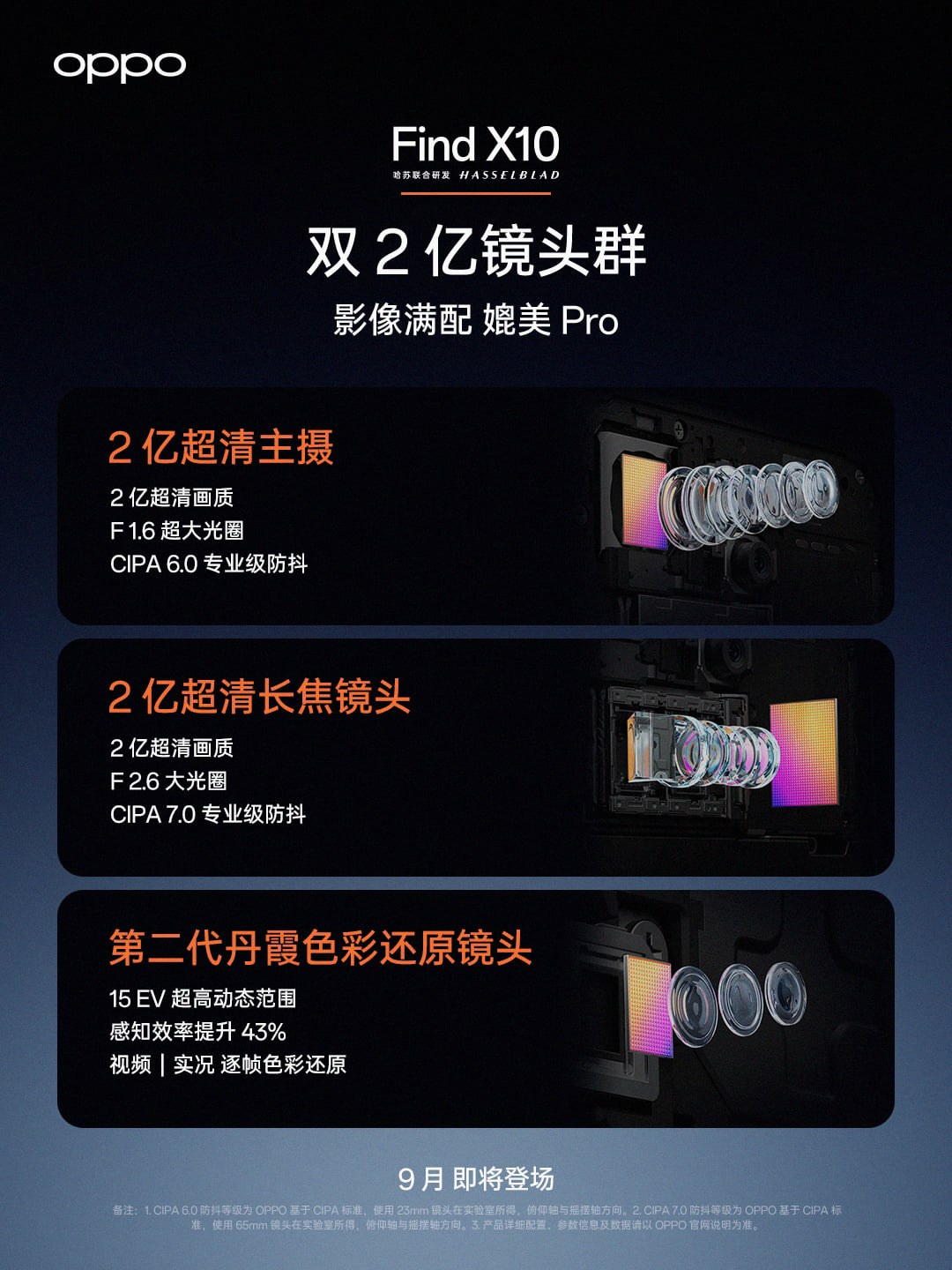
- 200 MP main camera: f/1.6 aperture and CIPA level 6 stabilisation. The CIPA scale is counted in stops of exposure: six stops means a shutter speed roughly sixty times longer held by hand without blur. That is precisely what separates a street photograph after dark from a wasted one.
- 200 MP telephoto: f/2.6 aperture and CIPA level 7, one stop better than the main camera. That is not misplaced generosity: on a telephoto, the slightest tremor of the hand is magnified in the same proportion as the subject.
- Second-generation Danxia optics: Oppo claims 43% more light-gathering efficiency and confirms the 15 stops of dynamic range, applied to stills, to live photos and to video, frame by frame.
The small print at the foot of the poster adds something Oppo does not put forward: both measurements were taken in the laboratory with a 23 mm lens for the main camera and a 65 mm one for the telephoto. Those are the equivalent focal lengths of the two modules, and the ratio between them — a little under 3x — matches the optical magnification reported since the spring.
On timing, the poster only said “September”. Oppo settled it on 14 September by opening pre-reservations: the range will be unveiled on 22 September in China, five days after the ColorOS 17 conference.
Flat 6.59-inch display: 165 Hz and the BT.2020 colour space
At the front, the Oppo Find X10 adopts a very manageable format with a flat 6.59-inch OLED LTPO panel in 1.5K resolution. Thanks to LIPO encapsulation, the display is framed by ultra-thin symmetrical bezels that maximise the usable area.
Several hardware advances take the screen a clear step forward:
- 165 Hz refresh rate: a very high frame cadence that removes stutter and lifts both browsing and gaming.
- Extended BT.2020 colour space: the panel uses three new RGB emissive materials to cover the widest colour gamut in the industry.
- Sub-1-nit minimum brightness: where the Find X9 and X9 Pro bottomed out at 1 nit, the Find X10 goes below that threshold so you can read comfortably in complete darkness without eye strain.
- Advanced eye protection: the panel is designed to limit harmful blue light while maximising the beneficial red light output that makes long sessions easier on the eyes.
One more item does not come from a leak at all: Oppo has confirmed that the Find X10 series will be the first to use the new generation of its ProXDR display technology. The company is holding the detail back for the launch. On previous generations, ProXDR covered Oppo’s work on HDR photo playback, pushing highlights well past the panel’s average brightness so that, within a single image, sunlight on water can climb far higher than the rest of the scene — much as the eye perceives it.
The panel now has a name. Oppo calls it the Tiangong Screen 2.0 and developed it with Tianma: it cuts blue light exposure while improving rendering at very low brightness, two things that matter most in the evening, when the screen is the only light in the room.
Oppo now officially describes the 6.59-inch panel as an ultra-clear “diamond” screen, with an eye-protection feature.
Those “ultra-thin” bezels finally got a number on 10 September, and the number is striking: 0.99 mm, identical on all four sides. No Find had yet gone below one millimetre.
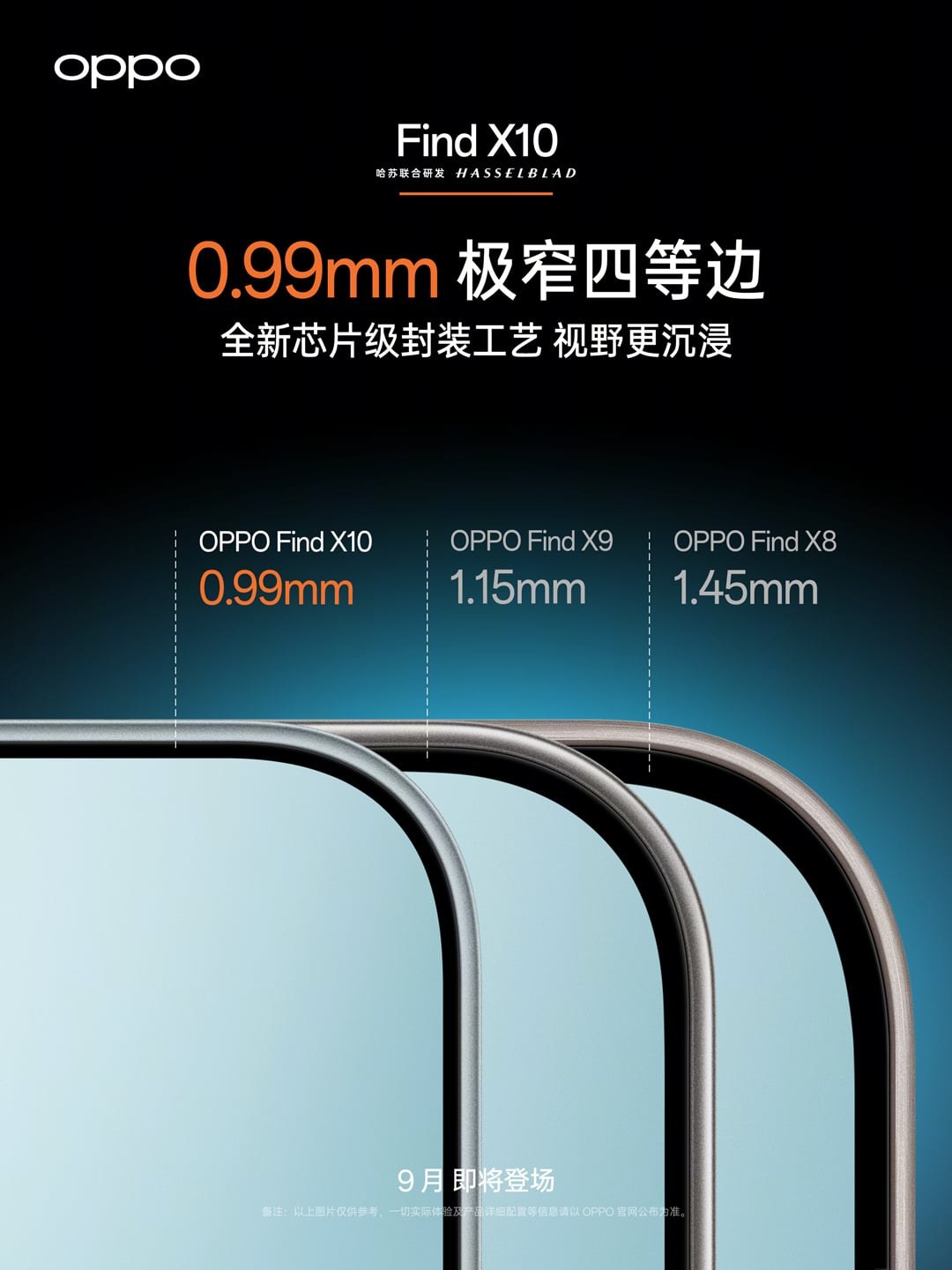
The progression reads at a glance on the poster: 1.45 mm on the Find X8, 1.15 mm on the Find X9, 0.99 mm on the Find X10. That is 32% less thickness in two generations. Oppo credits the gain to a new packaging process at display-chip level — the same family of techniques as the LIPO mentioned above, which folds the connections underneath the panel rather than housing them around its edge.
A new design with a horizontal camera bar and an AI button
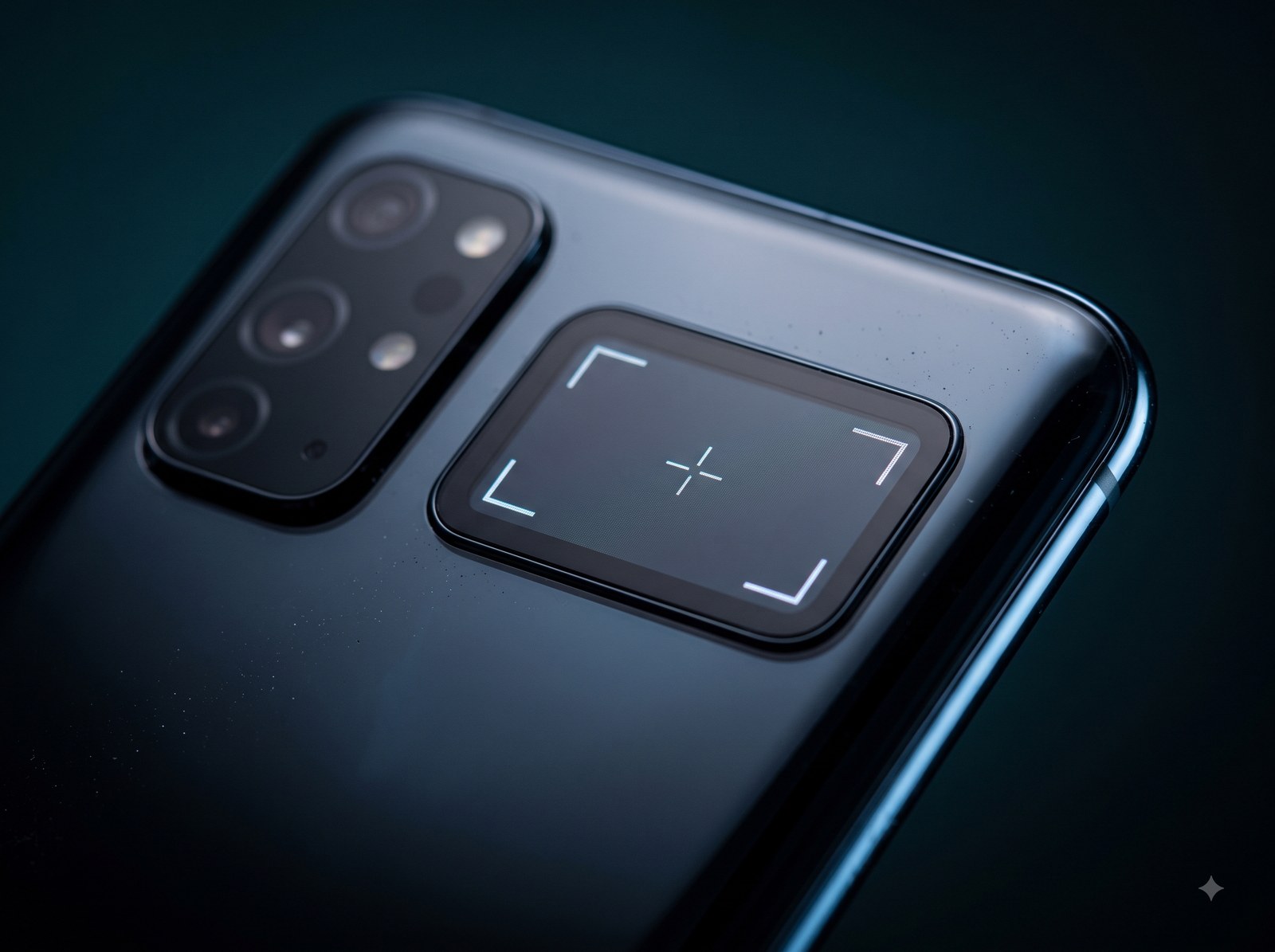
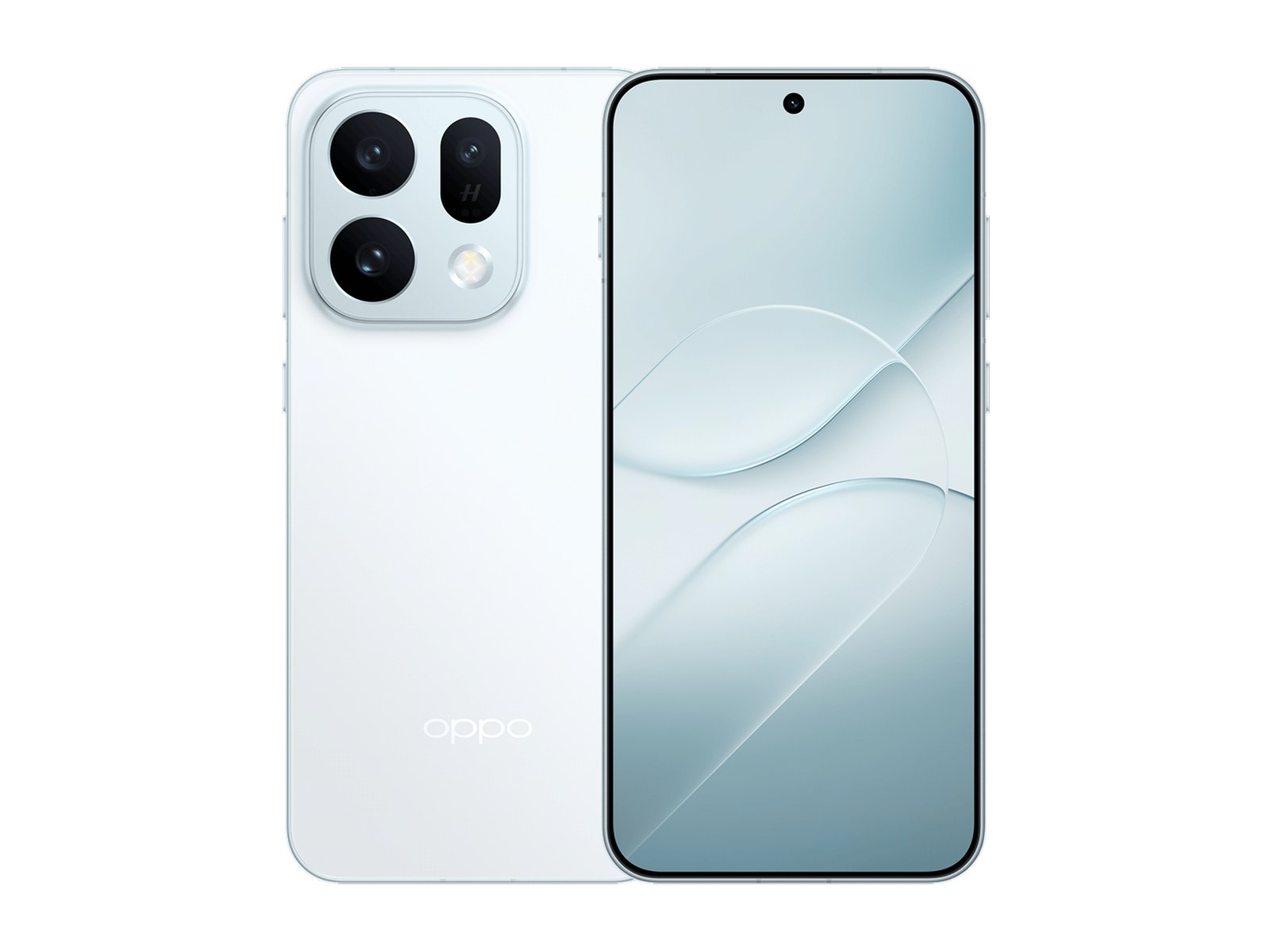
Visually, the Find X10 breaks with earlier generations by dropping the circular island in favour of a modern horizontal camera bar. The module gathers the three lenses on the left, while the flash and the multispectral sensor occupy the right-hand side.
The chassis comes in three finishes, now official — a pale orange called Qingcheng, Ice Blue and Light Titanium — and adds a practical novelty: a customisable AI button on the frame that fires system shortcuts instantly. Security and protection rest on a 3D ultrasonic fingerprint reader under the display and IP68 water resistance.
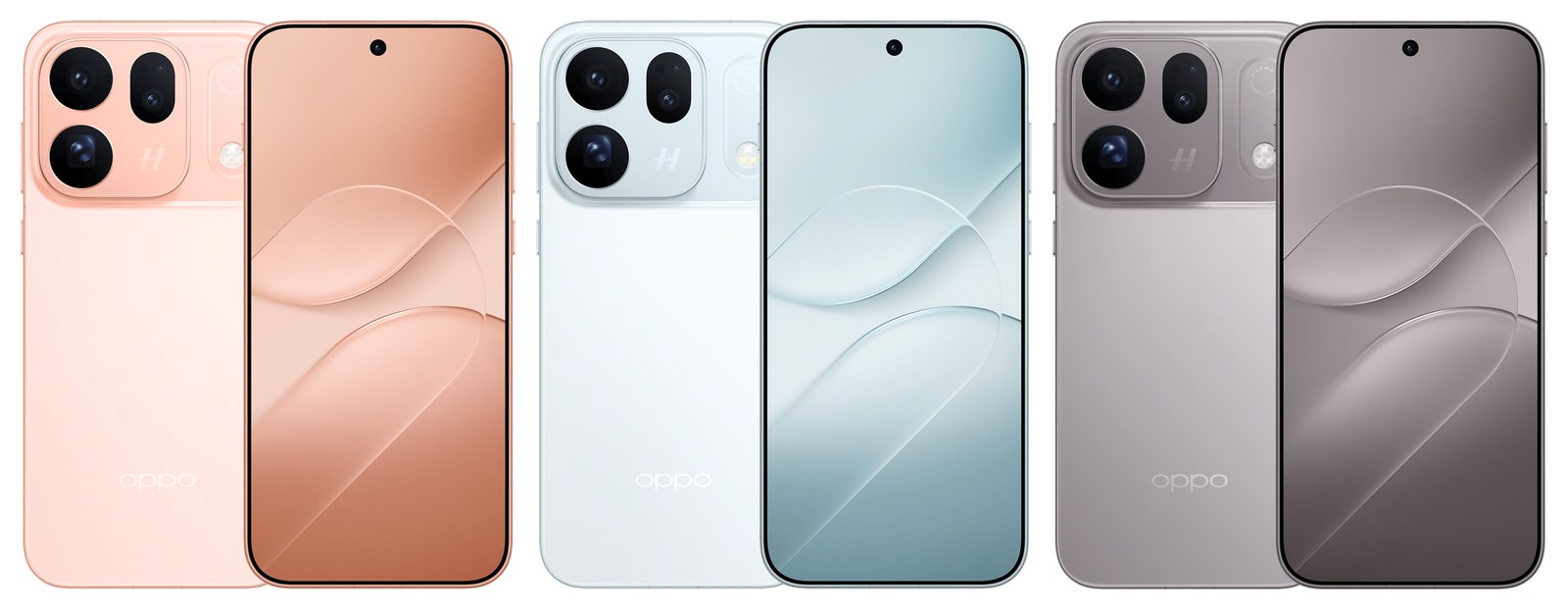
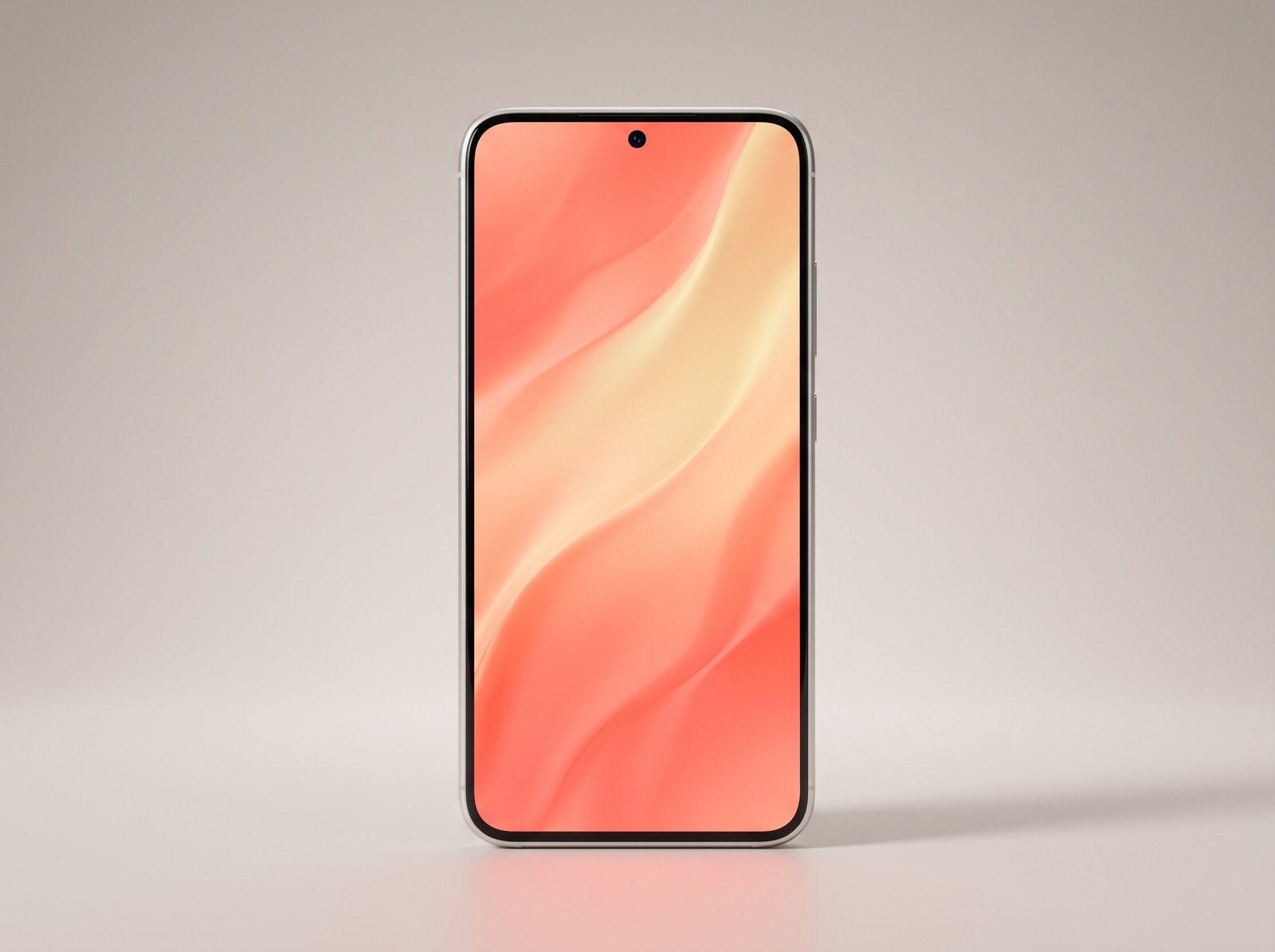
The official images released on 14 September show that bar just as it was described: the three lenses gathered in a rounded square — two on top, the third at bottom left, beside the Hasselblad monogram — and a pill on the right for the flash and the multispectral sensor. At the front, the flat display holds its selfie camera in a centred punch-hole.
MediaTek chip: the right balance of power
Two names circulated for a long time on the standard model, between a Dimensity 9600 and a Dimensity 9500 Plus. The phone’s appearance on Geekbench, on 5 September, settled it.
Under the reference PMW110, the database reports a MediaTek MT6993 arranged as four cores at 2.70 GHz, three at 3.50 GHz and one prime core at 4.21 GHz, with Mali-G1-Ultra MC12 graphics, 16 GB of memory and Android 17. That signature leaves little room for doubt, and we can check it without leaving our own catalogue: the Vivo X300 and the Vivo X300 Pro we stock both list a “Dimensity 9500, 4.21 GHz, octa-core, 3 nm”. Same prime-core clock, same process node. The MT6993 is the Dimensity 9500.
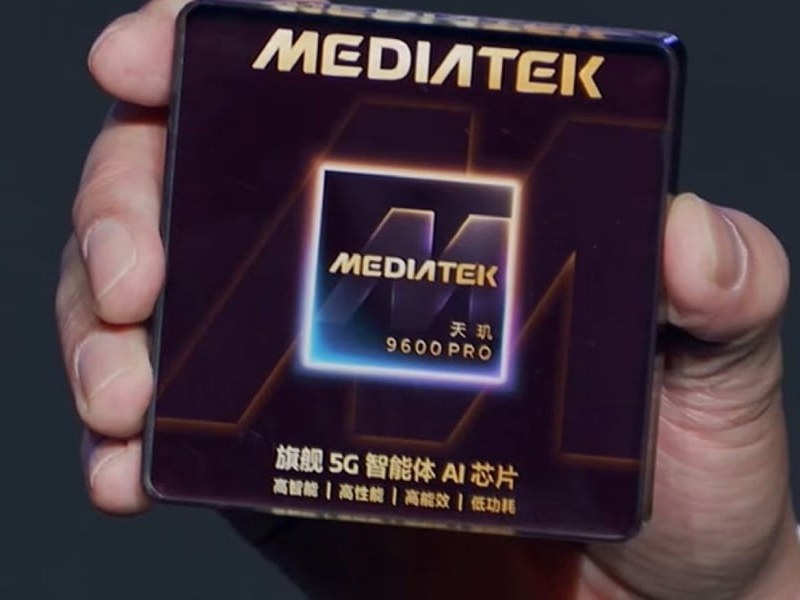
That leaves the name it will be sold under. According to the details accompanying the opening of pre-reservations, the Find X10 would carry a Dimensity 9600M: a reworked Dimensity 9500, with no change to its cores or its graphics, renamed for the new generation. The lead checks out elsewhere too, since the Vivo X500 was photographed in hand on 13 September with a chip of the same name, clocked at 4.21 GHz — the exact figure recorded here.
MediaTek made the chip official on 15 September, and its spec sheet confirms the Geekbench reading: the same 3 nm N3P process, the same C1-Ultra core at 4.21 GHz, the same Mali-G1 Ultra MC12 and the same NPU as the Dimensity 9500. What changes lies elsewhere: a third-generation scheduler that shares work more effectively between processor, graphics and memory, gaming up to 185 frames per second thanks to neural network rendering, and support for the Gemini Nano 4 and Qwen 3.5 Omni 4B AI models.
The doubt is now settled: it is official, the Find X10 does carry the MediaTek Dimensity 9600M. Oppo also confirms the top 16 GB of RAM and 512 GB of storage configuration, backed by 12 GB of virtual memory borrowed from storage, enough to keep more apps open in the background.
It is worth reading that finding for what it is. The Dimensity 9500 is no budget part: it is MediaTek’s flagship processor for the current generation, built on 3 nm, and the one powering the best compact phones on the market today. Oppo is simply keeping the brand-new 2 nm platform for its range-topper and giving the standard model a base that has been proven for a year — a trade-off that shows up mostly in driver maturity and thermal behaviour, two areas where a settled chip has the advantage.
The first readings give 3,380 points single-core and 9,792 multi-core. Those numbers call for caution: units tested before an unveiling rarely run final firmware, and retail results are usually higher.
The higher-end members of the family are heading towards specific architectures:
- The Find X10 Pro was tipped for a 6.78-inch display and the 2 nm Dimensity 9600 Pro. It does not appear on Oppo’s pre-reservation page, which lists only three models.
- The range-topping Find X10 Pro Max packs three 200 MP sensors, an 8,000 mAh battery confirmed by Oppo and a different chip: the MediaTek MT6995, the foundry’s first 2 nm processor, confirmed by Oppo on 15 September as the Dimensity 9600 Pro and measured at 3,691 points single-core and 11,093 multi-core.
- The Find X10E opens the range from below: Oppo has listed it on its pre-reservation page, without detailing its chip or its specifications.
- The upcoming Find X10 Ultra will switch to a Qualcomm Snapdragon chip when it arrives, expected in the first half of 2027.
A monster 8,000 mAh battery and AI-driven ColorOS 17
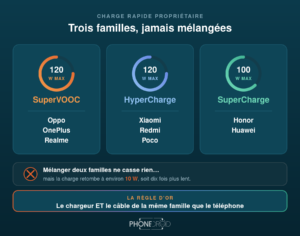
Despite its measured 6.59-inch footprint, the Find X10 sets a remarkable endurance standard with 8,000 mAh of capacity, the energy floor for the entire range. That reserve makes two full days of use a realistic prospect. 80 W wired charging, now confirmed by 3C certification, keeps daily top-ups quick, and wireless charging reaches 50 W, now officially confirmed — enough to claw back most of a day without plugging the phone in.
Oppo officially lists the 8,000 mAh as a typical value, the certified rated capacity always being slightly lower, and uses the Glacier battery name.
On 10 September, Oppo gave that cell a name: the Glacier battery, rated to last five years of daily use. The claim is not about capacity, which was already known, but about how it holds up — the number of cycles before endurance visibly starts to fade, which is the real weak point of very large batteries.
On the software side, the phone will run ColorOS 17 (Android 17), whose launch conference is set for 17 September 2026. The Find X10 series gets its own unveiling five days later, on 22 September. The various artificial intelligence models have already been formally filed and cleared with the Chinese regulator, which means the AI features should be ready at launch. Network access approval filed by OPPO Guangdong Mobile Telecommunications has also been granted, for a five-year term.
The timetable outside China is becoming clearer too. According to analyst Yogesh Brar, the Find X10 series would launch internationally by the end of October 2026, with India targeted before Diwali. Only two models would make it there, the Find X10 and the Find X10 Pro Max; the Find X10 Pro does not appear there, and no source has said, to date, which markets it will be sold in. That pairing has just been reinforced by an approval obtained in Thailand for those two devices precisely. Wireless charging, introduced with the Find X9 generation, carries over across the whole line-up.
Two accessories will share the stage and are already open for reservation in China: the Enco X4 premium wireless earbuds and the Watch S2.
Expected Oppo Find X10 specifications
| Component | Expected specifications |
|---|---|
| Display | Flat 6.59-inch OLED LTPO 1.5K “Tiangong Screen 2.0” (Tianma), BT.2020 gamut, below 1 nit |
| Refresh rate | 165 Hz adaptive |
| Display technology | New-generation ProXDR (confirmed by Oppo) |
| Processor | MediaTek Dimensity 9600M (MT6993, 3 nm process), official — Dimensity 9500 hardware made official by MediaTek on 15 September |
| Memory and storage | 12 GB + 256 GB, 12 GB + 512 GB, 16 GB + 512 GB, 16 GB + 1 TB (official) · up to 12 GB of virtual memory |
| Main camera | 200 MP (Samsung HPC, 1/1.3-inch or 1/1.4-inch, DeepPix) |
| Periscope telephoto | 200 MP (Samsung HP5, 1/1.56-inch, 3x optical zoom) |
| Ultra-wide | 50 MP |
| Front camera | 50 MP with autofocus |
| Assist sensor | 3 MP multispectral · second-generation Danxia optics (24 channels, 15 stops) · LUMO engine · Hasselblad Super Clear Camera system |
| Battery | 8,000 mAh (typical value), Glacier battery |
| Charging | 80 W wired (3C certified) · 50 W wireless (official) |
| Security & water resistance | 3D ultrasonic under-display fingerprint reader, IP68 |
| Software | ColorOS 17 on Android 17 (AI built in) |
| Design & colours | Horizontal camera bar, side AI button · Qingcheng (pale orange), Ice Blue, Light Titanium (official) |
| Launch | 22 September 2026 (China, official) · end of October 2026 (global) |
Oppo Find X10 price and availability
Oppo has not announced a price, but opening pre-reservations in China already sets the line-up. The Find X10 will come in 12 GB + 256 GB, 12 GB + 512 GB, 16 GB + 512 GB and 16 GB + 1 TB — exactly the four combinations of the Find X10 Pro Max. The standard model is not held back on memory, then, and the price gap between the two will come down to the camera, the chip and the display.
The unveiling takes place on 22 September in China. The global version, the one we will be offering, is expected by the end of October.
In summary
By combining a bright 165 Hz display, a colossal 8,000 mAh battery, certified 80 W charging and a dual 200 MP camera with no compromise, the Oppo Find X10 stands out as a strikingly consistent proposition in the balanced flagship segment.
We will be following its official launch on 22 September closely so we can bring the global version to our online shop quickly. In the meantime, take a look at our Oppo smartphones in stock, along with our selection of Oppo cases and Oppo tempered glass screen protectors.

![Oppo Find X10 Pro Max: official colours, triple 200 MP and 8,000 mAh [UPDATED]](https://www.phonedroid.net/blog/wp-content/uploads/2026/09/oppo-find-x10-pro-max-rendus.jpg)
![Xiaomi 18 Pro Max: Heading for an Outrageous Spec Sheet [UPDATED]](https://www.phonedroid.net/blog/wp-content/uploads/2025/09/Xiaomi-17-Pro-Max.jpg)