
📌 Updated 15 September 2026 — MediaTek has made the X500 Pro’s Dimensity 9600 Pro official: a 2 nm process, two Arm C2-Ultra cores at 4.55 GHz, and a claimed gain of 17% single-core and 15% multi-core over the Dimensity 9500. Vivo confirms the X500 Pro series will be the world’s first to carry it, and has published a joint poster with MediaTek promising, among other things, 10-bit Log video at 4K 120 fps and 4K Dolby Vision portrait video. Launch on 21 September in China.
While the Vivo brand wraps up the international rollout of its previous ranges, the manufacturer has confirmed the renewal of its premium catalogue in China as autumn approaches. For this new generation, the brand is skipping the “X400” naming entirely and jumping straight to the Vivo X500 series. That commercial decision comes down to tetraphobia in Asia, where the pronunciation of the number 4 remains associated with the word “death”.
Within a family made up of four main variants (Vivo X500e, Vivo X500, X500 Pro and X500 Pro Max), the Vivo X500 Pro looks like a particularly targeted proposition. It speaks to users after a phone with contained dimensions and no compromises on photo and video performance, and it could be sold in some markets under the name Vivo X500 Pro Mini.
Design and display: the compact 144 Hz LTPO feat
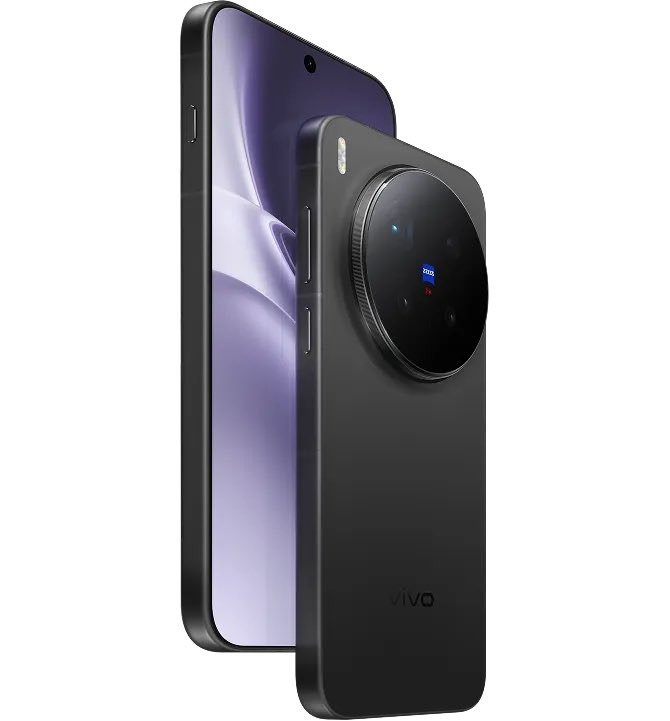
Aesthetically, the X500 series draws a clear visual line between models. Where the standard version places its camera block in the upper left corner, the Vivo X500 Pro wears an imposing circular module centred on the back of the phone. The chassis is built around a completely flat screen with generously rounded corners, leaving the curved edges of earlier generations behind for good.
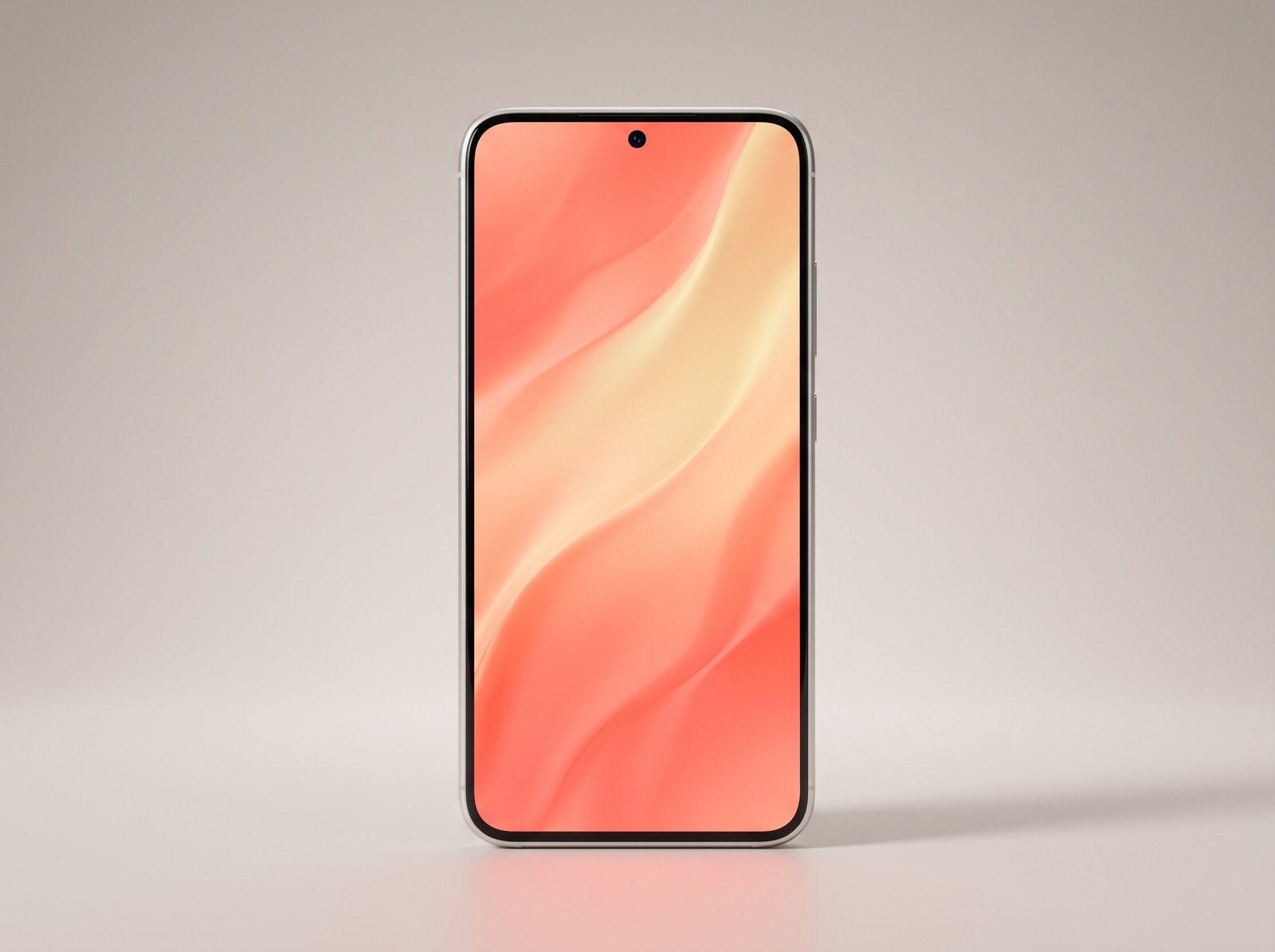
Display duties go to an OLED panel supplied by BOE measuring 6.37 inches across the diagonal. This compact format gets a 1.5K resolution of 2,800 × 1,260 pixels and a peak brightness quoted at 2,600 nits, guaranteeing perfect legibility outdoors in strong sunlight. The panel relies on the LIPO (Low-Injection Pressure Overmolding) encapsulation process, which delivers extremely thin, symmetrical bezels on all four sides.
Two technical features bring a direct benefit to everyday use:
- Adaptive LTPO refresh from 1 to 144 Hz: the panel adjusts its frequency in real time according to what is on screen. It climbs to 144 Hz for maximum smoothness in compatible gaming sessions, then drops automatically to 1 Hz when you are looking at a still image or reading text. That adaptive behaviour saves a considerable amount of battery across the day.
- PWM dimming at 1,920 Hz: in dim light or at night, high-frequency pulse width modulation reduces screen flicker at low brightness. The technology helps avoid eye strain for people sensitive to OLED dimming.
On 10 September, Vivo published the official renders of the range, and the X500 Pro appears exactly as described: a commanding camera disc, centred at the top of the back, ringed by a metal bezel whose fine knurling recalls a lens barrel. The flash has been moved out of the disc and placed to its left, on the back panel itself.
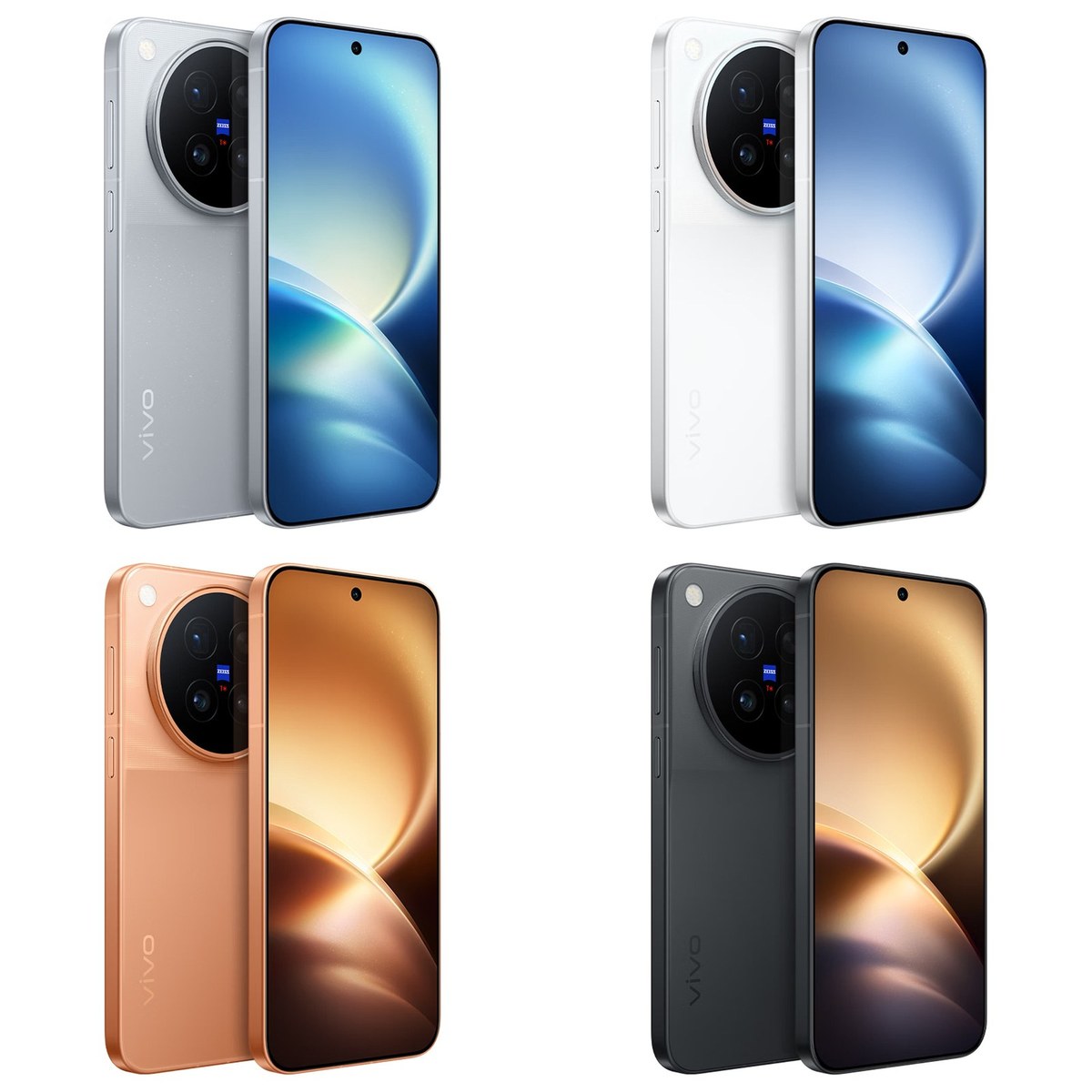
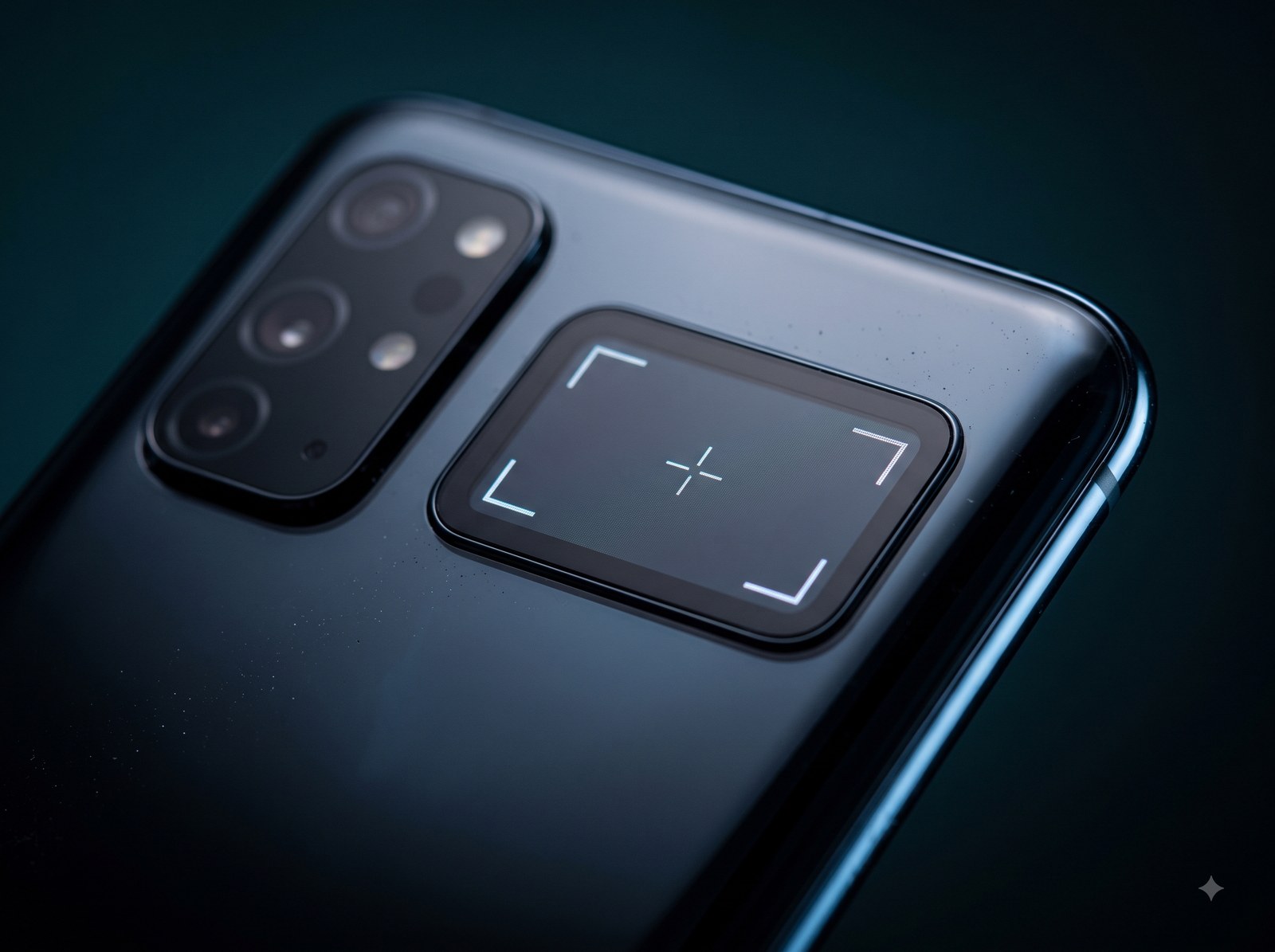
Four colours are on the menu — grey, white, orange and black — and the coppery orange is plainly the one the company is pushing, as Vivo has done since the X100 series. Inside the disc, the upper-left opening reveals a rectangular window: the signature of a periscope telephoto, whose optical block lies flat within the thickness of the chassis.
These images finally settle something the leaks had left hanging: what visually separates the Pro from the X500 Pro Max. On all four Pro renders, the right edge carries only the usual volume and standby pair, and the left edge is bare. The Pro Max adds a button on that left edge. Which is to say the gap between the two models is not only a matter of screen size.
Processor and architecture: the Dimensity 9600 Pro built on 2 nm
Under the bonnet, the Vivo X500 Pro sets itself clearly apart from the standard model. While the base version makes do with a 3 nm Dimensity 9600M — made official by MediaTek on 15 September with a spec sheet that mirrors the Dimensity 9500’s almost line for line — the Vivo X500 Pro moves up a generation with the brand-new MediaTek Dimensity 9600 Pro SoC.
Manufactured by TSMC on its cutting-edge 2 nm process, this chip delivers a major gain in energy efficiency compared with previous architectures. The finer process allows high clock speeds to be sustained under heavy load while keeping heat output and power draw in check.
MediaTek lifted the lid on its chip on 15 September, and the numbers show the size of the jump. Moving from 3 nm to 2 nm alone brings 14% more performance and 23% lower power consumption, before the architecture even comes into it. And that architecture is all new:
- Two Arm C2-Ultra cores at 4.55 GHz: where the Dimensity 9500 had just one core of that class.
- Six C2 Pro cores: three at 4.35 GHz and three at 3.10 GHz, for 34.5 MB of cache in total.
- +17% single-core and +15% multi-core against the Dimensity 9500, with prime cores drawing 37% less power.
- LPDDR6 and UFS 5.0: the Dimensity 9600 Pro is the first mobile chip to support both memory and storage standards.
On a 6.37-inch compact, the drop in power draw is probably what matters most: a battery aiming for 7,000 mAh will last all the longer when the chip spends less on the same task.
Vivo and MediaTek published a joint poster the same day presenting the X500 Pro series as the world’s first to carry the Dimensity 9600 Pro. It covers the series without singling out either model, and promises dedicated hardware for 10-bit Log video at 4K 120 fps, 4K Dolby Vision portrait video achieved with Vivo’s BluePrint chip, 60 fps tracking autofocus and XDZ video super-resolution for high magnification. Those features are detailed in our article on the Vivo X500 Pro Max.

The phone will run OriginOS 7, developed on an Android 17 base. Software optimisation combined with the processor’s power reserve should guarantee smooth operation for several years, both for heavy multimedia processing and for the artificial intelligence calculations built into the system.
Camera: 64 MP Zeiss APO telephoto and an all-new hybrid matrix
On the photography front, Vivo has lifted the lid on the exact optical hardware of its Pro model, designed jointly with Zeiss and Sony:
- 50 MP Zeiss Super Dynamic / BluePrint Guangyu 900 main sensor (1/1.28-inch) with LOFIC technology: developed on the basis of the Sony LYT-838 sensor, this module stands out for a record dynamic range reaching up to 17 EV. The LOFIC (Lateral Overflow Integration Capacitor) structure channels excess light charge to a lateral capacitor to preserve every detail in the highlights when shooting into strong backlight or at night.
- 64 MP Zeiss APO periscope telephoto (Sony LYTIA 610 / BluePrint) with an 85 mm focal length: co-developed with Zeiss, this module carries over the apochromatic (APO) heritage introduced on the Vivo X100 Pro, while considerably shrinking its physical footprint so it can sit neatly inside a compact body.
- 50 MP ultra-wide for wider framing with no compromise on sharpness.
A GG 1×1 and RB 2×2 pixel structure for surgical focusing
The headline innovation in this telephoto lens is its unusual pixel layout, combining GG 1×1 and RB 2×2. Why is that piece of engineering so clever?
A 1×1 matrix offers the purest resolution and the best level of detail, but takes longer to lock focus. Conversely, 2×2 binning speeds up autofocus dramatically at the cost of a slight loss of fine detail. By applying a 1×1 pattern to the green pixels (to which the human eye is most sensitive when it comes to sharpness) and a 2×2 pattern to the red and blue pixels, Vivo manages to combine both benefits: instant focusing paired with exemplary subject tracking stability.
The 85 mm focal length, the benchmark for portrait photography, combined with 64 MP of resolution, leaves very comfortable headroom for cropping your shots digitally with no visible loss of quality. Optical stabilisation certified to the demanding CIPA 7.0 standard, meanwhile, secures handheld and low-light shots.
The Pro model’s video performance
The official visual confirms the Pro model’s exact video calibration:
- 4K at 60 frames per second in HDR with direct output, to render the dynamic range of high-contrast scenes without blowing out the highlights.
- 4K slow motion at 120 frames per second to break down the action with total clarity.
These settings position the X500 Pro clearly: while the more extreme frame rates (4K 120 fps HDR and 4K 240 fps slow motion) remain the preserve of the Vivo X500 Pro Max and its 200 MP sensor with 400 mm extender, the X500 Pro offers a formidable balance for everyday video.
According to leaks shared by Digital Chat Station, the series developed under the internal code name “Thanos 500” is also said to benefit from cutting-edge colour processing across all of its camera modules.
Battery and endurance: the 7,000 mAh challenge in a measured chassis
Power management is the biggest challenge Vivo’s engineers have taken on with the X500 Pro. Fitting a high-capacity battery into a compact 6.37-inch chassis means optimising every internal cubic millimetre, especially with a periscope camera block in the mix.
The first prototypes measured on the test lines showed real-world capacities between 6,500 and 6,600 mAh. Vivo’s development teams are, however, actively pushing silicon-carbon cell density to reach the symbolic 7,000 mAh mark on the final retail version.
Fast Charging will also benefit from the 90 W wired figure validated during the range’s certifications, rounded out by fast wireless charging.
Release date and official launch
The date is now settled: the event takes place on 21 September at 7 pm in China, and the X500 series will not be alone there — Vivo will also show the Vivo Watch 6 and the Vivo Buds Clip earbuds. The rollout outside China is expected in November.
Han Boxiao has officially confirmed that the Vivo X500 Pro will be unveiled in September 2026 in China.
An international release is still on the cards. On 13 September, the X500 Pro cleared SIRIM certification in Malaysia under the reference V2621, a step that usually comes a few weeks before a global announcement. The gradual registration of the global variants with international regulatory bodies confirms an arrival on world markets shortly after the Chinese launch event. Later models such as the Vivo X500 Ultra will round out the family in 2027.
Vivo X500 Pro specifications
| Component | Specifications |
|---|---|
| Display | Flat, 6.37 inches, BOE OLED 1.5K (2,800 × 1,260 px) |
| Display technologies | Adaptive LTPO 1-144 Hz, PWM 1,920 Hz, 2,600 nits, LIPO |
| Processor | MediaTek Dimensity 9600 Pro (2 nm TSMC), made official on 15 September: 2 C2-Ultra cores at 4.55 GHz + 6 C2 Pro cores |
| Operating system | OriginOS 7 based on Android 17 |
| Main camera | 50 MP Zeiss Super Dynamic / BluePrint Guangyu 900 (1/1.28″, LOFIC, 17 EV) |
| Telephoto | 64 MP Zeiss APO periscope (Sony LYTIA 610, 85 mm, GG 1×1 + RB 2×2 matrix, macro) |
| Ultra-wide | 50 MP |
| Video features | 4K 60 fps HDR, 4K 120 fps slow motion, CIPA 7.0 optical stabilisation |
| Battery | 6,500 to 6,600 mAh (7,000 mAh silicon-carbon target) |
| Charging | 90 W wired (3C certified), fast wireless |
| Rear design | Centred circular camera module |
| Global reference | V2621 (SIRIM certified) |
| Official release | 21 September 2026 at 7 pm (China, confirmed by Vivo) |
Vivo X500 Pro or Vivo X500 Pro Max: which one should you pick?
If you are torn between the two most ambitious models in the range, here are the key points to weigh up:
- Size and display: the X500 Pro goes for compactness with its 6.37-inch panel (1.5K), while the Pro Max targets fans of very large screens with its 6.85 inches (2K).
- Telephoto philosophy: the Pro model banks on an ultra-fast 64 MP Zeiss APO sensor (85 mm) optimised for portraits, whereas the Pro Max packs a giant 200 MP sensor compatible with a 400 mm extender for long-distance work.
- Video performance: the X500 Pro handles 4K 60 fps HDR and 4K 120 fps slow motion, while the Pro Max pushes the sliders to 4K 120 fps HDR and 4K 240 fps slow motion with optical stabilisation across 3°.
- Battery life: the Pro aims for 6,500 to 7,000 mAh in a small format, against a battery approaching 8,000 mAh in the Pro Max’s larger chassis.
In summary
Officially confirmed for September 2026 in China by Han Boxiao, the Vivo X500 Pro is shaping up to be one of the most complete compact phones on the market. By combining the power of a 2 nm process, the optical mastery of the Zeiss Super Dynamic LOFIC main sensor and the responsiveness of its 64 MP Zeiss APO telephoto, it answers precisely what users want when they are after excellence without the bulk of a large phone.
You will be able to find the manufacturer’s models in our shop as soon as they launch. In the meantime, browse our selection of Vivo smartphones and our refurbished Vivo models, along with our dedicated protective accessories such as our Vivo cases and our Vivo tempered glass screen protectors.

![Vivo X500 Pro Max: The Future Monster Holds No More Secrets [Update]](https://www.phonedroid.net/blog/wp-content/uploads/2026/08/une-x500.jpg)
![iQOO 16: 2K 165 Hz display, Snapdragon 8 Elite Gen 6 Pro and an 8,400 mAh battery [UPDATED]](https://www.phonedroid.net/blog/wp-content/uploads/2026/09/iqoo-16-rendu-fuite-noir.jpg)
![Vivo X500: Sony LYTIA-828 sensor made official, flat 6.59-inch 144Hz display [UPDATED]](https://www.phonedroid.net/blog/wp-content/uploads/2026/09/vivo-x500-affiche-officielle-capteurs-zeiss.jpg)
![Xiaomi 18 Pro Max: Heading for an Outrageous Spec Sheet [UPDATED]](https://www.phonedroid.net/blog/wp-content/uploads/2025/09/Xiaomi-17-Pro-Max.jpg)

![Oppo Find X10: unveiling on 22 September, dual 200 MP and 8,000 mAh [UPDATED]](https://www.phonedroid.net/blog/wp-content/uploads/2026/09/oppo-find-x10-rendu-officiel-qingcheng.jpg)